

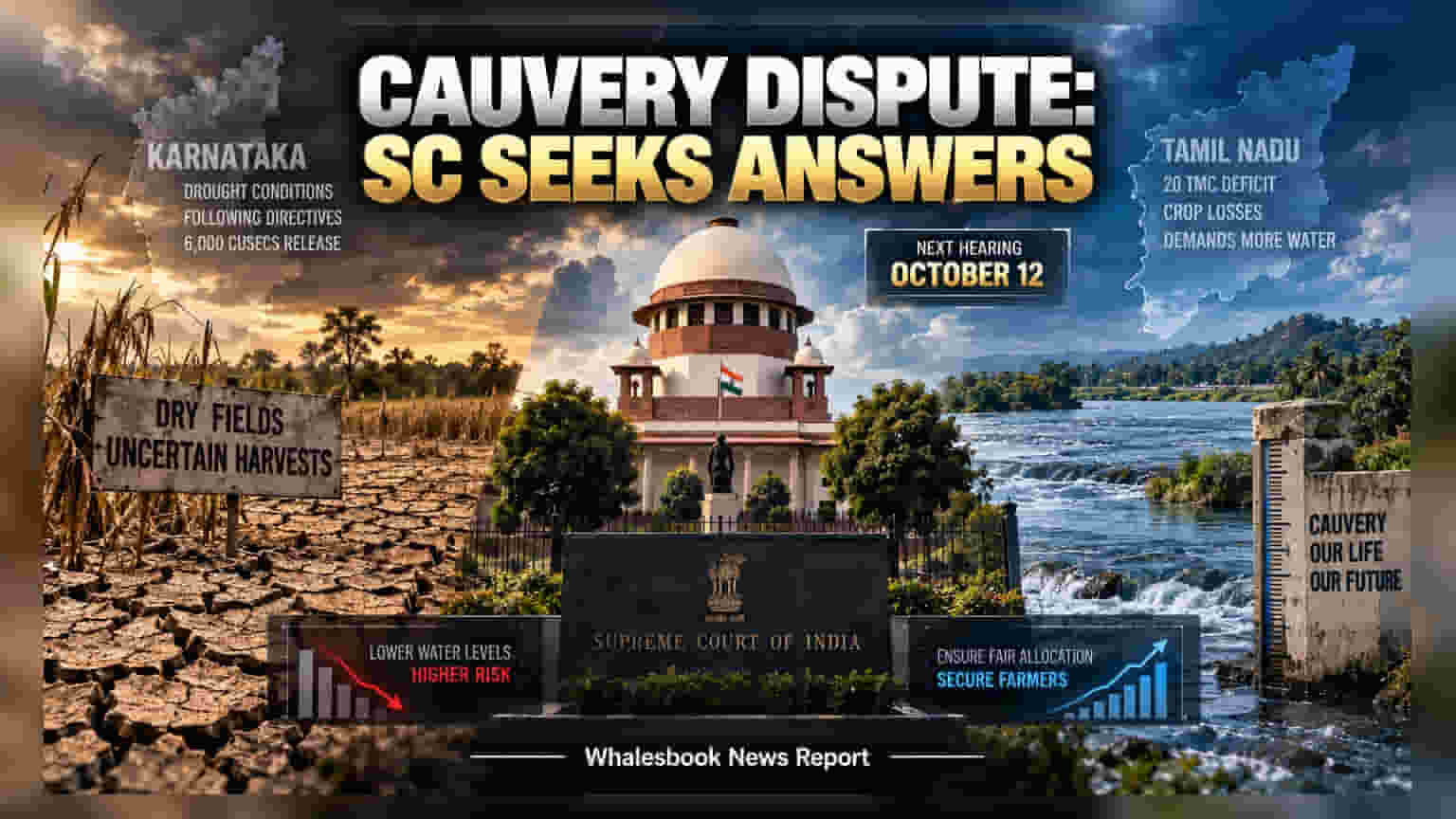
The Supreme Court has directed the Karnataka government to file a formal response by October 12 regarding Tamil Nadu's claim of a 20 TMC water deficit. This inter-state dispute over Cauvery water allocation impacts agricultural irrigation in the delta region. Investors and analysts are monitoring the situation, as water scarcity can affect crop yields and regional economic stability.
The Supreme Court has mandated that the Karnataka government file a formal response to Tamil Nadu's claim of a 20 TMC (thousand million cubic feet) water deficit. The bench, led by Justice Vikram Nath, has set October 12 as the deadline for this filing. This legal action follows Tamil Nadu’s assertion that insufficient water inflows have significantly harmed its early Kharif crop season, sparking a fresh round of debate over how resources are shared during drought-hit years.
Conflict Over Drought-Year Allocation
The dispute centers on the distribution of water during rain-deficient cycles. Tamil Nadu has argued that despite existing court and regulatory orders, the actual water received has not been enough to support agricultural needs, leading to potential crop losses. In its defense, Karnataka’s legal team has maintained that the state is following the release directives issued by the Cauvery Water Management Authority (CWMA). Karnataka has stated that it is currently releasing 6,000 cusecs of water, in line with the September 8 mandate, while also managing its own severe drought conditions. The state emphasizes that its compliance is tied to real-time basin data monitored by the Cauvery Water Regulation Committee.
Impact on the Agricultural Sector
For investors and market participants, the primary concern is the potential impact on agricultural output in the Cauvery delta region. This area is a crucial hub for paddy cultivation. When water levels fall short, it directly threatens the yield and health of the standing Kharif crop. Sustained water scarcity can lead to lower production levels, which may influence food commodity prices and affect the profitability of regional agricultural businesses.
Beyond farming, water-intensive industries and power plants that rely on consistent river levels could also face operational challenges if water rationing becomes more stringent. Investors monitoring the economic health of these states often track these disputes, as persistent water shortages can lead to localized economic pressure and supply chain instability.
Regulatory Oversight and Next Steps
The Supreme Court has reiterated that the Cauvery Water Management Authority remains the primary expert body responsible for resolving these allocation grievances. The court is encouraging the use of this established regulatory framework rather than immediate judicial intervention for every requested change in water release. The next phase of this legal process will depend on the CWMA’s ability to assess current meteorological conditions and basin availability. The outcome of the October 12 hearing will be important to track, as any policy adjustment regarding water release could directly influence irrigation prospects for the remainder of the season.