

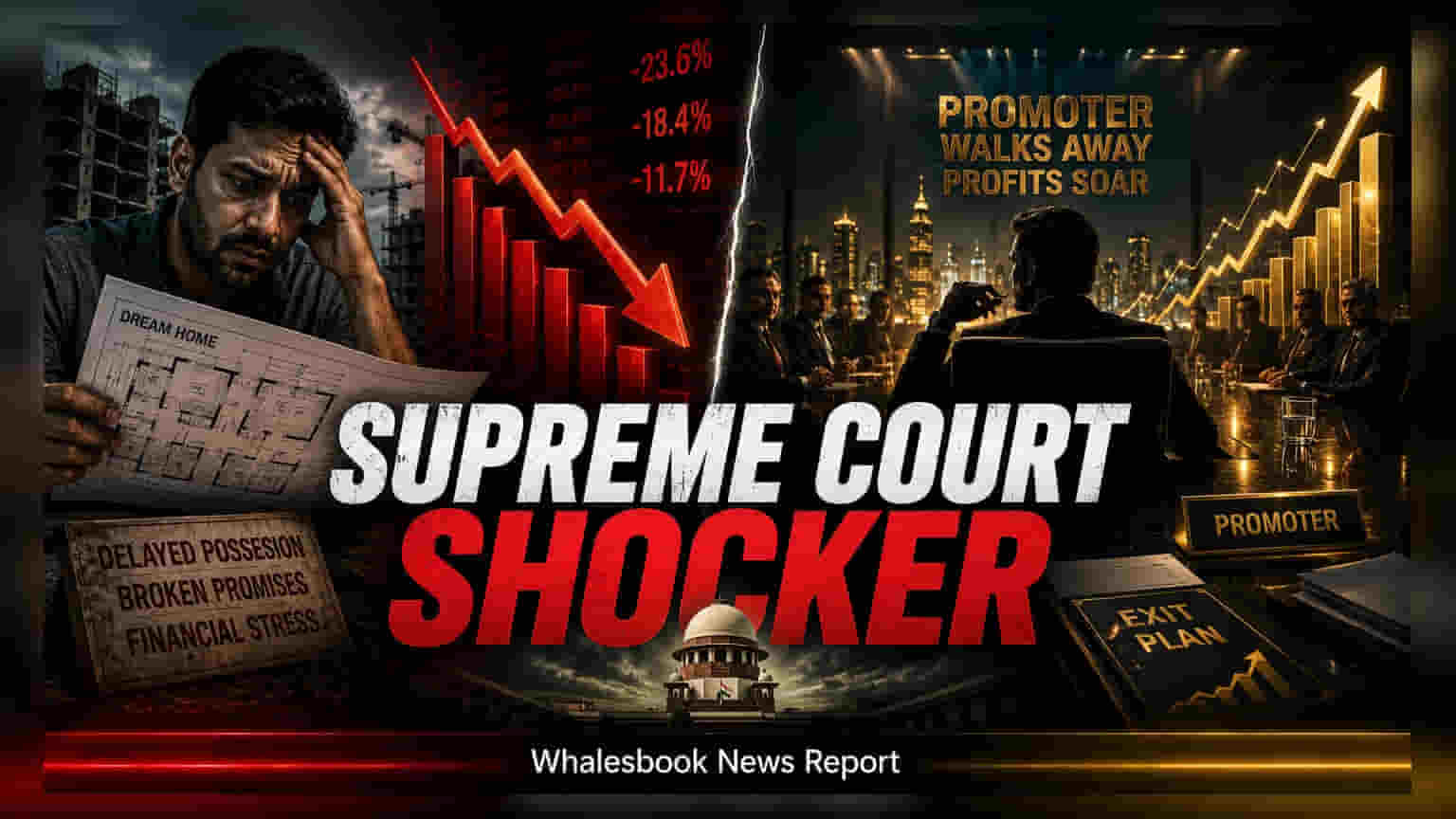
The Supreme Court has clarified that insolvency moratoriums only protect companies, not their promoters or directors. This allows homebuyers to continue consumer court cases against management even if the developer is undergoing insolvency. The ruling prevents developers from using bankruptcy proceedings as a shield against personal legal accountability.
Detailed Coverage
In a significant order for the real estate sector, the Supreme Court has ruled that individuals managing a company, including promoters and directors, cannot use the Insolvency and Bankruptcy Code (IBC) to stop legal action from homebuyers. The judgment clarifies that the protection granted by an insolvency moratorium—which pauses legal proceedings—applies strictly to the company, known as the corporate debtor, and not to its leadership.
Scope of IBC Moratorium Explained
The dispute centered on Section 14 of the IBC, which is designed to freeze legal proceedings against a company once it enters insolvency resolution. This protection helps preserve the firm’s assets while a recovery plan is prepared. However, the bench comprising Justices Vikram Nath and Sandeep Mehta found that the law does not extend this immunity to the people running the business. The court stated that the moratorium is meant to shield the company's assets, not to provide a blanket exemption to its management from liabilities under other laws, such as the Consumer Protection Act.
Impact on Pending Consumer Cases
The verdict sets aside a previous decision by the National Consumer Disputes Redressal Commission (NCDRC), which had paused a case against the promoters and directors of Bengaluru-based Mantri Technology Constellation Pvt Ltd. With this ruling, the consumer proceedings against these individuals have been revived. This decision is expected to help thousands of homebuyers who often find their legal options limited when a developer declares insolvency to avoid immediate payouts or accountability.
Why This Matters for Investors and Homebuyers
For investors in real estate companies, this ruling increases the personal accountability of promoters. In the past, there was a risk that management could use the insolvency process to delay or escape consumer claims, leaving homebuyers with little recourse. By narrowing the scope of the moratorium, the Supreme Court has ensured that developers cannot use bankruptcy as a tool to avoid personal responsibility for project delays or other contractual failures.
Looking ahead, market participants should monitor how this precedent affects the strategy of debt-laden developers. Developers facing severe financial stress may no longer be able to protect their management teams behind the corporate veil of insolvency. The next important step will be to watch how consumer courts handle pending cases involving other developers currently undergoing insolvency, as this ruling provides a clear legal roadmap for claimants to pursue action against promoters regardless of the corporate entity's bankruptcy status.