

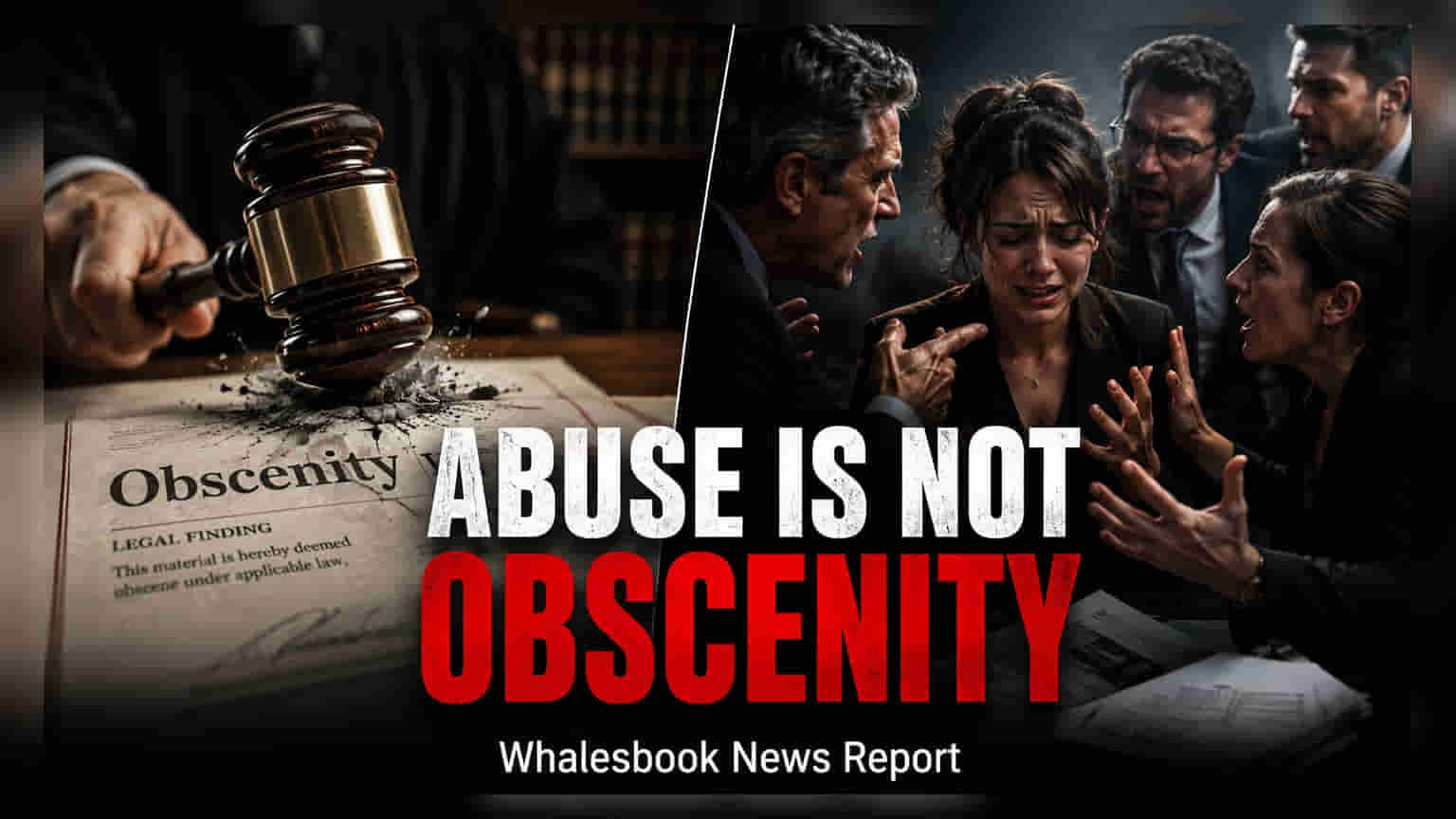
The Supreme Court clarified that using abusive words does not automatically qualify as obscenity under Section 294 of the Indian Penal Code. The ruling distinguishes between rude expressions and sexually explicit content that intends to corrupt minds. This decision impacts how legal definitions of public behavior are applied in future criminal cases involving verbal disputes.
The Supreme Court has clarified the legal boundaries of what constitutes obscenity, ruling that the mere use of abusive or insulting language does not automatically trigger a conviction under Section 294 of the Indian Penal Code. A Bench consisting of Justices Sanjay Karol and Vipul Pancholi held that for speech to be legally defined as obscene, it must go beyond simple vulgarity. To meet this legal threshold, the content must be sexually explicit, designed to arouse sexual desire, or carry the potential to deprave or corrupt the minds of those who hear it.
Defining the Legal Threshold for Obscenity
This ruling provides important guidance for courts across India when dealing with cases involving offensive verbal exchanges. The court emphasized that while language may be offensive, rude, or insulting, it does not necessarily satisfy the requirements for obscenity if it lacks a sexually explicit nature. By establishing this distinction, the court aims to prevent the misuse of obscenity laws in situations where the speech may be provocative but does not pose the specific threat to public morality that Section 294 is intended to address.
Background of the Land Dispute Appeal
The court’s clarification arose during the appeal of a 70-year-old man involved in a long-standing land dispute in Tamil Nadu. The original case originated in August 2017 following a physical confrontation over land ownership. The complainant had accused the appellant of using an expletive directed at his mother, which led to a trial court conviction for both obscenity and criminal intimidation.
While the Supreme Court set aside the convictions for obscenity and criminal intimidation, it maintained the conviction for voluntarily causing grievous hurt, noting that the incident had resulted in physical injury to the complainant. In view of the appellant's advanced age and health condition, the court opted to commute his sentence to imprisonment until the rising of the court. Furthermore, the appellant was directed to pay a fine of ₹50,000 within a two-month period.
Impact on Future Legal Proceedings
This judgment is significant as it sets a clear precedent for lower courts to follow when evaluating cases where offensive language is a key component of the dispute. By focusing on the intent and the specific nature of the language used, the ruling provides a more objective framework for determining guilt in criminal appeals. Future cases involving verbal altercations will now require a more precise examination of whether the expressions used meet the specific legal definitions provided by the Supreme Court, rather than being treated as obscenity simply because they are offensive.