

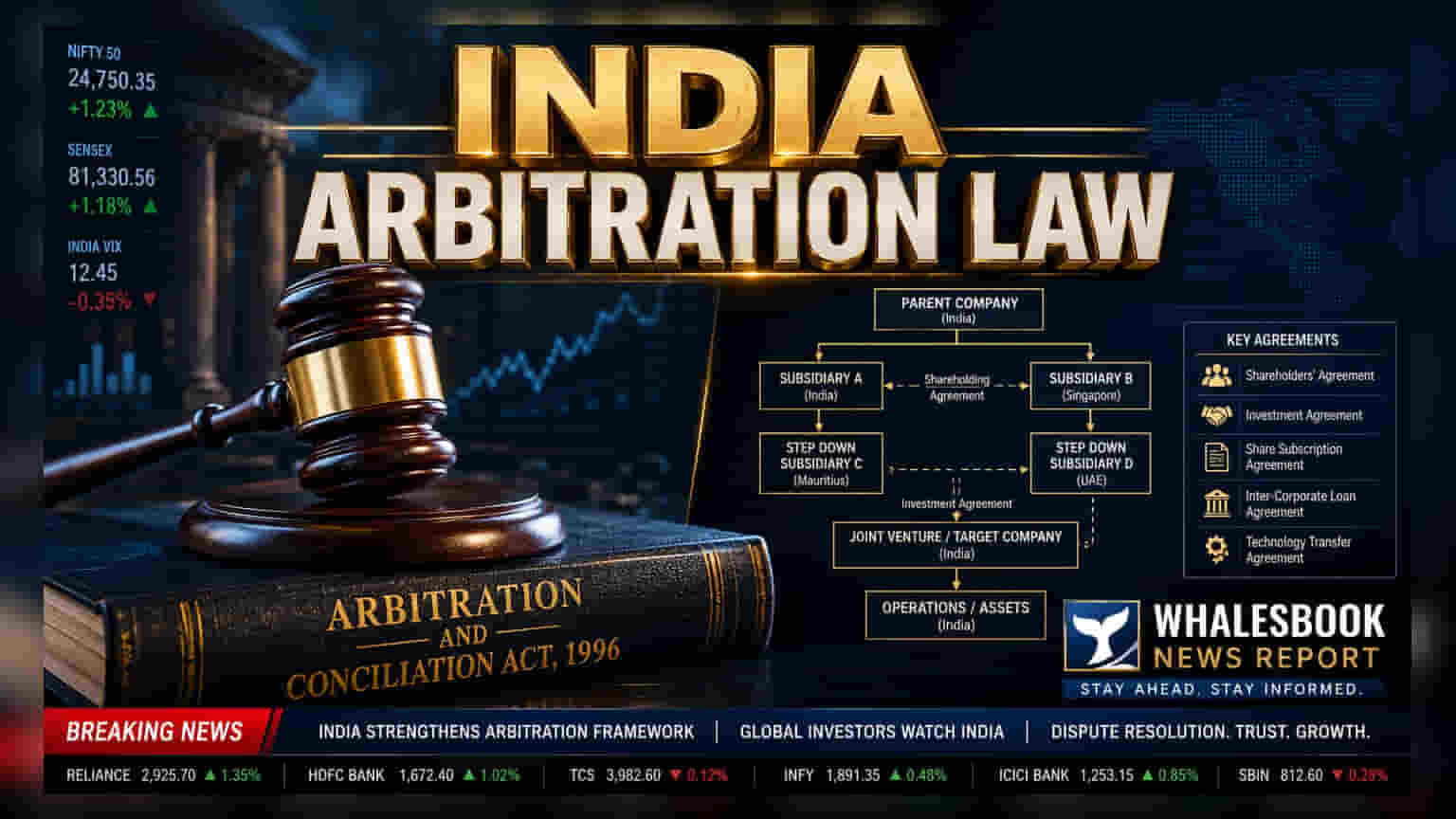
The Supreme Court of India is re-examining the 'group of companies doctrine' in arbitration. This legal principle allows binding non-signatories to an agreement based on corporate ties, but courts are now debating if this overrides specific contract clauses like 'entire agreement' that intentionally exclude third parties.
What Happened
The Supreme Court of India is currently conducting a deeper analysis of the "group of companies doctrine" in arbitration cases. This legal doctrine currently allows a court or an arbitral tribunal to include a company in arbitration proceedings even if that company did not technically sign the original contract. This usually happens when the company is part of the same corporate group as the signatory. The court is now evaluating whether this doctrine can be applied when the involved parties have explicitly included clauses in their contracts to prevent exactly this kind of inclusion.
The Tension With Party Autonomy
At the heart of the debate is the concept of party autonomy—the legal principle that parties should be free to decide the terms of their own agreements. The "group of companies doctrine" is traditionally used to trace the mutual intent of parties and bring non-signatory entities into an arbitration agreement. However, legal experts are questioning if this doctrine should remain supreme when parties have clearly defined their boundaries. If a company explicitly writes into a contract that no third party can be bound by or benefit from the agreement, experts argue that applying this doctrine could violate the original, signed intent of those businesses.
Impact of Specific Contract Clauses
The debate centers on three types of common contract clauses that might now act as a shield against the doctrine. First, an "entire agreement clause" typically states that the written contract is the only document that matters, excluding outside influences. Second, a "no third-party benefit clause" is designed to strictly limit legal rights and obligations to only those who signed the document. Finally, a "no oral modification clause" requires that any changes to the contract must be in writing. Legal scholars and past court observations suggest that when these clauses are present, they may serve as a decisive barrier that prevents courts from using the "group of companies doctrine" to bring other group entities into an arbitration.
Legal Precedents and Challenges
Several past judgments have highlighted the importance of these specific clauses. For instance, in cases like Joshi Technologies International Inc. v. Union of India, courts have emphasized that the written contract must be treated as the sole repository of terms. Similarly, Indian and international courts have increasingly upheld the enforceability of "no oral modification" clauses, such as in the SEPCO Electric Power Construction Corporation case. These rulings suggest a judicial shift toward respecting the precise wording of contracts over broader interpretive doctrines.
What Investors Should Track
For companies and investors, the key monitorable is the upcoming clarity from the Supreme Court. If the court rules that explicit contract clauses effectively override the "group of companies doctrine," it will provide much-needed certainty for corporate entities during contract drafting. It could reduce the risk of unexpected arbitration exposure for subsidiary companies. Conversely, if the doctrine retains its broad reach, companies will need to be even more careful about their group-wide interlinkages and the potential for one entity's disputes to be dragged into another's arbitration.