

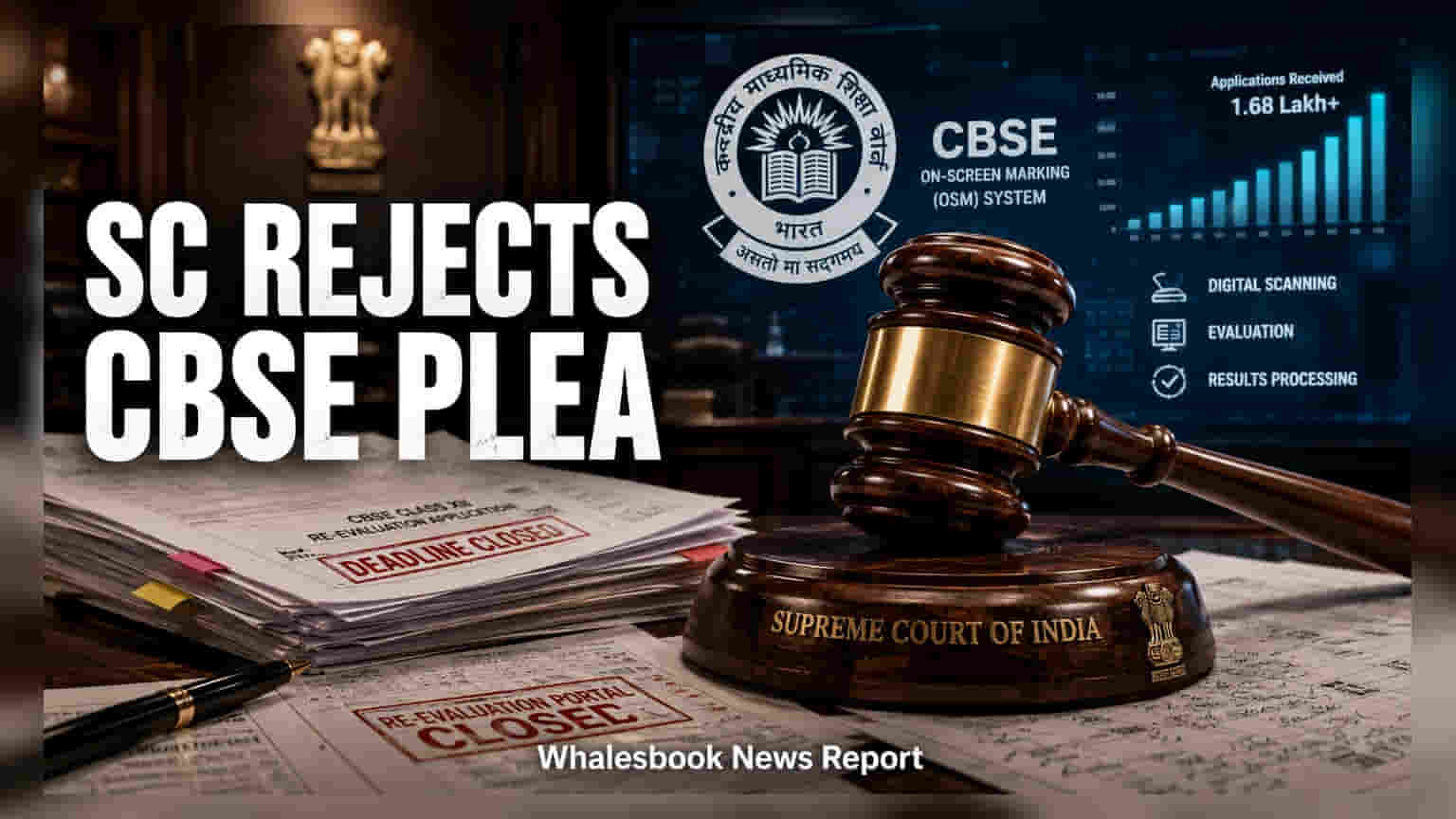
The Supreme Court has dismissed a petition to reopen the CBSE Class XII re-evaluation portal, upholding the board's original deadline. The bench noted that 1.68 lakh students had already applied, and further extensions would disrupt the national admission calendar. This ruling provides finality to the assessment process for the current academic cycle.
On August 25, 2026, the Supreme Court of India dismissed a plea to reopen the re-evaluation portal for CBSE Class XII students. The bench, led by Chief Justice of India Surya Kant along with Justices Joymalya Bagchi and V. Mohana, ruled that the board had provided sufficient time for all candidates to apply and that reopening the window would create administrative paralysis.
The petition had sought a one-week extension, citing technical difficulties following the implementation of the new On-Screen Marking (OSM) system in 2026. Legal counsel for the petitioners argued that the transition to digital scanning resulted in complications such as missing pages, unassessed answers, and illegible digital images. They alleged that the rapid rollout of the digital system, combined with a lack of adequate training for evaluators, had compromised the grading process.
In its order, the Supreme Court emphasized that the portal had remained accessible to all students during the designated timeframe. The CBSE informed the court that 1.68 lakh students had already successfully submitted their applications during this period. The bench noted that allowing the portal to reopen would trigger an unmanageable cascade of new claims, which would significantly delay the processing of results and impact the broader university admission timeline.
This decision highlights the operational challenges associated with digitizing national-level examination boards. While the shift to the OSM system is intended to improve efficiency and reduce manual errors in grading, the transition year has brought to light technical gaps in scanning and digital assessment. The court’s refusal to extend the deadline serves to protect the integrity of the established academic calendar, ensuring that the admission process for higher education remains stable.
With the matter now resolved by the apex court, the focus shifts entirely to the conclusion of the current academic admission cycle. Students who were dissatisfied with their marks but did not apply within the initial window will not have a further opportunity to seek re-evaluation for this cycle. The outcome reinforces the importance of adhering to official administrative timelines in high-stakes public examinations.