

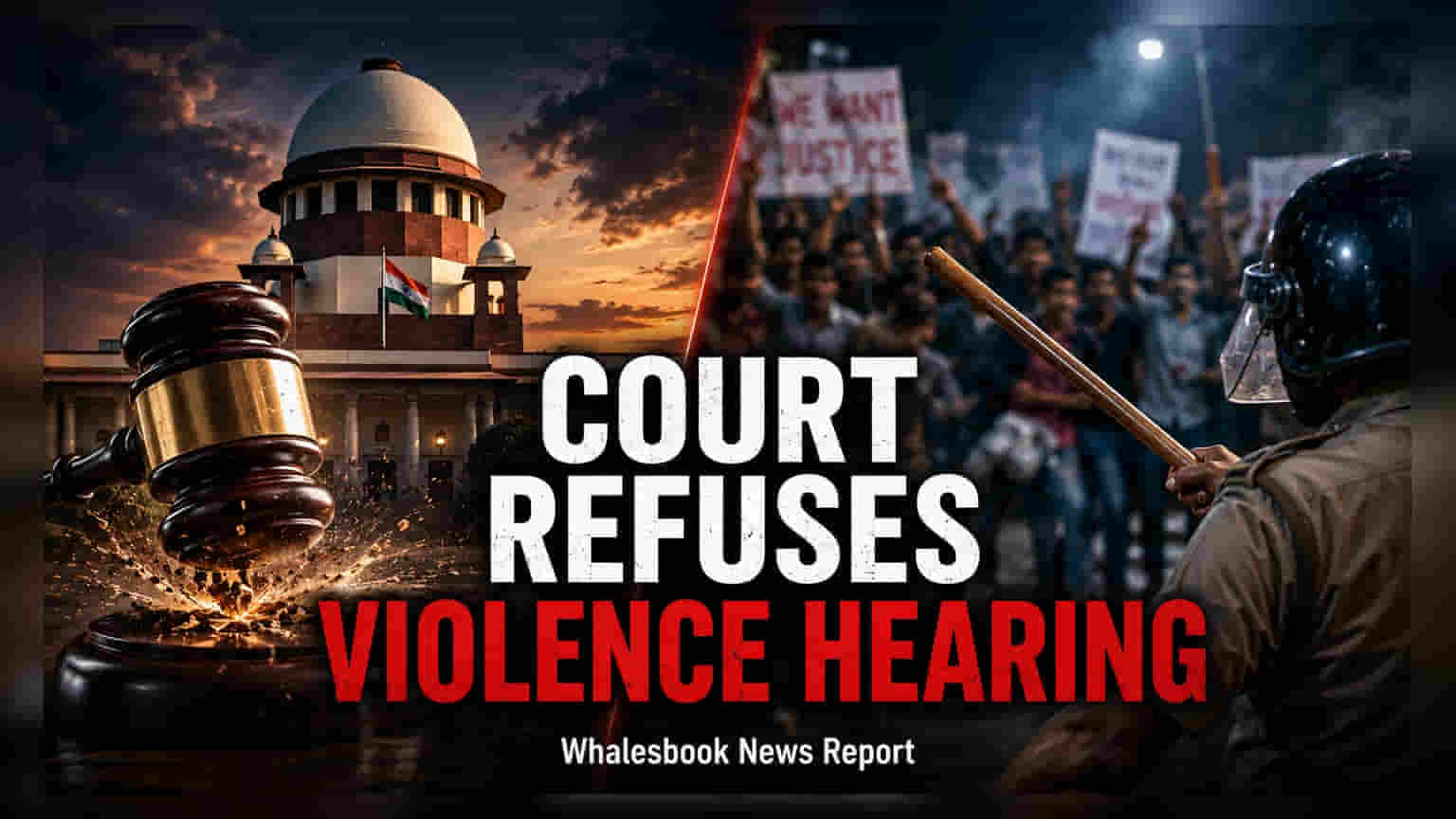
The Supreme Court has refused to take suo motu action regarding alleged police violence during recent student protests in Delhi. The demonstrations, led by the CJP, focus on demands for National Testing Agency (NTA) reforms and the resignation of the Union Education Minister.
Detailed Coverage
The Supreme Court of India on Wednesday declined to intervene in the ongoing dispute surrounding student protests in New Delhi. A plea seeking the court’s focus on alleged police actions against demonstrators was rejected by a Bench led by Chief Justice Surya Kant, along with Justices Joymalya Bagchi and V. Mohan. When a lawyer attempted to present video evidence of the situation, the Court stated that it would not entertain the matter at this time.
Core Demands of the Protests
The protests, organized under the banner of the Cockroach Janta Party (CJP), have brought thousands of students to the streets of the capital. The central issue driving these demonstrations is a demand for systemic changes to the National Testing Agency (NTA). Students are seeking reforms in the conduct of entrance examinations following widespread allegations of paper leaks. Furthermore, protesters have called for the resignation of Union Education Minister Dharmendra Pradhan, citing administrative failure in managing these examinations.
Impact of the Administrative Response
The situation escalated following police action taken during the July 20 demonstrations. Reports from the protest site indicate that nearly 80 individuals sustained injuries, with at least one case of pellet gun trauma being documented. These events unfolded alongside a temporary internet shutdown in the capital, which local authorities implemented as a precautionary measure. This decision has attracted significant criticism from various political factions, including opposition Members of Parliament who staged a sit-in protest following the detention of demonstrators.
Judicial and Political Context
This refusal by the Supreme Court follows a similar decision by the Delhi High Court. Chief Justice D.K. Upadhyaya had previously declined an urgent hearing on a related plea, noting that the court should not be involved in these administrative disputes. Political leaders, including Rahul Gandhi, have publicly criticized the government’s response, demanding an apology to the student community. The situation remains sensitive as the government faces mounting pressure to address the operational concerns regarding the NTA. The key monitorable for the coming days will be whether the Ministry of Education announces any concrete structural changes to the testing body or if the student-led protests continue to disrupt normal academic and administrative activity in the capital.