

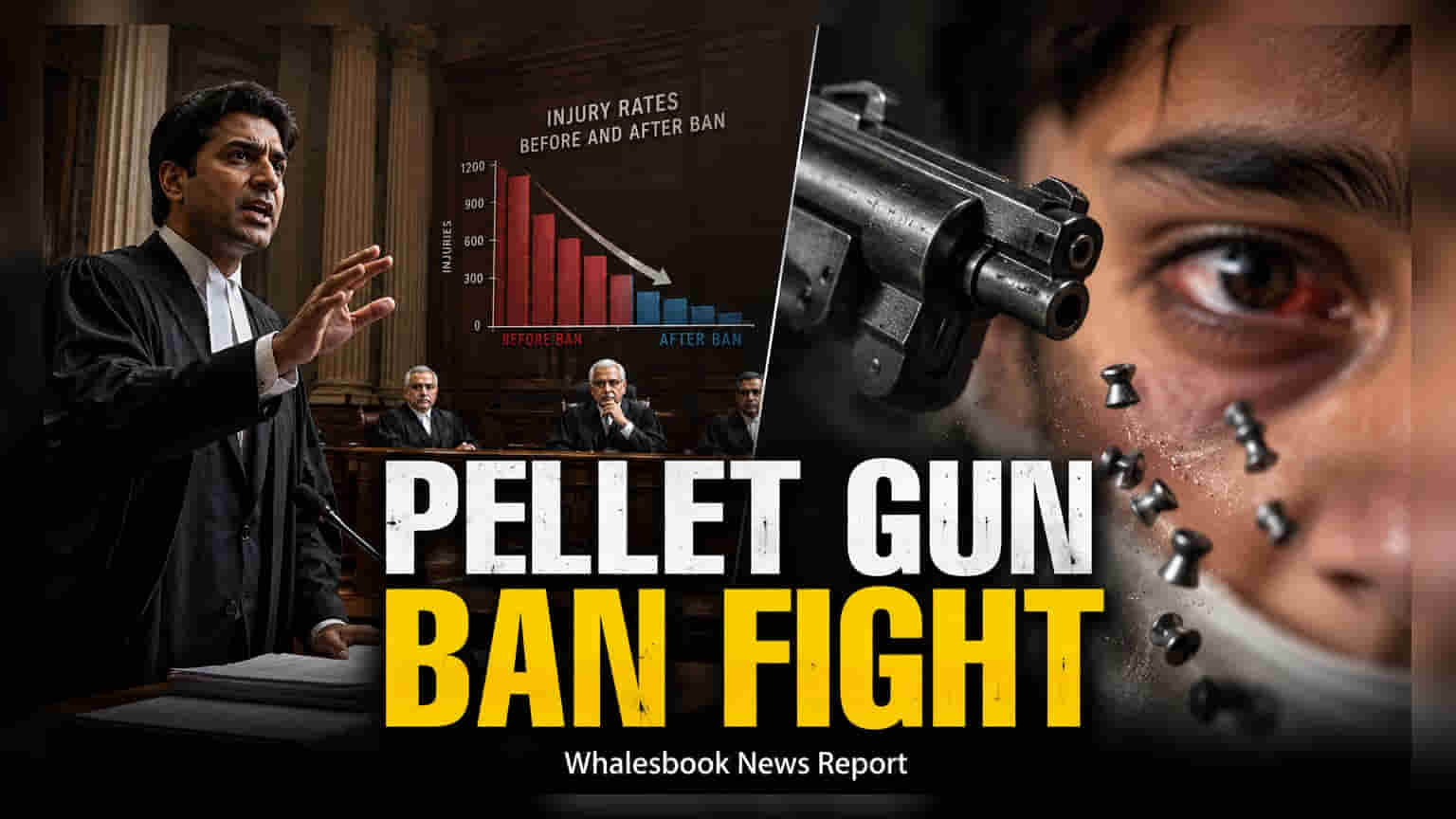
A petition filed in the Supreme Court seeks to ban pellet guns for civilian crowd control, citing concerns over permanent injuries and constitutional rights. The legal move follows reports of pellet gun use during protests in Delhi related to NEET examination irregularities. Investors and the public are monitoring the court's stance on these law enforcement tactics.
Detailed Coverage
A new legal challenge has been brought before the Supreme Court regarding the use of pellet guns by law enforcement agencies for managing crowds. The petition, which includes signatories such as a former Indian Police Service (IPS) officer and individuals who claim to be victims of past pellet injuries, requests that the court declare these weapons unconstitutional for use against civilians.
The core of the argument centers on whether the deployment of pellet guns aligns with constitutional principles of proportionality and necessity. The petitioners contend that the use of such weapons often leads to disproportionate harm and violates the fundamental rights of citizens during public protests. This legal action comes after allegations that pellet guns were used to disperse demonstrators in Delhi who were protesting against reported irregularities in the NEET examination process.
Concerns Over Public Safety and Injury Risks
Pellet guns are designed to discharge cartridges containing hundreds of small metal or rubber pellets at high speeds. While established operating procedures for security forces typically require personnel to aim below the waist and maintain a safe distance, the weapon’s inherent design carries a high risk of causing severe, permanent disabilities. Medical data and past reports have consistently highlighted that the most common and devastating injuries associated with these weapons involve damage to the eyes, often leading to partial or total vision loss. The petition argues that these risks are too high for civilian crowd management, even when protocols are followed.
Historical and Regulatory Context
This is not the first time the use of pellet guns has faced significant public and legal scrutiny in India. The weapons gained substantial attention during their use in Jammu and Kashmir, particularly following a surge in deployment in 2016. At that time, numerous human rights organizations and medical professionals raised alarms regarding the high number of eye injuries sustained by protesters. The criticism led to intense debates regarding the need for safer alternatives for crowd control. The current Supreme Court petition is part of a broader, ongoing discussion about modernizing policing techniques and moving toward non-lethal methods that carry a lower risk of permanent bodily harm.
Next Steps for Legal Review
The Supreme Court’s response to this petition will be the primary focus for stakeholders. The court will need to evaluate whether the current guidelines for the use of force by security personnel are sufficient or if a more restrictive approach is required. For the public and human rights advocates, the key monitorable will be any interim orders the court might issue regarding the immediate use of these weapons, as well as the eventual ruling on whether a nationwide ban or stricter regulation is necessary to prevent further injuries in civilian settings.