

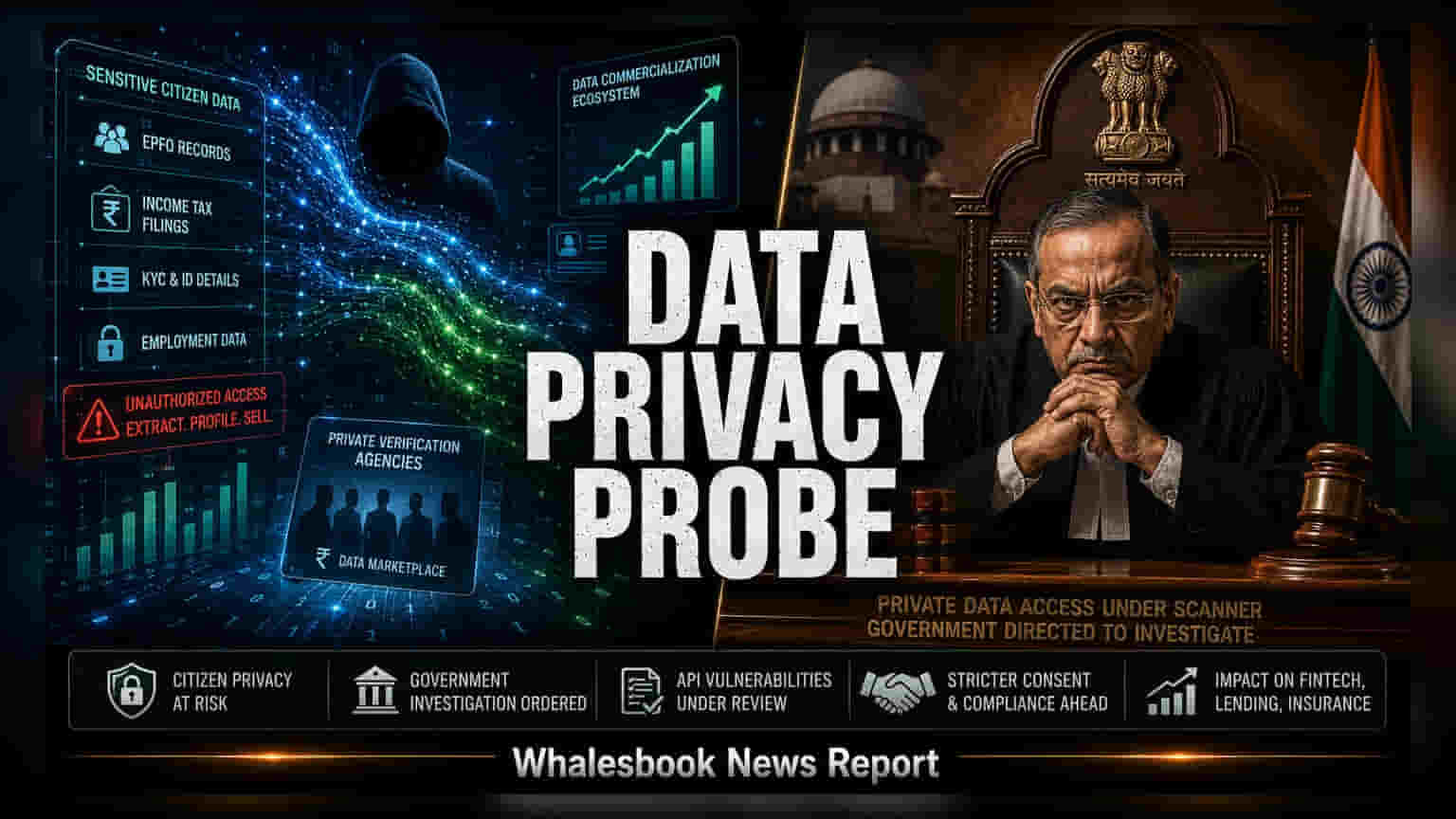
The Supreme Court has directed the government to investigate allegations that private firms are accessing and monetizing sensitive citizen data from EPFO and income tax records. This intervention could lead to tighter regulations for verification and fintech companies that rely on government-linked data APIs.
The Supreme Court of India has directed the Union government to investigate claims that private verification agencies are gaining unauthorized access to sensitive citizen data, including records from the Employees' Provident Fund Organisation (EPFO) and income tax filings. The court, led by Chief Justice Surya Kant, expressed deep concern over the existence of a commercial ecosystem that allegedly extracts, profiles, and sells such data without explicit citizen consent.
The court's intervention does not equate to a confirmed ruling on illegal activity by specific firms. Instead, it serves as a formal directive for the government to engage domain experts to identify these system vulnerabilities—often described as gaps in API access—and develop an effective strategy or "antidote" to protect citizen privacy. Authorities have been requested to review these claims and take necessary policy actions, ideally within a four-month timeframe.
Impact on Verification and Fintech Business Models
For investors, this development is significant because a wide range of companies relies on government-provided APIs for real-time verification. Industries such as financial services, lending, insurance, and background screening providers use these data streams to authenticate employment histories, income levels, and creditworthiness. Companies often integrate these checks into their workflows to streamline onboarding for loans, insurance policies, or corporate hiring.
If the government acts to tighten API access or mandates stricter consent protocols, it could directly affect these operational workflows. A shift toward more rigid compliance might increase the time and cost involved in data verification for private entities. Furthermore, firms that have built their business models on the frictionless access to these government-linked datasets may face challenges if those channels are restricted or subjected to more intense regulatory oversight.
Regulatory Risks to Monitor
The central risk for firms in this sector is the potential for sudden regulatory changes. If the government's investigation uncovers systemic abuse, it could lead to new directives governing how private entities interface with public databases. This might include mandatory multi-factor authentication for data retrieval, stricter audit trails, or limitations on the types of data that can be commercially exploited.
Investors tracking companies in the data verification, fintech, and HR-tech sectors should watch for the government’s findings in the coming months. The outcome of the mandated investigation could alter the compliance landscape, requiring companies to invest in more robust data governance frameworks to ensure they remain aligned with evolving privacy standards. The primary monitorable will be any change in the availability or terms of access for government APIs, which could influence the operational efficiency of firms heavily dependent on such verification services.