

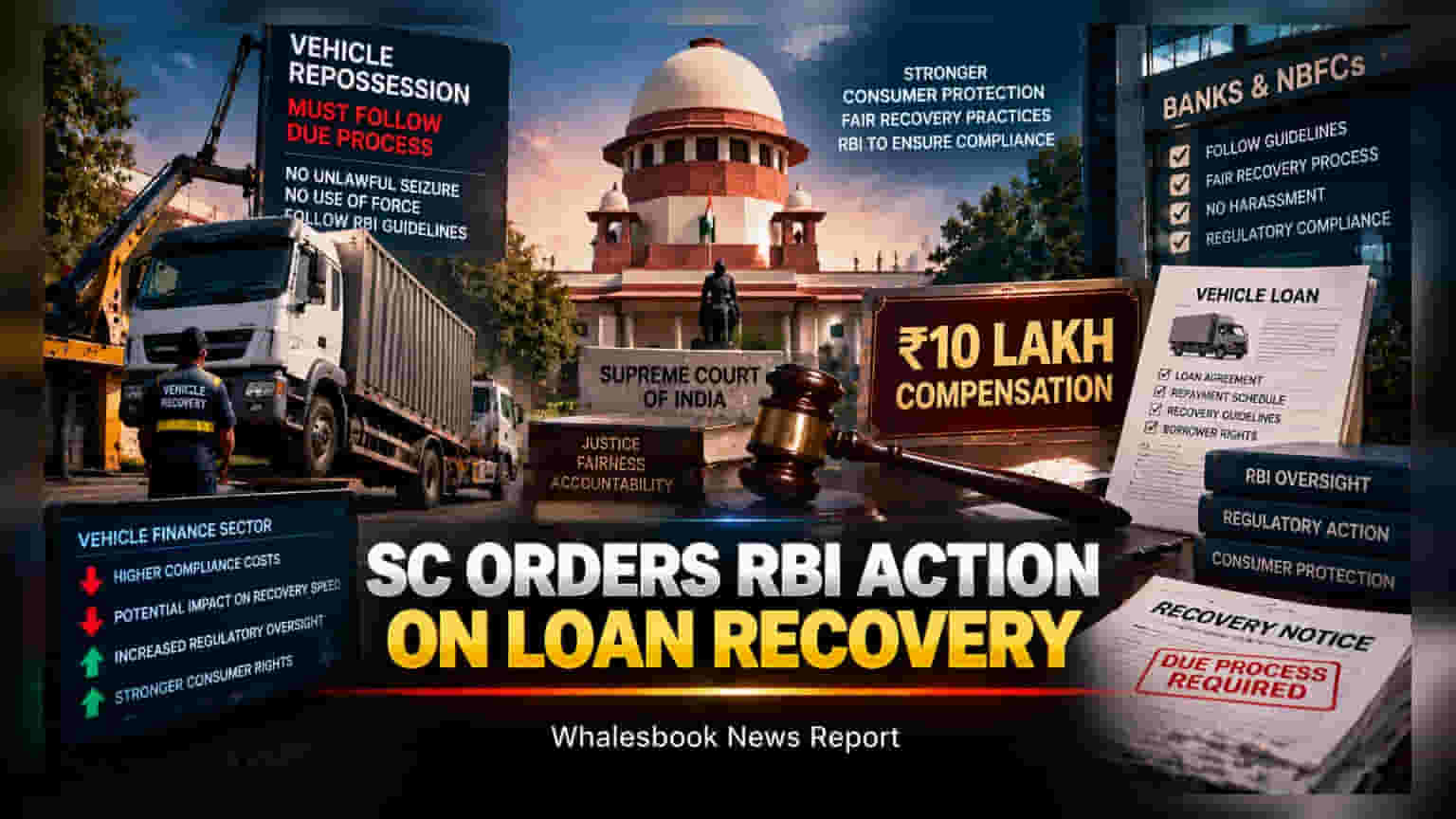
The Supreme Court has directed the RBI to ensure banks and NBFCs strictly follow vehicle repossession guidelines following a case involving Cholamandalam Investment and Finance Company. The lender was ordered to pay compensation for improper seizure, highlighting rising regulatory risks for vehicle lenders. This ruling may lead to tighter operational norms, potentially impacting recovery timelines and costs for companies in the vehicle finance sector.
The Supreme Court on September 16, 2026, issued a landmark order directing the Reserve Bank of India to take effective measures to ensure banks and non-banking financial companies strictly adhere to existing vehicle repossession guidelines. The ruling came in a case involving Cholamandalam Investment and Finance Company, which was ordered to refund ₹4.5 lakh and pay ₹10 lakh in compensation to a borrower after a commercial vehicle was seized without following due legal process. The court set aside an earlier high court judgment that had dismissed the borrower’s plea, emphasizing that contractual rights do not authorize lenders to bypass regulatory protections.
For investors in the vehicle finance sector, this ruling signals a shift toward a stricter regulatory environment. The business model of many NBFCs and banks with large vehicle loan books depends on the ability to repossess and sell assets quickly when borrowers default. The Supreme Court has effectively narrowed the scope of self-help repossession clauses, stating that lenders cannot use force or methods that circumvent established procedures, even if the loan agreement allows for it.
From a financial perspective, the most important investor monitorable is the impact on collection efficiency and operational costs. If lenders are required to move toward more formal, time-consuming, or court-led recovery processes to ensure compliance with the court’s mandate, it could slow down the resolution of bad loans. A potential increase in operational expenses to upgrade recovery protocols and manage compliance risks may also affect the bottom line of companies heavily exposed to the vehicle finance market.
This development puts the spotlight on the recovery practices of the entire sector. While the court acknowledged that lenders have a right to recover financed assets, it emphasized that this must be done with strict regard for law. Investors may want to look for management commentary from major vehicle lenders in upcoming quarters to understand if there is a strategic shift in their collection strategies or if they anticipate any changes to their cost structures or asset recovery timelines. The directive to the RBI to secure genuine compliance suggests that lenders should expect heightened oversight of their recovery agents and repossession activities in the near future.