

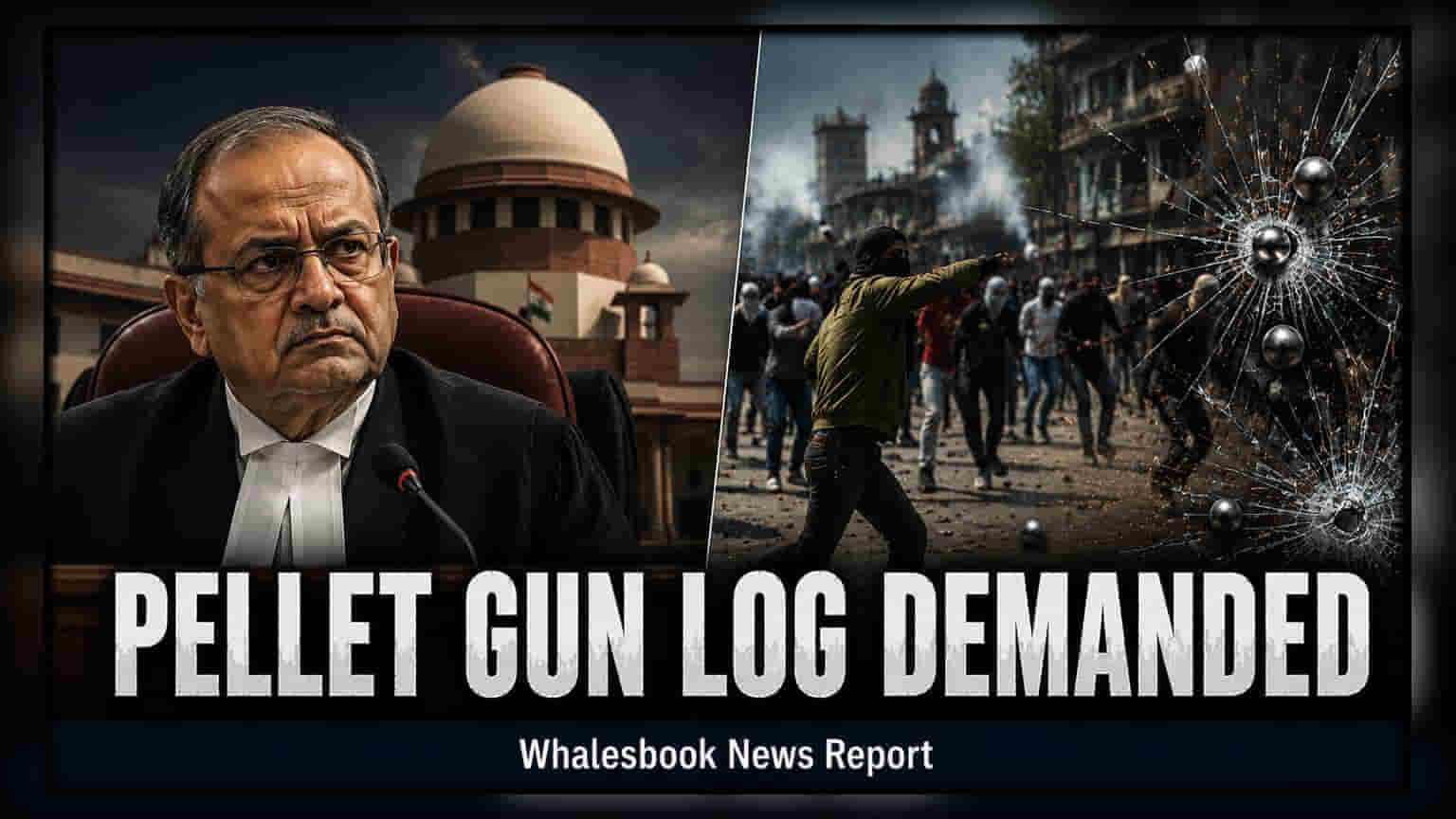
The Supreme Court has directed the Central government to preserve the ammunition records of the Rapid Action Force used during recent NEET protests. The court is evaluating a plea to ban metallic pellet guns in civilian crowds while ensuring medical care for the injured.
The Supreme Court of India has issued a directive to the Central government to secure and preserve the ammunition log of the Rapid Action Force (RAF). This order follows the deployment of security personnel at Jantar Mantar during protests regarding alleged irregularities in the National Eligibility cum Entrance Test (NEET) examination.
Judicial Review of Crowd Control Measures
A bench led by Chief Justice Surya Kant, along with Justices Joymalya Bagchi and V Mohana, is currently examining a Public Interest Litigation (PIL) filed by former Central Information Commissioner Yashovardhan Azad and two individuals who reported sustaining injuries during the demonstrations. The plea challenges the use of metallic pellet guns against civilian assemblies, arguing that such equipment does not align with constitutional standards regarding the proportionate use of force.
While the petitioners seek a total ban on the use of these weapons, the court has taken note of existing guidelines from the Bureau of Police Research and Development. These guidelines generally permit the use of pellet guns only in exceptional law and order situations. The court is now in the process of scrutinizing the specific circumstances under which these weapons were deployed during the July 20 protests.
Healthcare Directives and Legal Next Steps
In addition to the procedural orders regarding ammunition logs, the court has directed the Delhi government to provide comprehensive medical treatment to those injured during the unrest. The petitioners are also seeking rehabilitation and financial compensation for the affected individuals, as they contest the necessity of using such force in a protest environment.
Solicitor General Tushar Mehta appeared on behalf of the Central government to present the state's position. As the proceedings continue, the court is expected to further examine the official records provided by the authorities to determine if the use of force was consistent with legal protocols. Investors and stakeholders in the legal and public policy space will likely track the outcome of this case, as it may influence future judicial interpretations regarding standard operating procedures for crowd control and the accountability of security agencies in civilian settings.