

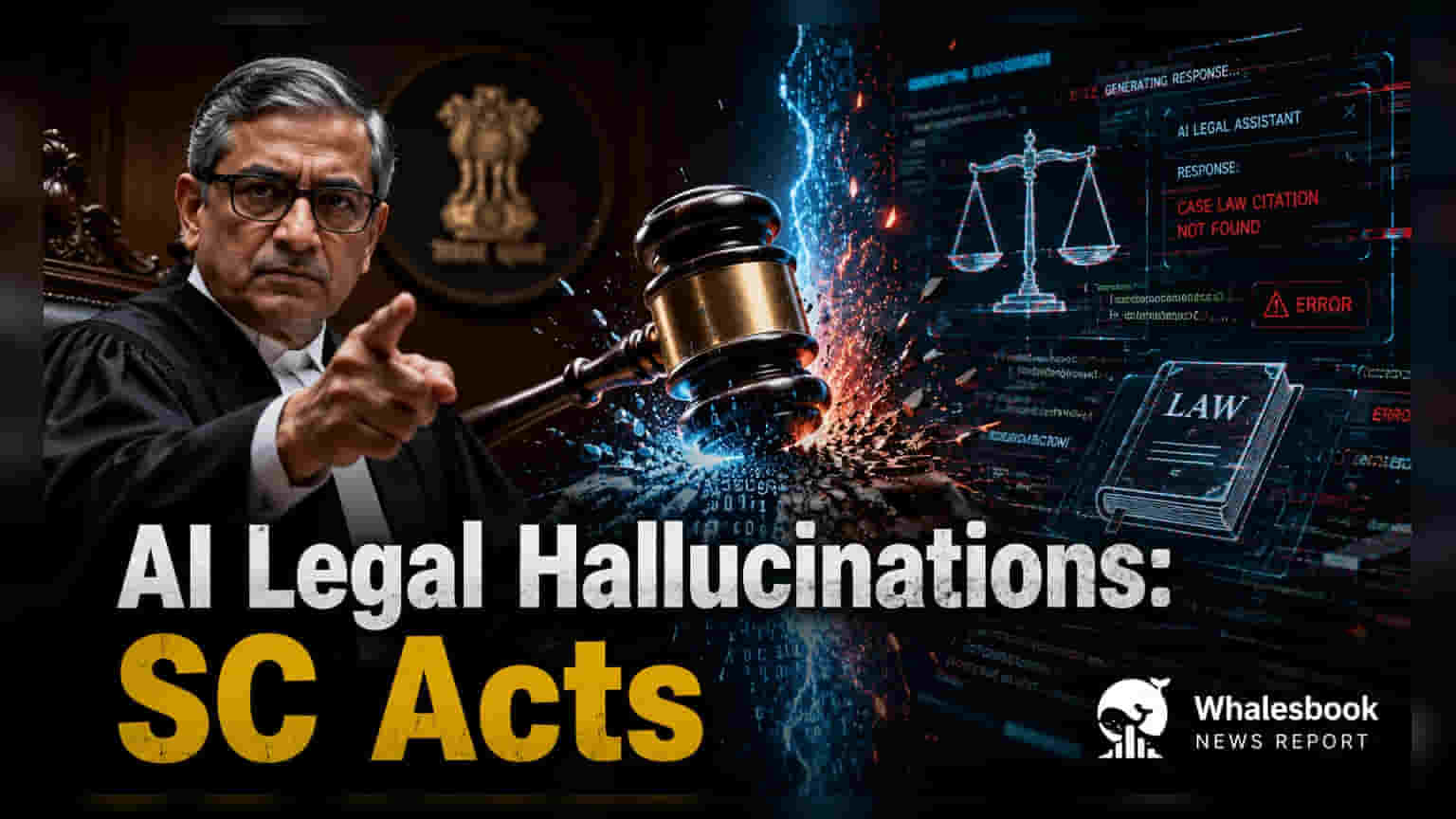
The Supreme Court has mandated the Bar Council of India to create AI guidelines after rejecting tribunal rulings based on fabricated legal precedents. This move addresses the risks of AI-hallucinated case laws in judicial proceedings. The court emphasized that lawyers remain fully accountable for verifying all information submitted to the judiciary, regardless of the technology used.
The Supreme Court of India has issued a directive to the Bar Council of India to establish formal guidelines regarding the use of artificial intelligence by legal professionals. This order follows a critical observation by the apex court, which identified that certain insolvency proceedings at the National Company Law Tribunal and the National Company Law Appellate Tribunal relied on non-existent, AI-generated case laws. The Court has adopted a zero-tolerance policy toward the citation of such fictitious precedents in legal arguments.
Accountability in the AI Era
While the court identified the presentation of these hallucinated laws as professional misconduct, it did not pursue contempt charges in these specific instances. Instead, the bench categorized the reliance on these fabricated judgments by lower tribunals as a lapse. This decision highlights the current lack of a formal regulatory framework for generative AI within the Indian legal system. By tasking the Bar Council of India with this role, the court is seeking to bridge the gap between rapidly advancing technology and the professional obligations of legal practitioners.
Global Standards and Verification Risks
This development mirrors regulatory shifts in other major economies where the risks of AI-generated content have already been addressed. In the United Kingdom, courts have cautioned that tools like ChatGPT are not reliable replacements for traditional legal research and that all AI-generated output must be independently verified. Similarly, the United States has seen judicial action, including financial penalties, for lawyers who submitted briefs containing fake authorities created by AI tools. These international cases underscore a common principle: the duty to ensure accuracy and authenticity rests entirely with the human legal representative, not the software.
Impact on Legal Processes
For the Indian legal system and its participants, the focus is shifting toward rigorous verification. Existing laws already provide for strict penalties, including charges of perjury or contempt, if false materials are knowingly presented to a court. The forthcoming guidelines from the Bar Council are expected to formalize these obligations. Investors and market participants involved in corporate litigation or insolvency processes should note that this push for accuracy could influence how evidence and case research are presented in future tribunal hearings. The main monitorable for the industry will be the finalization of these norms, which will dictate how technology can be safely integrated into professional legal work without compromising the integrity of judicial outcomes.