

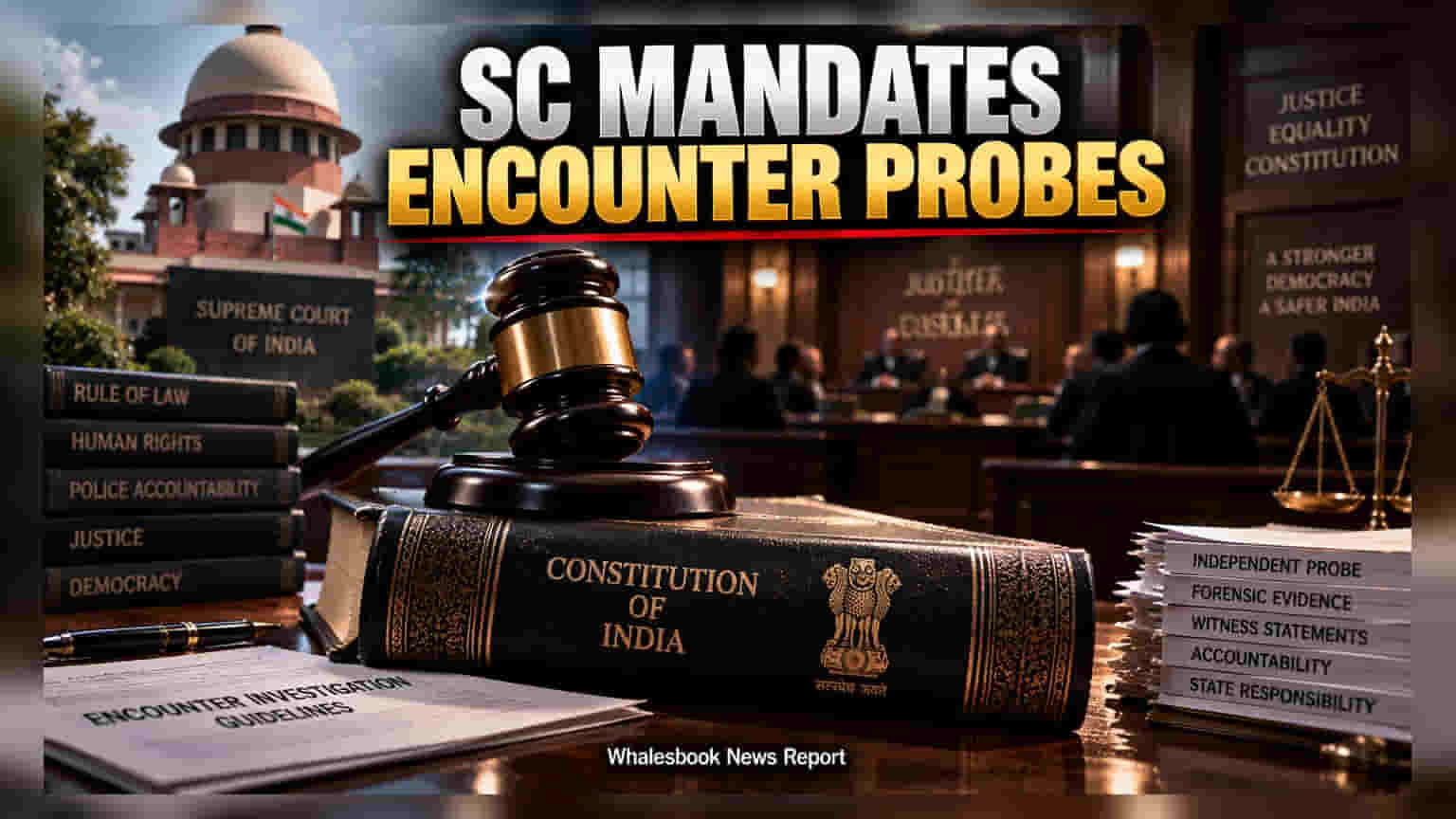
The Supreme Court of India has ordered strict independent scrutiny for all police encounter deaths, reinforcing the 16-point guidelines from the PUCL case. For investors, the ruling highlights the judicial focus on institutional accountability and the rule of law, which are critical foundations for a stable business environment and regulatory predictability.
The Supreme Court of India has mandated that all police encounters resulting in death must undergo rigorous, independent legal investigations. This directive reinforces the judiciary's role in ensuring state power is exercised within the bounds of constitutional mandates. By requiring strict adherence to the 16-point guidelines previously established in the People’s Union for Civil Liberties versus State of Maharashtra case, the court has signaled that administrative accountability cannot be bypassed by executive discretion.
The Assam Precedent
The court’s intervention was particularly highlighted by the case of Arif Md. Yeasin Jwadder versus the State of Assam. Records presented indicated 171 such incidents occurring between May 2021 and August 2022, which resulted in 56 deaths and 145 injuries. The Supreme Court has directed the Assam Human Rights Commission to conduct time-bound investigations into these events. This development underscores the judiciary's intent to monitor procedural lapses and ensure that the established legal framework for law enforcement is followed consistently across states.
Impact on Institutional Stability
For the investment community, the functioning of the criminal justice system is a key indicator of institutional health. Official data from the National Human Rights Commission shows that over 800 encounter-related cases were registered nationwide between 2016 and 2022, with a low number of convictions for officials. A stable and predictable rule of law is essential for a robust business environment. When the judiciary enforces strict compliance with legal procedures, it serves to strengthen institutional trust, which in turn supports long-term regulatory and social stability.
Investors often assess governance and social risks within a country, as these factors influence the overall stability of the operating environment. Persistent gaps in institutional mechanisms or a perceived lack of oversight in sensitive areas can create uncertainty. By reasserting the requirement for independent forensic and judicial oversight, the court aims to mitigate potential governance issues that could arise from unchecked executive power.
The most important monitorable for stakeholders is how these judicial directives are implemented at the state level. Compliance with these mandates will be crucial in shaping the future of administrative accountability. Investors may track whether these legal interventions lead to improved transparency in state institutions, as this will influence the long-term reliability of the domestic legal and regulatory landscape.