

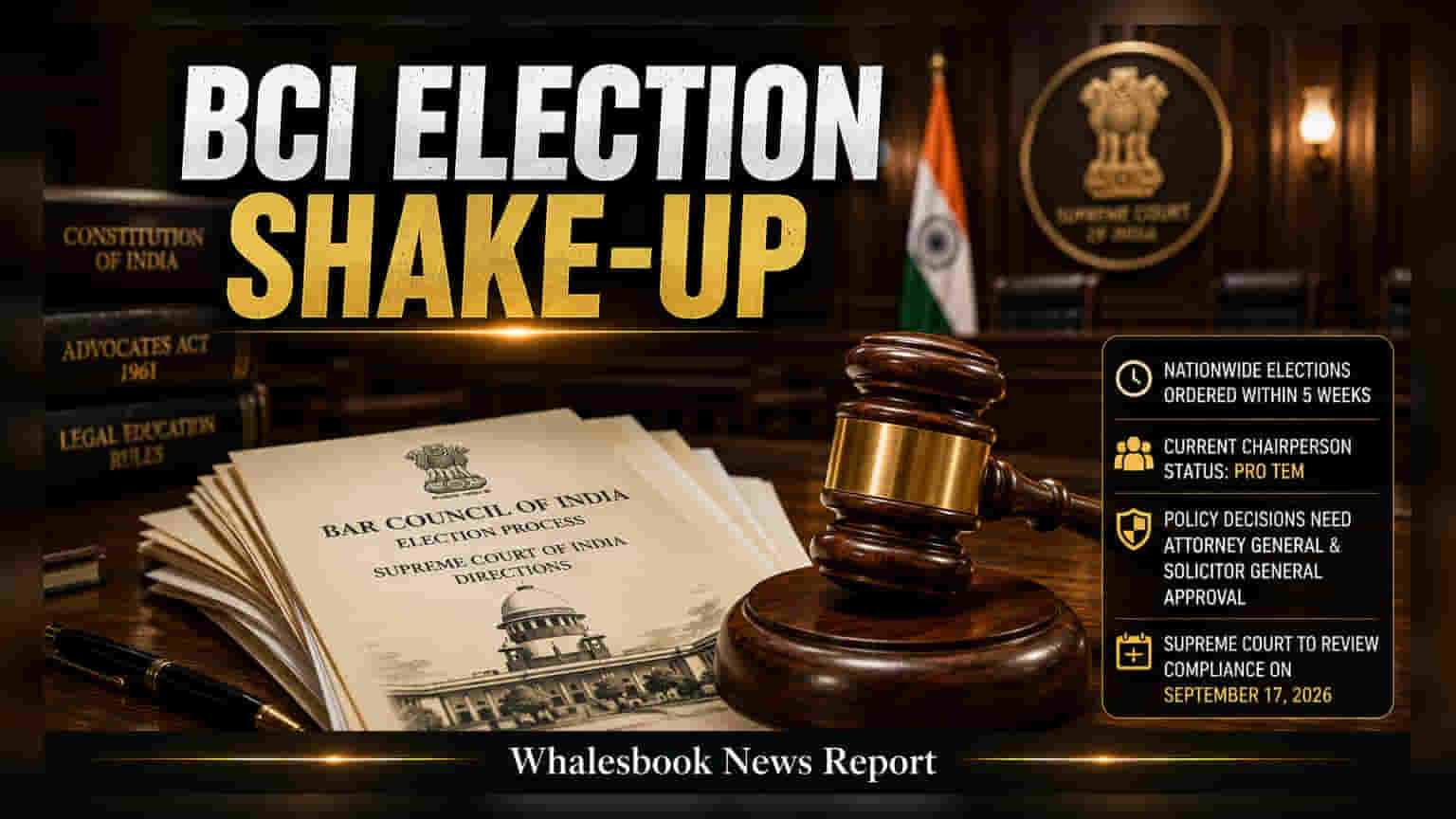
The Supreme Court of India has ordered the Bar Council of India to conduct elections within five weeks, ending the indefinite tenure extension of the current chairperson. Manan Kumar Mishra will now serve in a temporary 'pro tem' capacity with restricted administrative powers. Furthermore, any significant policy decisions must now receive the mandatory approval of the Attorney General and Solicitor General of India.
The Supreme Court of India has mandated a time-bound restructuring of the Bar Council of India (BCI) following legal challenges regarding the tenure of its leadership. In a significant ruling, the bench led by the Chief Justice of India has directed the body to complete nationwide elections within five weeks to restore democratic processes within the institution.
The court clarified that the status of the current chairperson, Manan Kumar Mishra, is officially 'pro tem' or temporary. This decision effectively ends the legal debate over his previously extended term, which was slated to continue until 2030. Under the new directive, the chairperson’s authority is now strictly limited to essential day-to-day administrative tasks. This restriction prevents the office from making unilateral or long-term policy changes while the electoral process is underway.
To ensure institutional stability during this transition, the court has introduced a mandatory oversight mechanism. Any significant policy decisions taken by the BCI during this interim period must now receive the explicit involvement and consent of the Attorney General of India and the Solicitor General of India. This intervention is intended to ensure transparency and accountability within the apex regulatory body for legal practice and education.
The electoral roadmap is set to proceed under judicial supervision. The court has directed the Chief Justices of all High Courts to appoint two female members to their respective State Bar Councils within a two-week window. Following these appointments, State Bar Councils have one week to finalize their internal compositions. Finally, a three-week period has been allocated for the election of new chairs and representatives, who will then constitute the new BCI body.
The Supreme Court has scheduled a compliance review for September 17, 2026, to monitor the progress of these electoral mandates. This intervention is expected to have a lasting impact on the legal fraternity by addressing long-standing concerns regarding leadership continuity, democratic governance, and the regulatory oversight of legal professionals across the country.