

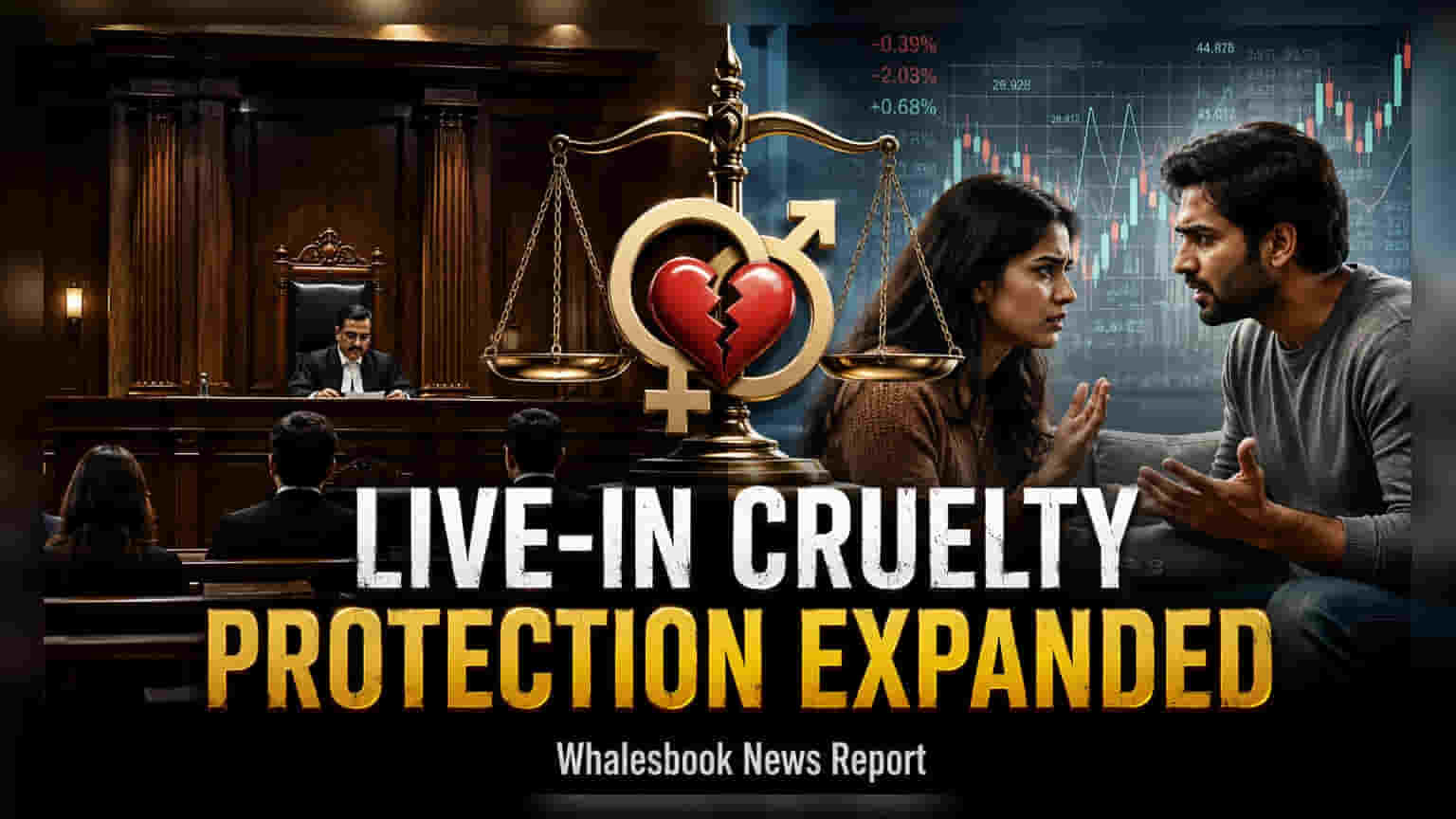
The Supreme Court ruled that women in long-term, marriage-like live-in relationships can seek legal protection from cruelty under Section 498A of the IPC. This judgment aims to provide domestic abuse safeguards beyond formal marriages, though it places the burden of proof on the individual to establish the nature of the relationship.
The Supreme Court has issued a significant legal update regarding the application of Section 498A of the Indian Penal Code, which deals with domestic cruelty. In a recent judgment, the court clarified that women in stable, long-term live-in relationships that share characteristics similar to a marriage can now seek legal protection against harassment and abuse under this section. Previously, this protection was generally understood to be reserved strictly for legally married women.
Expanding Legal Safeguards for Domestic Relationships
The apex court observed that the primary intent of Section 498A is to protect women from domestic cruelty, regardless of their specific marital status. The bench noted that abuse and harassment can occur within various types of shared domestic setups and that the law should reflect the changing social realities of urban India, where live-in arrangements are becoming more common. By expanding this interpretation, the court aims to ensure that the legal framework for domestic protection remains relevant to modern societal structures.
Defining the Scope of the Ruling
While this judgment expands the reach of domestic violence protections, the court established clear boundaries for its application. This broadened interpretation is restricted specifically to proceedings under Section 498A of the IPC. It does not automatically grant the same status across all criminal or civil laws. Furthermore, the ruling is not a blanket inclusion for all romantic relationships. It is specifically intended for consensual, long-term partnerships between adults that demonstrate a commitment and domestic arrangement equivalent to marriage. Casual encounters or short-term romantic liaisons do not fall under this extended protection.
Requirements for Legal Recourse
For those seeking protection under this expanded scope, the judgment emphasizes a clear burden of proof. The individual seeking relief must demonstrate that their live-in relationship was truly in the nature of marriage. This involves showing evidence of shared domestic life and long-term commitment. The court’s focus on robust documentation and proof is designed to prevent the misuse of the provision while providing a shield for those in genuine, marriage-like partnerships. This ruling highlights the necessity for individuals in such arrangements to maintain clarity regarding their domestic commitments, as these factors will be central to any future legal considerations regarding domestic abuse claims.