

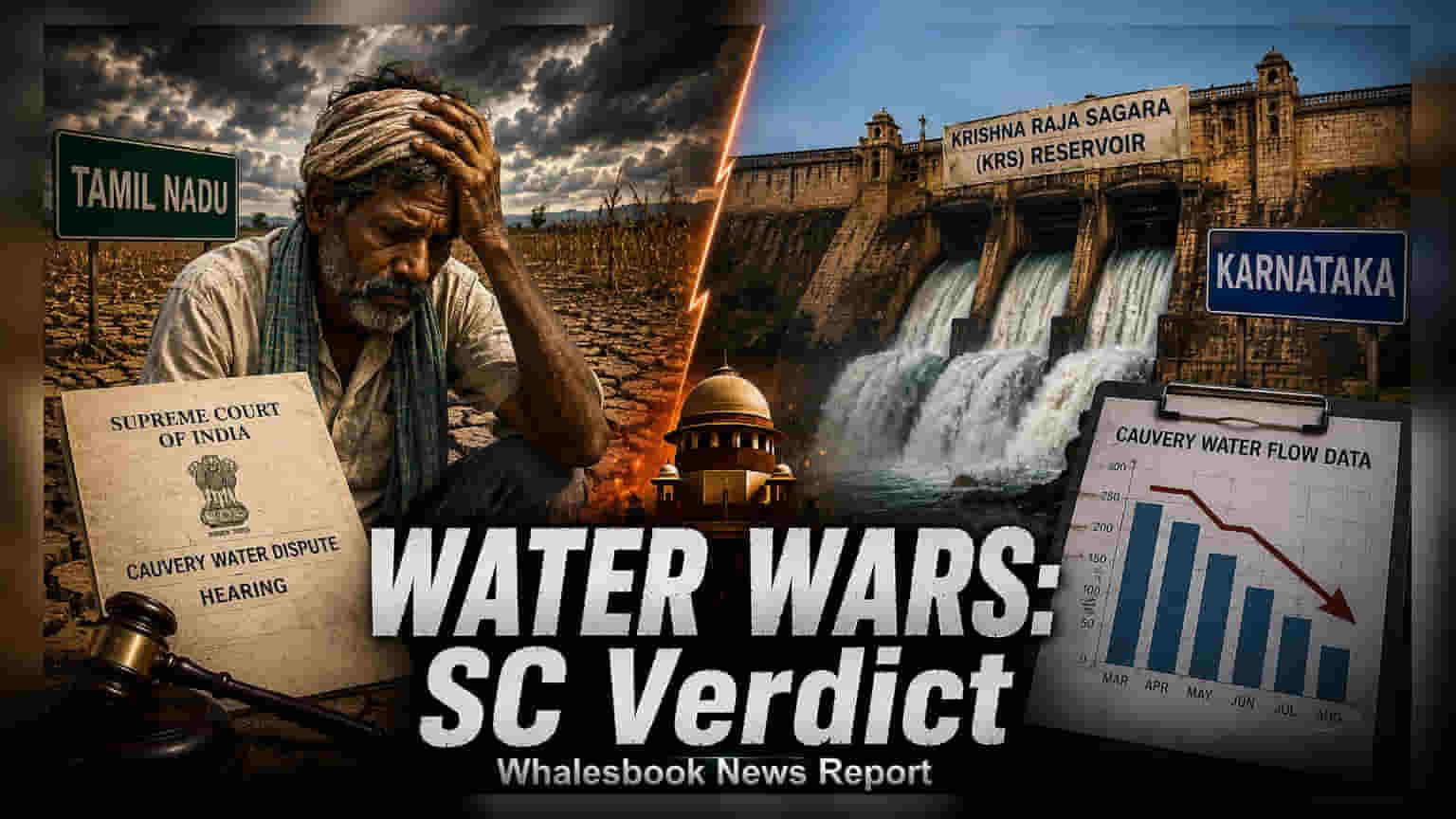
On August 24, 2026, the Supreme Court directed the Tamil Nadu government to take its grievances regarding Cauvery water sharing to the Cauvery Water Management Authority (CWMA). The court observed that Karnataka has acted in line with existing directives. The next hearing is scheduled for August 31.
The Supreme Court of India on Monday directed the Tamil Nadu government to approach the Cauvery Water Management Authority (CWMA) to address its concerns regarding the release of Cauvery river water. The matter, which involves a long-standing water-sharing dispute between Tamil Nadu and Karnataka, was heard by a bench comprising Justices Vikram Nath and Sandeep Mehta.
During the hearing, the legal team representing Tamil Nadu argued that the state was not receiving its fair share of water. However, the bench noted that Karnataka appeared to have complied with the directives previously issued by the CWMA. The court advised the Tamil Nadu government to present its specific grievances before the CWMA, which is the statutory body responsible for managing water sharing and monitoring the implementation of the Cauvery Water Management Scheme.
This legal development is significant for the regional economy, as the Cauvery river is a primary source of irrigation and water supply for parts of both states. Agricultural output in the region is often sensitive to water availability. While the dispute remains a complex interstate administrative and legal issue, it serves as a monitorable for stakeholders involved in the agricultural supply chain and those tracking the regional economic climate in Southern India.
The court has scheduled the next hearing for August 31, 2026. The key monitorable for the immediate future will be the discussions and any subsequent decisions made by the CWMA regarding the water release schedules.
It is important to note that this is an interstate governance and legal matter. There are no direct corporate or stock market risks associated with this specific event. Investors and market participants should view this as an administrative development rather than one that impacts the operations or financial standing of listed companies.