 Whalesbook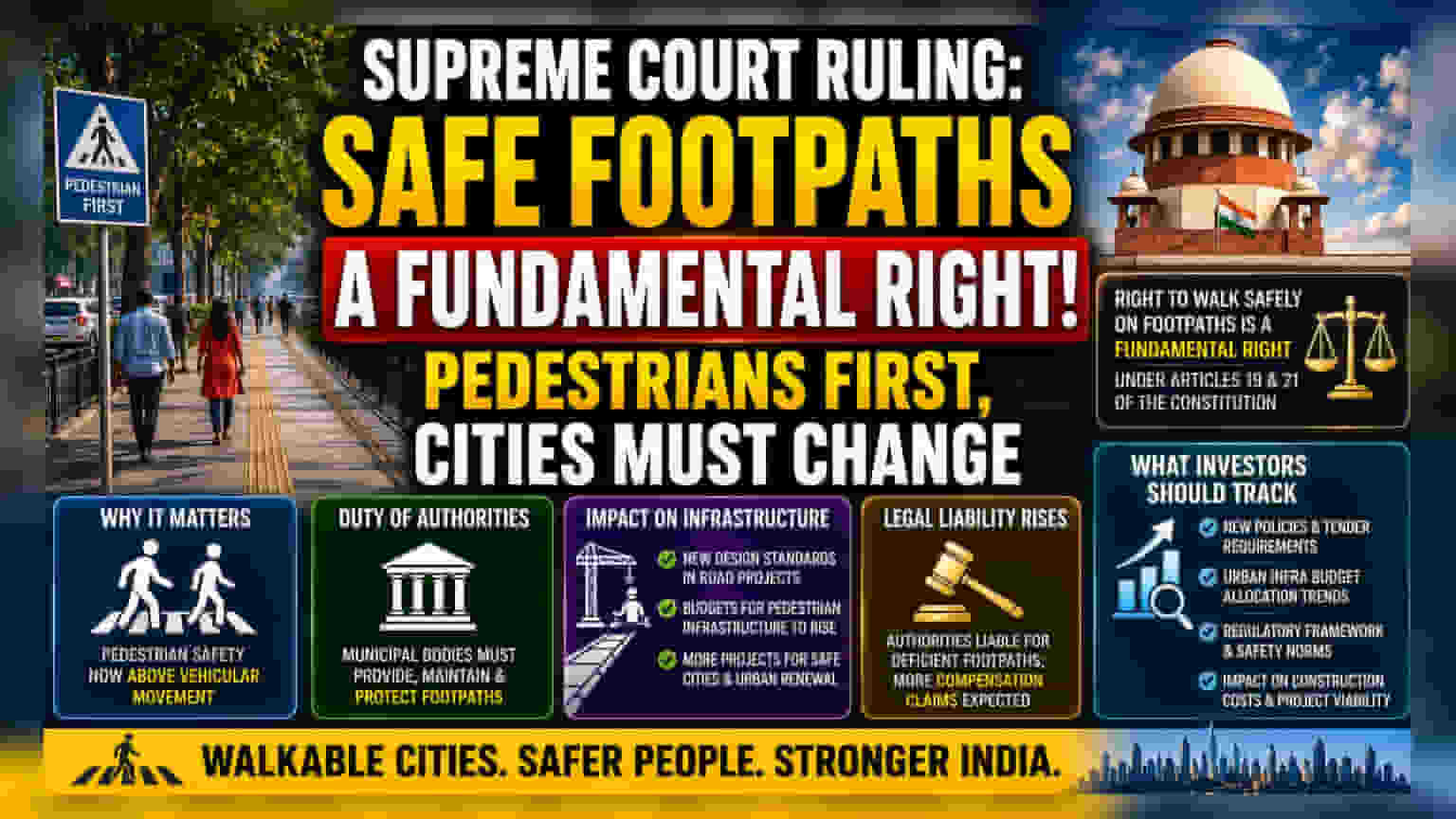
The Supreme Court has ruled that safe, demarcated footpaths are a fundamental right under the Constitution, prioritizing pedestrian safety over vehicular movement. This landmark decision mandates that local bodies and urban authorities maintain proper infrastructure. For investors, this shift may lead to stricter design requirements in future road projects, potentially impacting infrastructure budgets, compliance standards, and urban planning strategies across the country.
What Happened
The Supreme Court of India has declared that the right to walk on safe, demarcated footpaths is a fundamental right. This ruling connects the ability to walk safely to the freedom of movement and personal liberty guaranteed under Articles 19 and 21 of the Constitution. The Court emphasized that public authorities, including municipal corporations, municipalities, panchayats, and urban development bodies, have a legal duty to provide and maintain proper footpaths. This right is now officially placed above the privilege of vehicular movement, marking a shift in how urban spaces should be governed.
Why It Matters for Infrastructure
Historically, Indian urban planning has been heavily focused on vehicle movement, often at the expense of pedestrian safety. The Court identified this as a "civilizational problem" and a significant deficit in current infrastructure. By categorizing pedestrian safety as a fundamental right, the judiciary has set a standard that could require a change in how roads and cities are designed. This implies that pedestrian pathways are no longer optional add-ons but a mandatory component of public infrastructure.
The Investor Angle
The ruling could influence the infrastructure and construction sectors in several ways. Companies involved in road construction, highway development, and urban infrastructure projects may face new, stricter design requirements in future tenders. Public authorities could now be required to allocate larger portions of their budgets toward pedestrian-friendly infrastructure, such as wider sidewalks, safe crossings, and better street lighting.
For investors in construction and engineering firms, this could mean that the cost of execution for road projects might rise as designs become more complex to accommodate these requirements. On the other hand, it may open new avenues for projects focused on urban renewal and safe city initiatives, as municipal bodies seek to comply with these new legal standards.
Potential Challenges and Legal Liability
The judgment creates a new channel for accountability. Because this is now a recognized right, citizens can seek legal remedies against authorities if pedestrian infrastructure is missing or dangerous. This could lead to an increase in compensation claims, as highlighted by the specific case in the ruling where the Court increased the compensation for a fatal accident caused by the absence of a footpath. For local municipal bodies, this creates a heightened risk of legal liability, which may force faster upgrades to public infrastructure.
What Investors Should Track Next
The most important monitorable for investors will be the reaction of state and central urban development ministries. Investors may want to watch for new policies, updated tender requirements, and budget allocations from local municipal bodies that reflect this shift toward pedestrian-friendly urban planning. Additionally, any move by the government to establish the regulatory framework suggested by the Supreme Court could lead to standardized safety norms across the country. Tracking how urban infrastructure budgets evolve to include these costs will be key to understanding the financial impact on the construction sector.

