 Whalesbook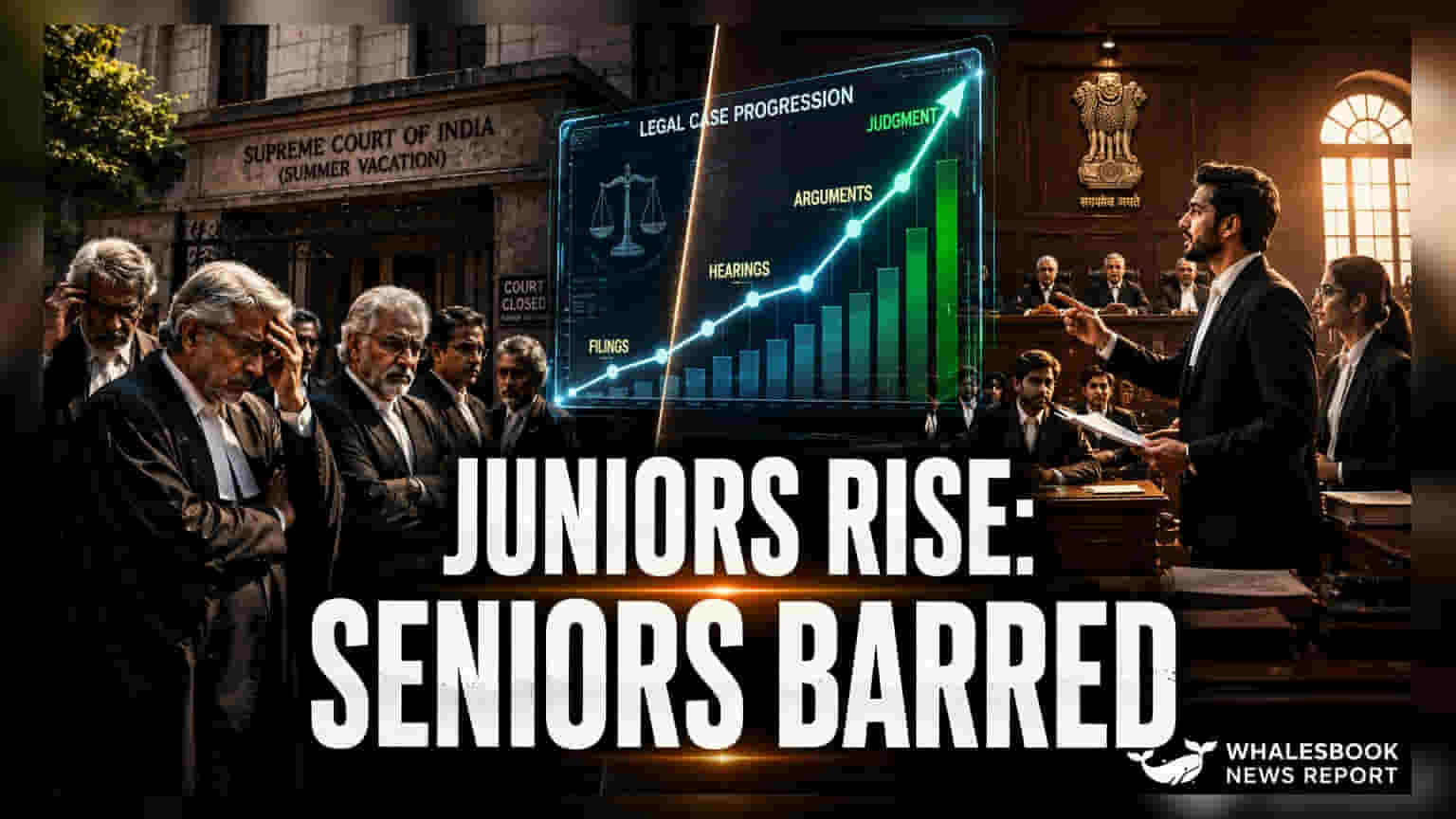


The Shift Toward Junior Representation
The Supreme Court’s tactical pivot toward excluding Senior Advocates from initial case mentions during the summer recess signals a broader effort to rebalance the experience gap within the bar. By mandating that only advocates-on-record handle these mentions, the court is effectively decentralizing the influence of elite legal counsel during a period traditionally defined by a skeleton crew of judges. This procedural adjustment, enforced by benches led by Justices Vikram Nath, PB Varale, Sanjay Karol, and Augustine George Masih, removes the customary reliance on seniority to expedite urgent filings.
Procedural Bottlenecks and Judicial Authority
While the bench maintains that the policy is intended to empower younger legal practitioners, the operational implications are significant. The refusal to permit Senior Counsel to flag urgent matters creates a structural barrier for complex litigations that often require the specific expertise and historical context that Senior Advocates provide. By directing counsel to approach the Chief Justice of India for exceptional circumstances, the court is centralizing administrative control over its vacation docket. This move limits the discretion of individual vacation benches and necessitates a more rigorous, top-down approval process for matters requiring immediate intervention.
The Structural Risk of Restricted Access
Critics of this policy argue that restricting senior representation could inadvertently delay the adjudication of time-sensitive matters. In the high-stakes environment of apex court litigation, senior legal professionals often navigate intricate procedural nuances that junior practitioners may not be fully equipped to handle. The court’s insistence that this practice has been standard for the past three years suggests a firm commitment to this inclusivity model, regardless of the potential friction it introduces into the filing process. There is a looming concern that if urgent matters are not filtered effectively by the most experienced legal minds, the court could see an accumulation of procedural errors or a bottleneck of cases that remain unaddressed until the court resumes full operation in mid-July.
Future Outlook and Administrative Oversight
The long-term efficacy of this strategy depends on the ability of advocates-on-record to maintain the flow of judicial business without the professional guardrails typically provided by Senior Counsel. As the judiciary moves to standardize this vacation-period protocol, the focus will likely remain on whether this democratic approach to courtroom participation enhances or hinders the speed of justice. With 23 benches tasked with managing the workload, the administrative burden on the Chief Justice’s office to resolve contested mentions will likely serve as the ultimate barometer for the success or failure of this restrictive policy.