 Whalesbook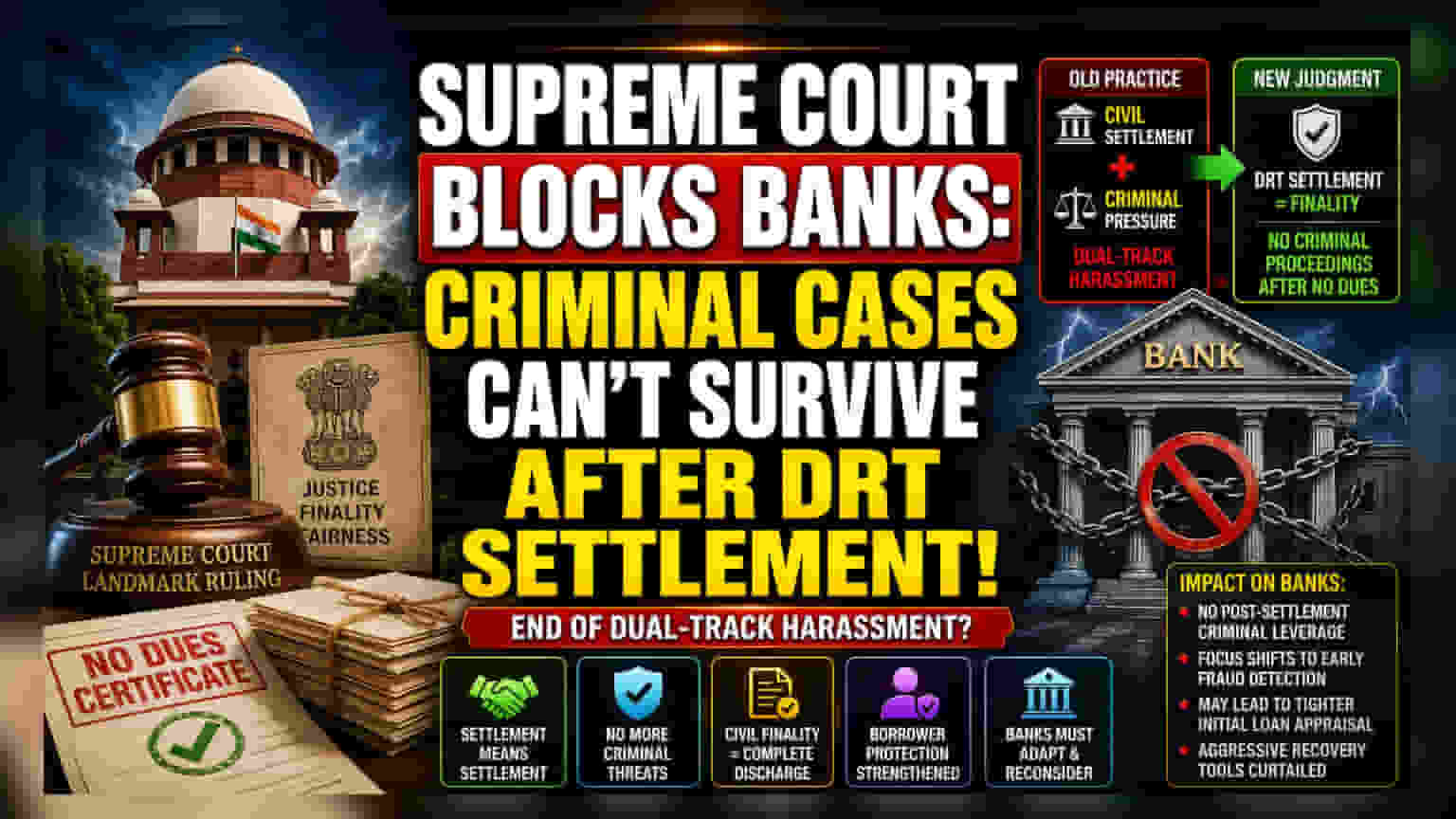


The Shift in Judicial Precedence
The judiciary has effectively erected a barrier against the common banking practice of using criminal complaints to extract value after a civil dispute has been legally resolved. By ruling that proceedings under the Indian Penal Code, such as those involving allegations of cheating or document forgery, must collapse following a Debt Recovery Tribunal (DRT) sanctioned compromise, the Supreme Court is shifting the power dynamic back toward settlement finality. This decision signals that banks cannot maintain a dual-track strategy—accepting civil payouts while keeping the threat of criminal prosecution alive for years post-settlement.
The Erosion of Bank Immunity
Historically, financial institutions have utilized criminal filings as a coercive secondary mechanism, often initiating action long after a borrower has satisfied DRT requirements. The court’s intervention targets this exact behavior, characterizing the attempt to revive allegations after a no-dues certificate has been issued as a bad-faith effort to circumvent established civil agreements. For banking entities, this creates a newfound constraint: once a haircut is accepted in the DRT, the slate is effectively wiped clean regarding potential criminal liability for the underlying credit facility. This creates a significant precedent for non-performing asset (NPA) management, forcing banks to consolidate their evidentiary claims during the civil settlement process rather than hedging with subsequent criminal complaints.
Risk Factors and Financial Exposure
While this ruling provides relief to distressed borrowers, it introduces a complex risk profile for bank balance sheets. Investors should monitor how this impacts the aggressive recovery tactics often employed by public sector banks. If institutions are barred from pursuing criminal repercussions post-settlement, they may become more rigid in their initial DRT negotiations, potentially leading to fewer compromises and more protracted litigation. Furthermore, this ruling risks creating an environment where borrowers feel emboldened to engage in aggressive credit-seeking behavior, knowing that the ultimate settlement at the DRT acts as a comprehensive legal shield against future prosecution.
Institutional Outlook and Regulatory Tension
Analysts are watching for how this intersects with existing insolvency laws. The decision suggests that the judiciary views banking disputes as inherently civil, which may lead to reduced efficacy for specialized investigative bodies like the CBI when intervening in debt default matters. Moving forward, the focus will likely shift toward higher-standard documentation during the initial loan appraisal, as banks will lose their 'safety net' of post-settlement criminal litigation to recover losses attributed to fraud. This effectively pushes the responsibility of fraud detection to the point of credit disbursement rather than collection.