 Whalesbook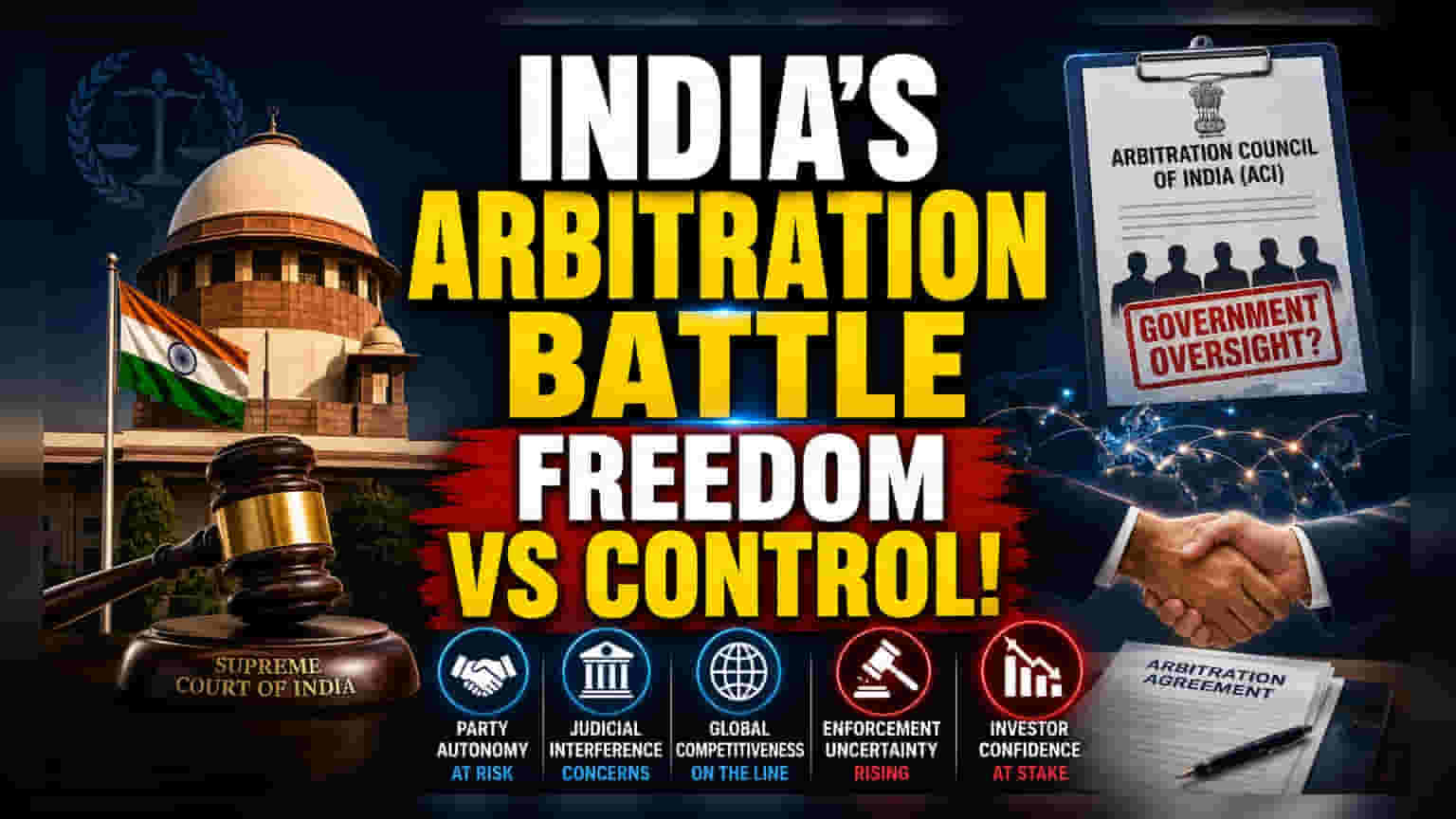


The Constitutional Crossroads
The Supreme Court’s recent notice to the Union government regarding the Arbitration Council of India exposes a deep-seated friction between centralized regulatory ambition and the flexible nature of private commercial law. By questioning how the ACI is formed and managed, the judiciary is essentially forcing a confrontation over the interpretation of the 2019 amendments to the Arbitration and Conciliation Act. The dispute centers on whether a government-appointed body can or should exert control over trade associations that administer private, contractual arbitration services. This judicial intervention is not merely procedural; it addresses whether the state can dictate the standards for private forums chosen by corporations, thereby threatening the principle of party autonomy that remains the bedrock of international commercial arbitration.
The Competitive Disadvantage
India currently lags behind mature jurisdictions like Singapore and the United Kingdom, where the efficacy of an arbitration seat relies on speed and minimal judicial interference. The imposition of a rigid, government-mandated regulatory framework threatens to invert this model. If India’s legal regime forces every arbitral institution—regardless of its size or specialization—to comply with standardized, government-heavy mandates, it will likely create a compliance burden that stifles boutique and specialized arbitration centers. Investors and global entities favor jurisdictions where they can rely on established, predictable rules rather than shifting bureaucratic oversight. By potentially creating a bottleneck at the ACI, India risks signaling to the international business community that its arbitration environment is becoming more political than professional.
Structural Weaknesses and Risk Factors
The move toward increased centralization invites significant risks for market participants who rely on arbitration clauses in commercial contracts. If the government succeeds in broadly defining institutional oversight, companies may find their chosen forums invalidated or subjected to external administrative pressures, complicating the enforcement of awards. Furthermore, the 2024 draft amendments suggest an attempt to carve out specific functions for regulation, yet this latest legal challenge indicates that the statutory definitions remain far too opaque. Should the Supreme Court side with the petitioners seeking broader oversight, the legal uncertainty will likely lead to a surge in challenges to arbitration awards, as losing parties use regulatory ambiguity as a new tactic to delay finality in litigation. This creates an environment of instability that investors consistently penalize, particularly in high-stakes infrastructure and cross-border commercial disputes.
The Path Forward
Market participants are now closely monitoring the Union government’s response to the court’s inquiry, as it will determine the extent of the ACI’s reach. While the government maintains that the ACI is necessary for quality control, the broader legal community remains skeptical of any framework that limits the choice of institutions. The eventual ruling will serve as a bellwether for India’s commitment to ease of doing business, specifically in the legal services sector. If the final framework imposes excessive, uniform hurdles on private institutions, it will likely alienate the very entities it aims to regulate, effectively pushing international arbitration work toward more neutral and less intrusive jurisdictions.