

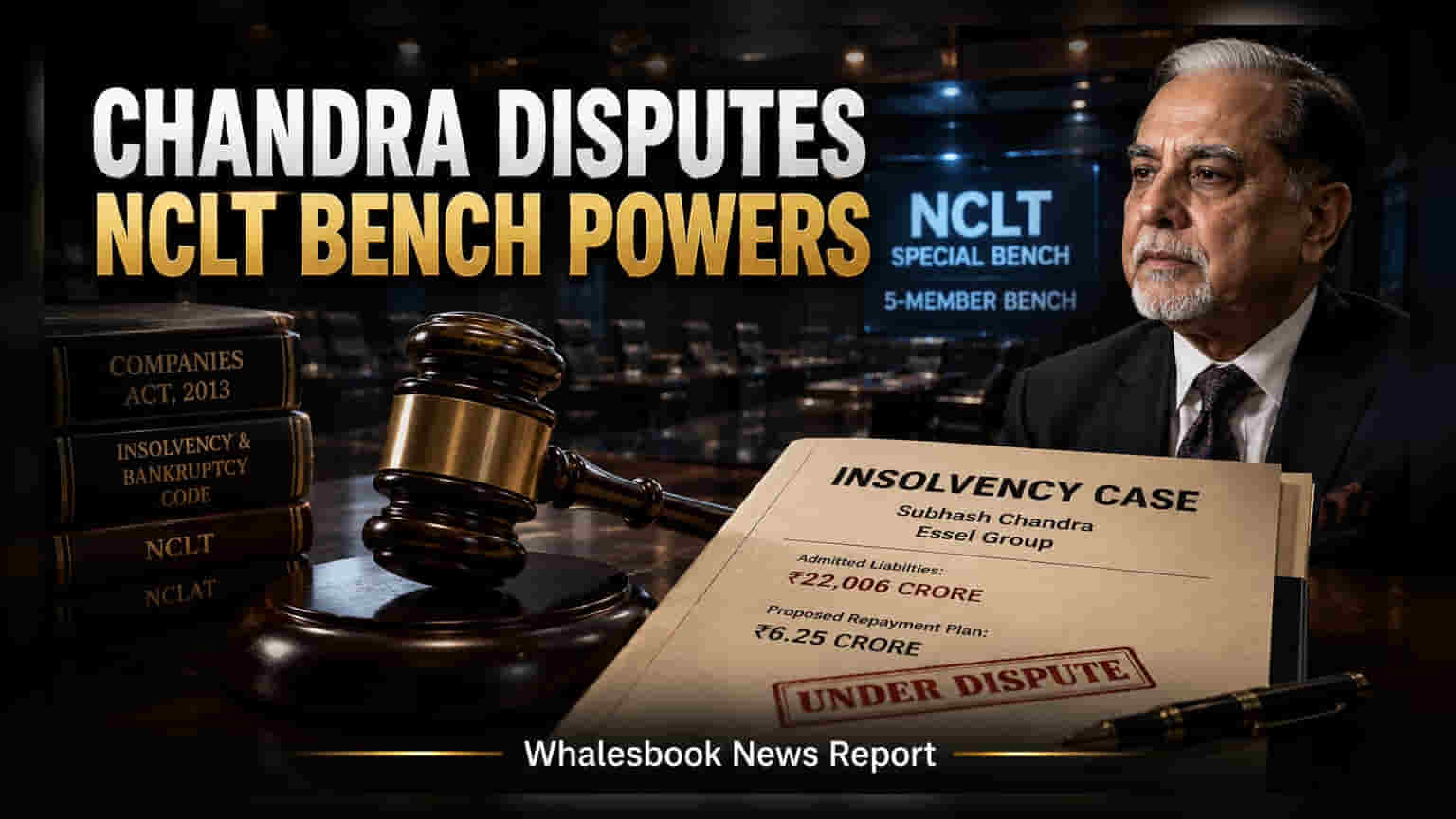
Essel Group Chairman Subhash Chandra has challenged the legality of a five-member NCLT bench overseeing his personal insolvency. The dispute follows a stay on an August order that proposed a ₹6.25 crore repayment against massive claims of over ₹22,000 crore. The NCLAT has adjourned the matter until October 7, 2026.
Essel Group Chairman Subhash Chandra has initiated a formal legal challenge against the formation of a five-member special bench by the National Company Law Tribunal (NCLT) to handle his personal insolvency proceedings. Appearing before the National Company Law Appellate Tribunal (NCLAT), his legal team argued that the tribunal lacked the necessary statutory authority under the Companies Act, 2013, to constitute a bench of this size.
This legal dispute arises from the ongoing personal insolvency case, which has seen significant procedural turbulence in recent weeks. On August 25, 2026, a ruling had initially approved a repayment plan for Chandra. However, this approval was later stayed by a five-member NCLT bench following concerns regarding a lack of majority consensus among the judicial members who heard the case. The claims against Chandra are substantial, with admitted liabilities totaling approximately ₹22,006 crore, while the proposed repayment plan that sparked the dispute was limited to ₹6.25 crore.
The formation of this five-member bench has become a central point of contention. Chandra’s counsel contends that the procedure followed by the NCLT is faulty and does not align with the statutory provisions of Section 419(5) of the Companies Act. The NCLAT, while reviewing the appeals filed by dissenting creditors such as Life Insurance Corporation (LIC) Housing Finance and Union Bank of India, has decided to defer the hearing until October 7, 2026.
For creditors, the situation remains complex. Beyond the uncertainty of the debt resolution process, the NCLT has explicitly restrained Chandra from alienating any of his assets, either directly or indirectly. This asset freeze is intended to maintain the status quo while the legal validity of the proceedings is debated.
The massive gap between the admitted claims and the proposed repayment amount highlights the financial stakes for the lenders involved. With the case now caught in a procedural deadlock—moving between the NCLT and the appellate authority—the timeline for any potential resolution remains unclear. The key development for observers to track is the upcoming October hearing, which will determine the legitimacy of the bench formation and potentially clear the path for the insolvency proceedings to resume in a structured manner.