

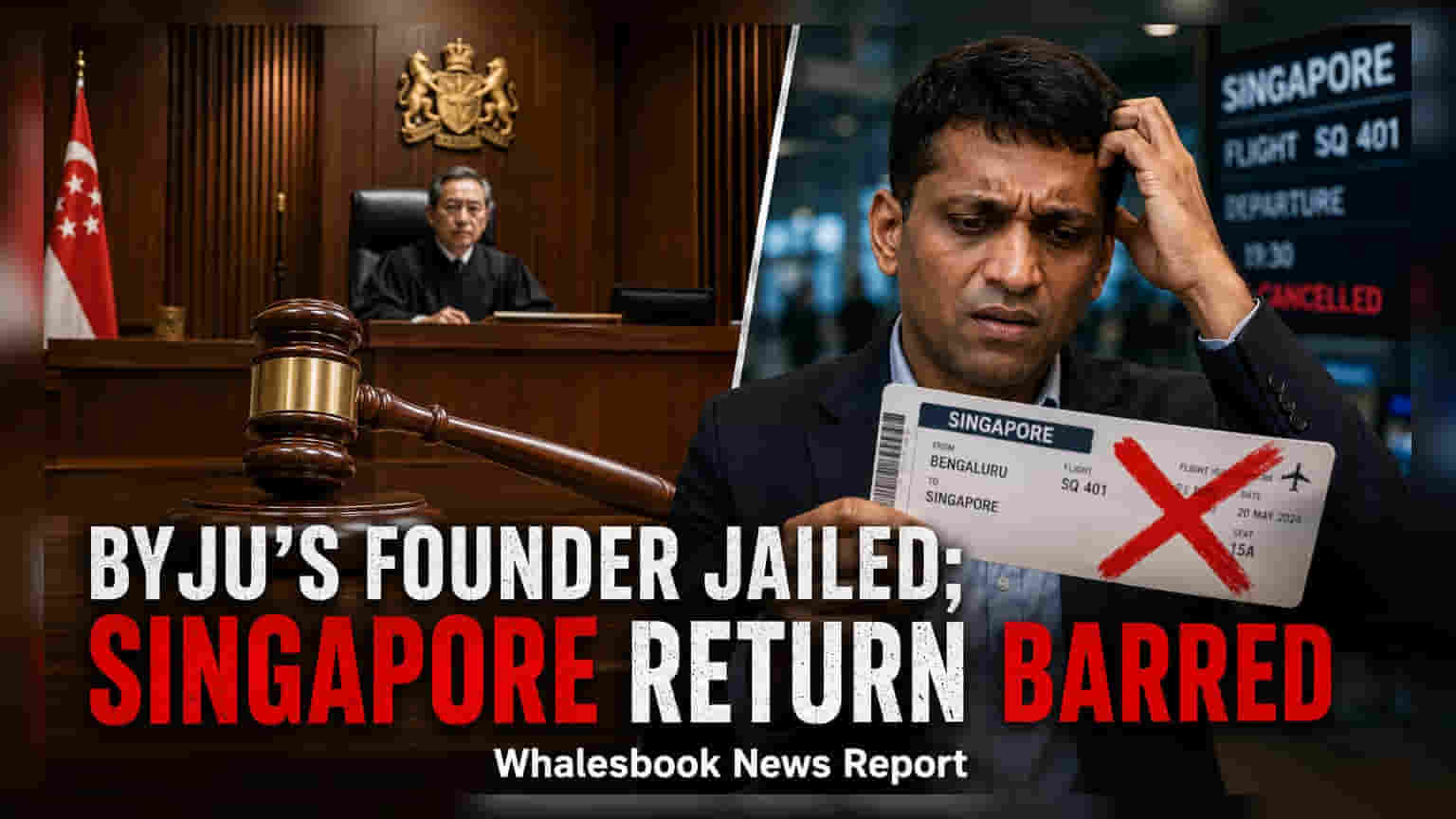
Singapore’s High Court has rejected an appeal by Byju's founder Byju Raveendran against a six-month jail sentence for contempt of court. The ruling effectively bars him from entering the country unless he serves the term. This legal development adds to the mounting pressure on the founder, who is already facing multiple insolvency proceedings and recovery actions from international lenders and investors.
The High Court of Singapore has upheld a six-month jail sentence handed down to Byju Raveendran, the founder of the edtech platform Byju's, for contempt of court. This decision, delivered on July 9, 2026, marks a significant legal setback for the entrepreneur, effectively restricting his ability to enter Singapore without facing immediate incarceration.
The contempt case stems from earlier legal proceedings in the city-state, where Raveendran was found to have breached court orders. While a temporary stay of the sentence had been granted last month, the High Court has now declined to overturn the ruling. Legal representatives for Raveendran have stated that he maintains his innocence regarding the breach of court orders and intends to pursue further legal remedies through established processes.
This ruling arrives at a time when the founder and his company, Think & Learn Pvt. Ltd., are dealing with intense legal and financial scrutiny across multiple global jurisdictions. In the United States, a group of lenders is actively pursuing the recovery of funds related to a $1.2 billion Term Loan B that defaulted. These lenders have been involved in prolonged litigation aimed at securing assets associated with the company.
Furthermore, the company is grappling with significant internal challenges, including insolvency proceedings in India, where the National Company Law Tribunal has been examining various petitions filed by creditors. These financial difficulties have been accompanied by questions regarding corporate governance, which have led to a substantial decline in the company’s valuation from its peak as one of India's most highly valued startups.
In Singapore, the legal action was bolstered by a subsidiary of the Qatar Investment Authority, which had previously invested in the company. The sovereign wealth fund has expressed its intent to continue pursuing legal remedies to protect its interests. Because Raveendran is not currently in Singapore, the order serves primarily as a restriction on his future mobility, as he would be subject to the sentence upon entry.
The ongoing legal battles remain a critical area for stakeholders to watch, particularly concerning the potential impact on the company’s remaining assets and the progress of debt recovery efforts by international and domestic creditors. Future updates will likely center on the outcomes of insolvency hearings in India and the status of recovery efforts by lenders in US courts, which continue to influence the overall business trajectory of the edtech firm.