

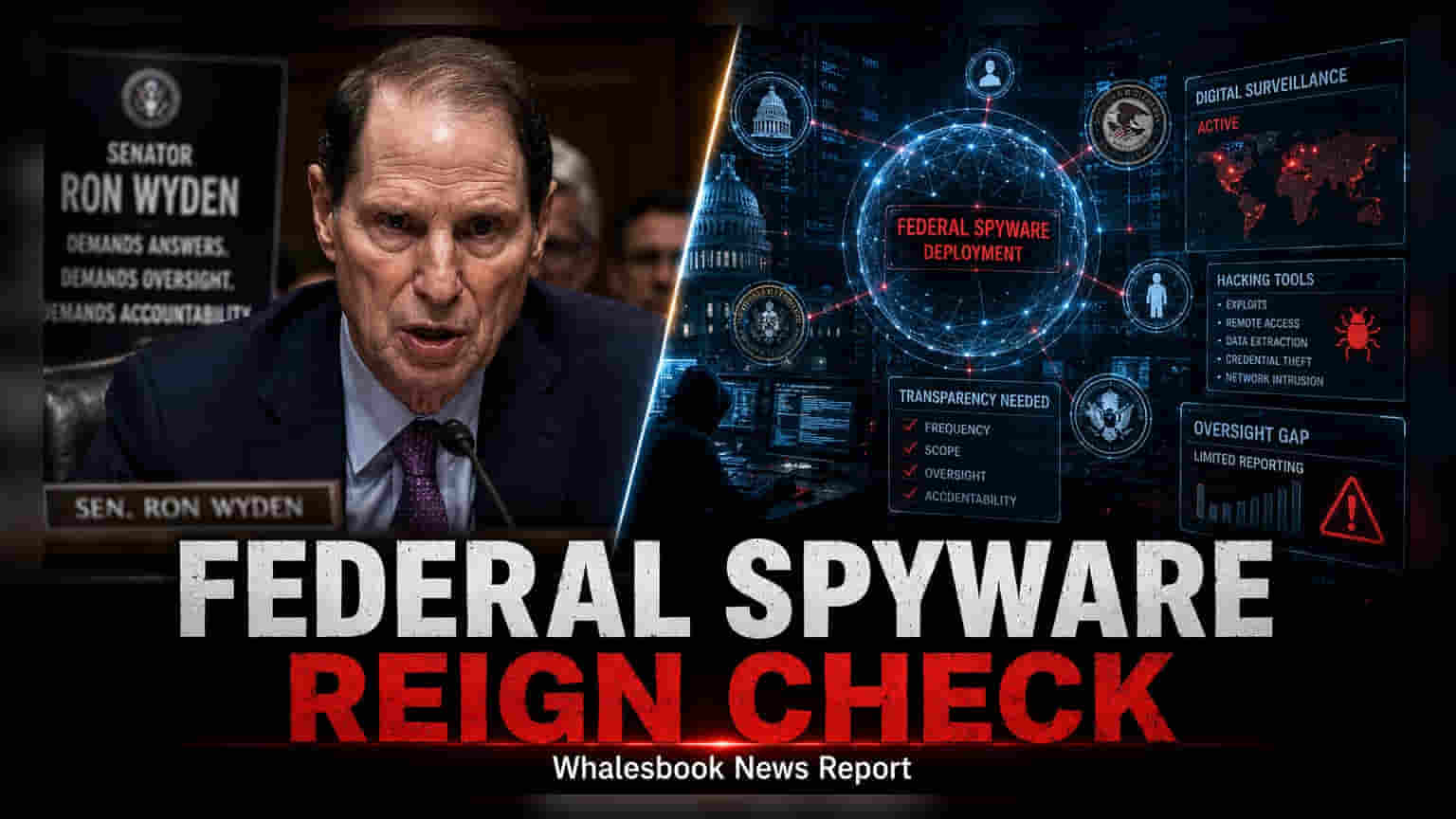
Senator Ron Wyden has called for a GAO review of federal hacking and surveillance tools to address transparency concerns. This move is part of an ongoing regulatory push to tighten cybersecurity standards and data privacy, which could influence future compliance and security requirements for the technology and financial sectors.
Senator Ron Wyden is leading a renewed push for transparency regarding the U.S. government's use of sophisticated hacking tools and spyware. By urging the Government Accountability Office (GAO) to conduct a thorough investigation, the senator aims to clarify the frequency, scope, and oversight mechanisms governing these digital surveillance instruments. Unlike traditional wiretapping, which is subject to annual public reporting, the deployment of federal hacking tools has historically operated with limited public documentation, raising questions about accountability and potential misuse.
This demand for oversight fits into a broader pattern of legislative activity in August 2026. Senator Wyden has been consistently advocating for stricter controls over federal digital surveillance and cybersecurity practices. Recently, he joined other lawmakers to request investigations into federal agencies' surveillance of personal financial records and has been a key voice in demanding that federal entities replace outdated, insecure VPN infrastructure to prevent foreign exploitation. Furthermore, his efforts to force the judiciary to publicly disclose the use of network investigating techniques starting in 2029 signal a long-term shift toward greater transparency in how digital surveillance interacts with public law.
For investors, these developments highlight an accelerating regulatory trend that emphasizes data privacy and robust cybersecurity governance. As federal oversight increases, technology firms and financial institutions are likely to face pressure to align their own operations with higher security standards. Companies that provide digital infrastructure, data security, or cybersecurity services may see evolving demand, while financial platforms are increasingly being required to implement advanced measures—such as transfer locks and enhanced authentication—to combat fraud and protect user information.
Regulatory risk remains a critical monitorable in this environment. As lawmakers and agencies move to audit how surveillance and security technologies are acquired and deployed, there is a risk of increased compliance costs for firms operating within the digital ecosystem. Organizations that rely on legacy systems or fall short of modern cybersecurity standards may face heightened scrutiny, potential operational disruptions, and reputation risks if vulnerabilities are exploited.
Investors should track upcoming GAO reports, federal procurement updates regarding security technology, and any new legislative mandates that could alter how businesses manage and report cybersecurity vulnerabilities. The focus on reducing reliance on insecure legacy infrastructure and the trend toward mandatory disclosure of surveillance practices suggest that the digital operating environment for corporate and financial entities will continue to become more complex and regulated.