 Whalesbook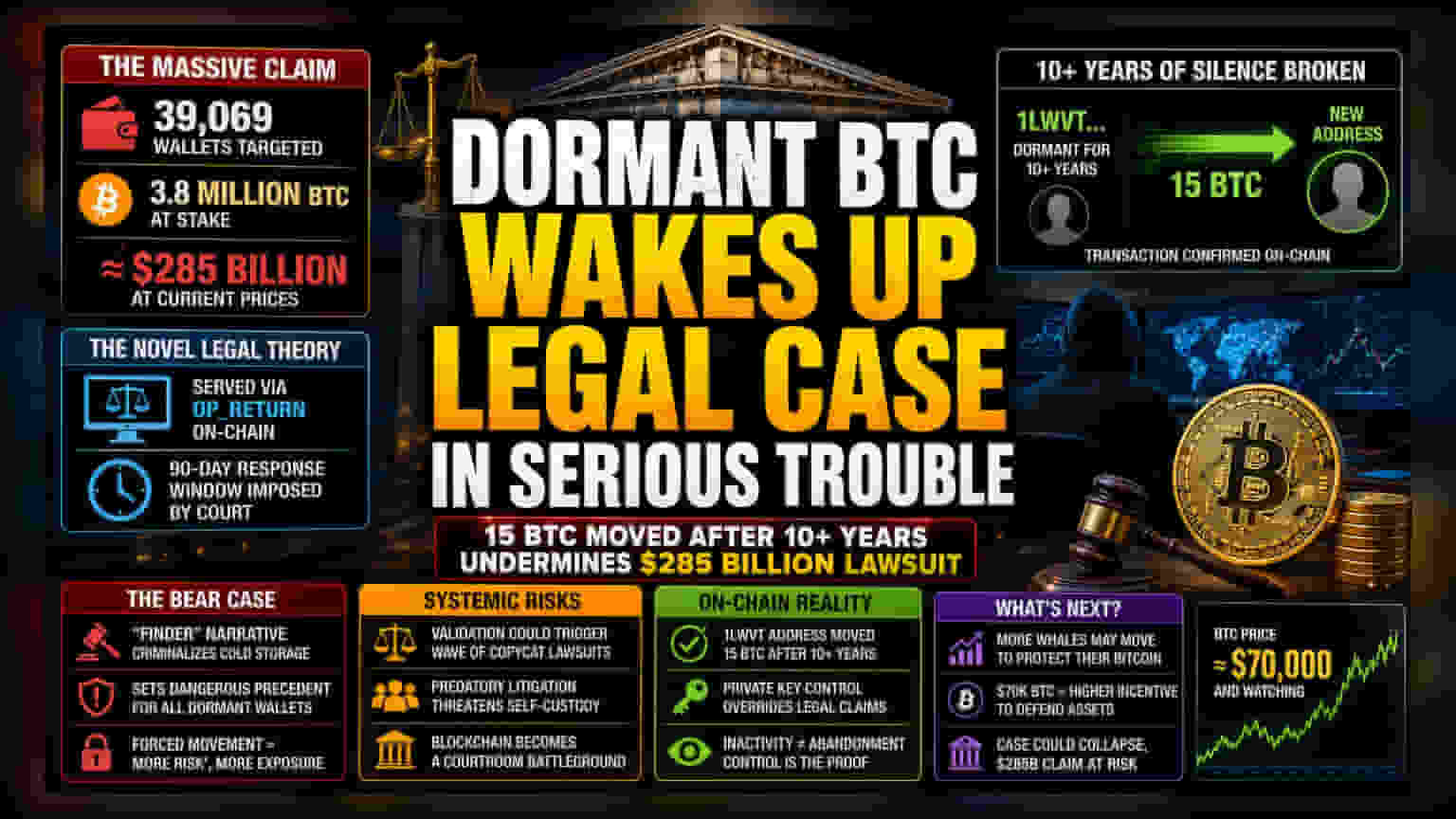


The Validity of Abandonment Claims
The movement of 15 BTC from an address dormant for over a decade serves as a physical contradiction to the core premise of the ongoing New York litigation. By shifting these funds, the owner has effectively refuted the legal theory that these assets were discarded or unclaimed property. This maneuver threatens to undermine the foundations of a case that seeks to assert control over 39,069 wallets holding an aggregate of 3.8 million BTC, a cache valued at approximately $285 billion. The sheer scale of this litigation, which relies on the novel interpretation of New York lost-property statutes, now faces the reality that the primary evidence of abandonment—inactivity—is reversible at the sole discretion of the private key holder.
Legal Precedent and On-Chain Service
The lawsuit, which gained notoriety for its attempt to serve defendants via OP_RETURN metadata, is testing the limits of judicial reach into decentralized networks. By embedding notification links within blockchain transactions, the plaintiffs attempted to establish a legal nexus with anonymous wallet owners. However, the 1LwWt address’s activity suggests that the 90-day response window imposed by the court is being treated as secondary to the immutable control granted by cryptography. Legal scholars are closely watching whether this on-chain service method will hold up under scrutiny, particularly as more defendants potentially "wake up" to protect their holdings. This case creates a dangerous precedent; if plaintiffs succeed in claiming title to these wallets, it could invite a wave of litigation targeting other high-value dormant accounts, effectively turning the blockchain into a courtroom battleground.
The Forensic Bear Case
The risks here extend far beyond a single legal defeat for the plaintiffs. From a structural perspective, this litigation poses a systemic threat to Bitcoin holders who prioritize privacy. The "finder" narrative utilized by the plaintiffs effectively criminalizes the decision to hold assets in cold storage without interaction. Furthermore, if the court validates the plaintiffs' claims, it would create an existential risk for any wallet that has not interacted with the network in years, effectively forcing users to move funds periodically to prevent them from being classified as legally abandoned. This creates a security vulnerability, as forced movement increases the frequency of exposure for keys that might otherwise remain safely offline. The involvement of various intermediaries attempting to facilitate this asset capture raises concerns regarding the potential for similar predatory litigation tactics across the broader digital asset sector.
Future Outlook
As BTC prices oscillate around the $70,000 mark, the economic incentive to pursue these dormant whales will only intensify. Market participants should expect further volatility in legacy addresses as the threat of legal action forces a choice between ongoing anonymity and the active defense of property. Should more addresses show signs of life, the $285 billion claim may prove unenforceable, likely leading to a collapse of the legal strategy currently employed by the pseudonymous plaintiffs and their advisory teams. Analysts remain divided on whether this trend of movement will be a catalyst for institutional sell-offs or a demonstration of the resilience of self-custody.