

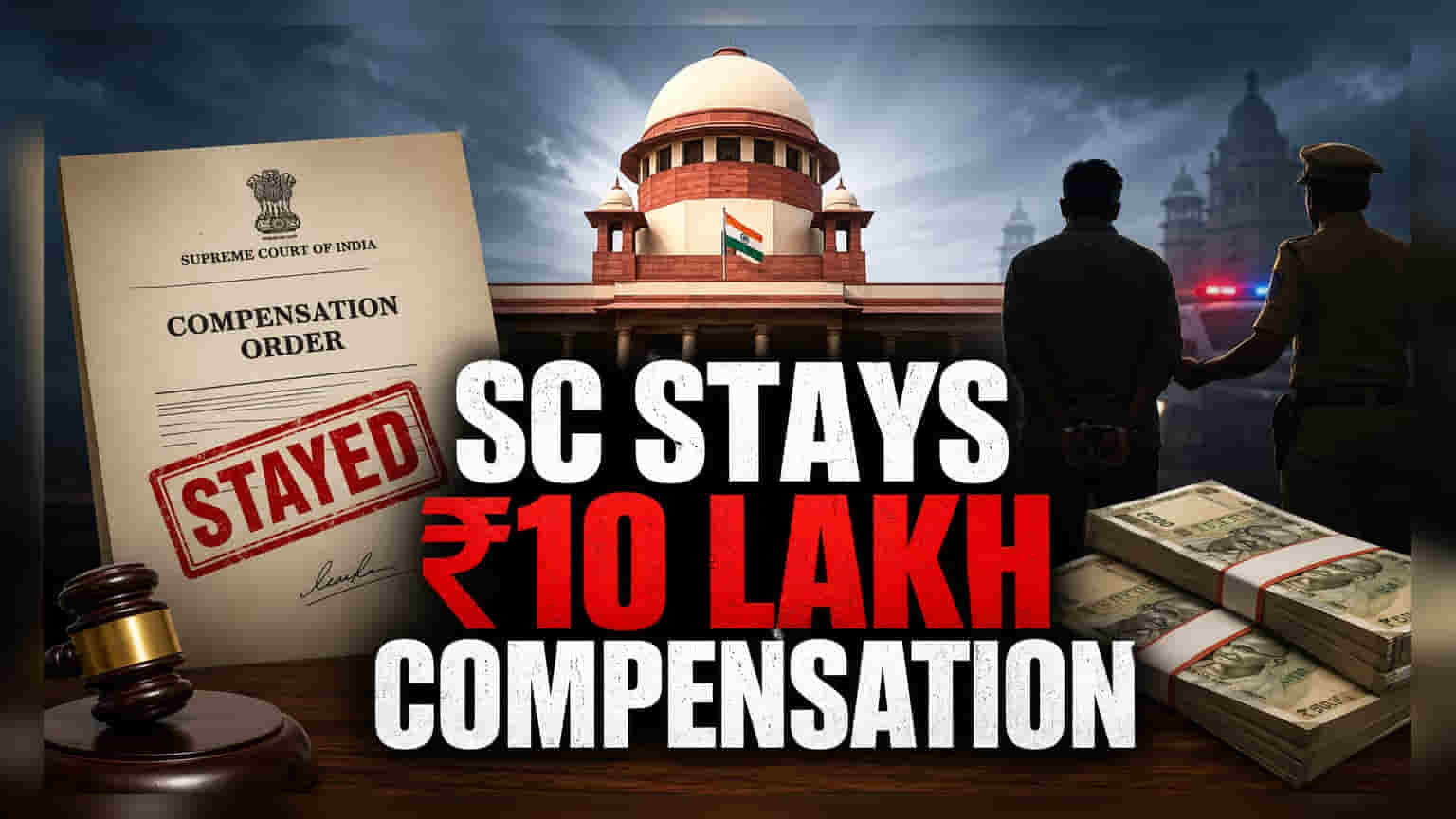
The Supreme Court has placed an interim stay on an Allahabad High Court directive requiring the Uttar Pradesh government to pay ₹10 lakh in compensation for illegal detention. While the state government admitted the police failed to provide proper grounds for arrest and suspended the responsible officer, it is contesting the financial penalty imposed by the court.
What Happened
The Supreme Court has issued an interim stay on an Allahabad High Court order that directed the Uttar Pradesh government to pay ₹10 lakh in compensation. This penalty was originally awarded to a man named Manoj Kumar, who was detained by the Uttar Pradesh Police for over three months. A bench comprising Justices Prashant Kumar Mishra and Sanjeev Sachdeva passed the order after the state government appealed against the financial cost imposed by the High Court.
Case Background and Legal Context
The case stems from a habeas corpus petition filed by Manoj Kumar, who challenged his arrest on January 27, 2026. The arrest was linked to an FIR registered in September 2024. Kumar argued that his arrest was illegal because the police failed to provide written grounds for the arrest, which is a mandatory requirement under Indian law and recent Supreme Court interpretations of Article 22(1) of the Constitution.
The Allahabad High Court had previously ruled the arrest and subsequent remand illegal, noting that the arrest memo only cited the crime number without detailing the specific grounds. The court had also expressed dissatisfaction with the Additional Chief Secretary (Home) for not providing a sufficient explanation for the detention, leading to the order for compensation.
The State’s Position
During the Supreme Court proceedings, the Uttar Pradesh government’s legal counsel acknowledged that the grounds for arrest were indeed not provided to the detainee. The state has already taken administrative action, including the suspension of the Station House Officer (SHO) involved in the case. However, the state’s appeal before the Supreme Court is limited to challenging the ₹10 lakh penalty, rather than disputing the finding that the arrest was illegal.
Why This Matters for Governance
For observers and the public, the functioning of administrative and law enforcement machinery is a key component of the overall regulatory environment. While this specific matter involves a legal challenge over a financial penalty, it underscores the importance of adherence to due process in police procedures. Clear and consistent application of the law is often viewed as essential for maintaining administrative stability and public trust. The Supreme Court's decision to stay the payment pending further review means the legal discussion on whether such financial penalties are appropriate in this context will continue.
What Investors Should Track
The key monitorable remains the next date of hearing, where the Supreme Court will further deliberate on the validity of the financial compensation order. The final verdict could set a precedent regarding the state's liability for procedural lapses by law enforcement agencies.