

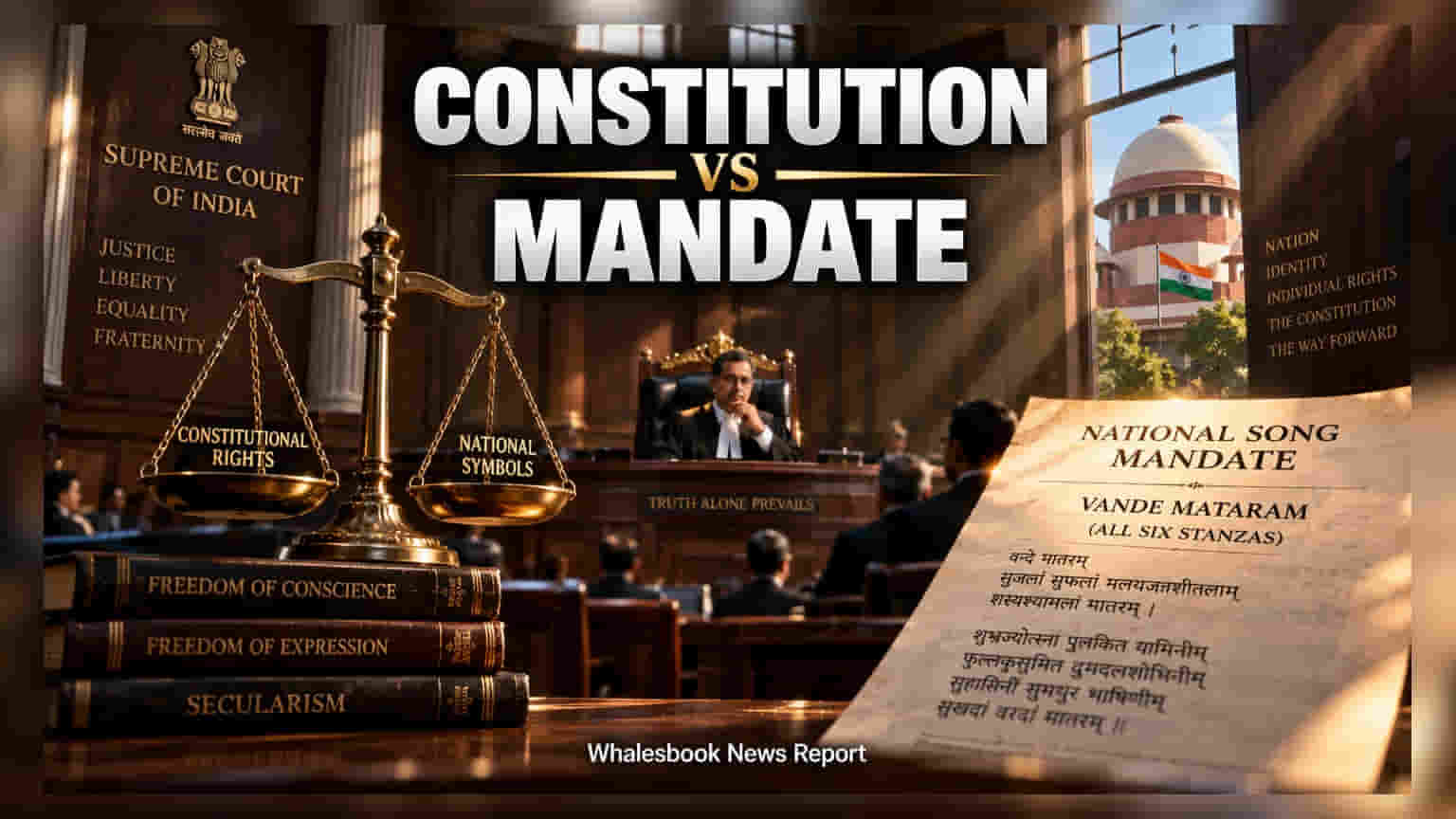
The Supreme Court is examining the 2026 amendment requiring the full recitation of Vande Mataram at public events under threat of imprisonment. Petitioner TM Krishna argues the law violates religious freedom by compelling non-secular expression. The court is currently weighing state-mandated national symbolism against constitutional rights, focusing on precedents regarding individual dissent.
The Supreme Court of India has initiated a review of the Prevention of Insults to National Honour (Amendment) Act, 2026, which mandates the full recitation of all six stanzas of Vande Mataram during public events. A bench led by Chief Justice Surya Kant is examining whether this legislative requirement infringes upon individual rights, particularly the freedom of conscience.
The case stems from a petition filed by vocalist TM Krishna, represented by senior advocate S Muralidhar. The legal challenge centers on the argument that the final four stanzas of the song carry explicit devotional and non-secular connotations. The petitioner contends that requiring citizens to recite these verses under the threat of up to three years of imprisonment effectively compels religious orthodoxy. This raises significant questions regarding the state's authority to impose such requirements on the public and whether this constitutes an overreach of constitutional secularism.
During the proceedings, the bench invoked the 1986 Bijoe Emmanuel versus State of Kerala ruling. This landmark judgment protects the right to silent objection and religious freedom, establishing a precedent that the court is now using to evaluate whether the 2026 amendment holds up against established constitutional protections.
Solicitor General Tushar Mehta, representing the Union government, defended the directive, arguing that the legislative process followed constitutional norms and that the song has historical status as a national symbol. The court has requested a formal response from the government to further clarify its position.
For observers of Indian governance and public policy, this case is an important monitorable. It highlights the ongoing legal tension between state-mandated national symbolism and individual liberty. The final outcome will clarify the limits of administrative circulars and legislative mandates that carry criminal consequences for non-compliance. Observers are tracking the situation to understand how the judiciary balances national identity with the constitutional rights that underpin the stability of the legal and social environment. The next steps will involve the government's formal reply and subsequent judicial review.