

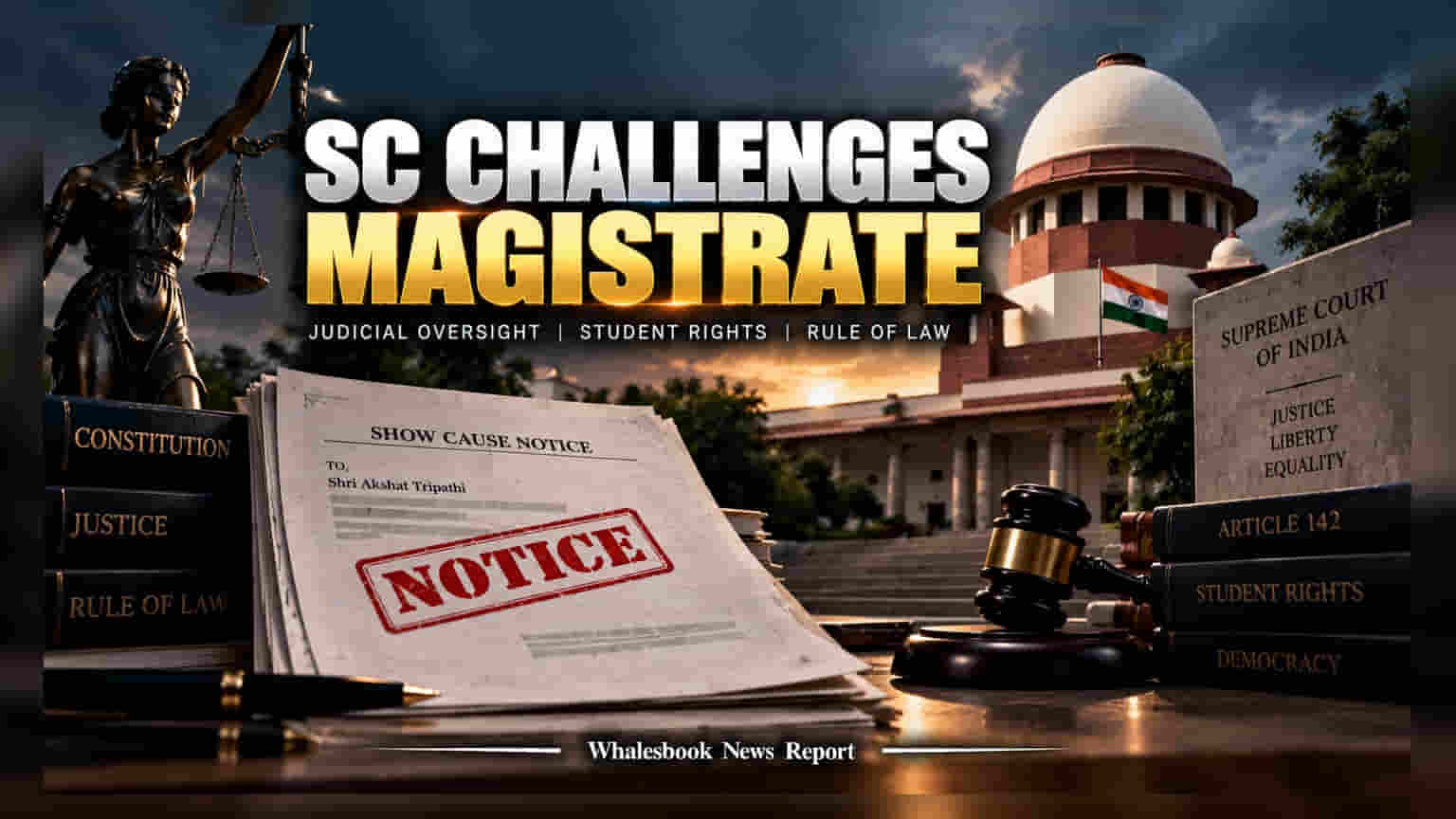
The Supreme Court has demanded an explanation from a Greater Noida Executive Magistrate regarding a show-cause notice issued to a student protester. The action reportedly violated a previous judicial order protecting NEET-UG agitators from coercive steps. The court is now reviewing this administrative move despite the notice having been withdrawn.
On Wednesday, September 9, 2026, the Supreme Court of India expressed strong disapproval regarding an action taken by an Executive Magistrate in the Greater Noida Commissionerate. The bench, led by Chief Justice Surya Kant, questioned the issuance of a show-cause notice to a student, Akshat Tripathi, which demanded a personal bond of ₹5 lakh.
The notice had alleged that the student was involved in spreading anti-government propaganda and inciting peers to participate in demonstrations related to the NEET-UG examination controversy. However, this administrative action appeared to directly contradict a Supreme Court directive issued on September 1, 2026. In that earlier order, the apex court invoked its absolute powers under Article 142 of the Constitution to quash FIRs related to student protests held between July 20 and July 25, 2026, while strictly prohibiting any further coercive action against the students involved.
During the proceedings, Solicitor General Tushar Mehta appeared on behalf of the government and clarified that the notice was issued by an executive magistrate, distinct from the district magistrate's office. He also highlighted that the administration is navigating separate legal challenges, including a pending matter related to an Allahabad High Court order concerning another student's detention. While the Greater Noida official reportedly withdrew the show-cause notice shortly after it was issued, the Supreme Court has decided to seek a formal explanation regarding the compliance with its prior directives.
This incident highlights the ongoing friction between local law-and-order management and apex judicial protections. For those observing the legal and regulatory environment in India, such events serve as a reminder of the importance of administrative alignment with Supreme Court rulings. The primary monitorable moving forward will be how state authorities ensure consistent adherence to judicial safeguards to avoid future conflict and protect the rights of individuals involved in such public interest matters.