 Whalesbook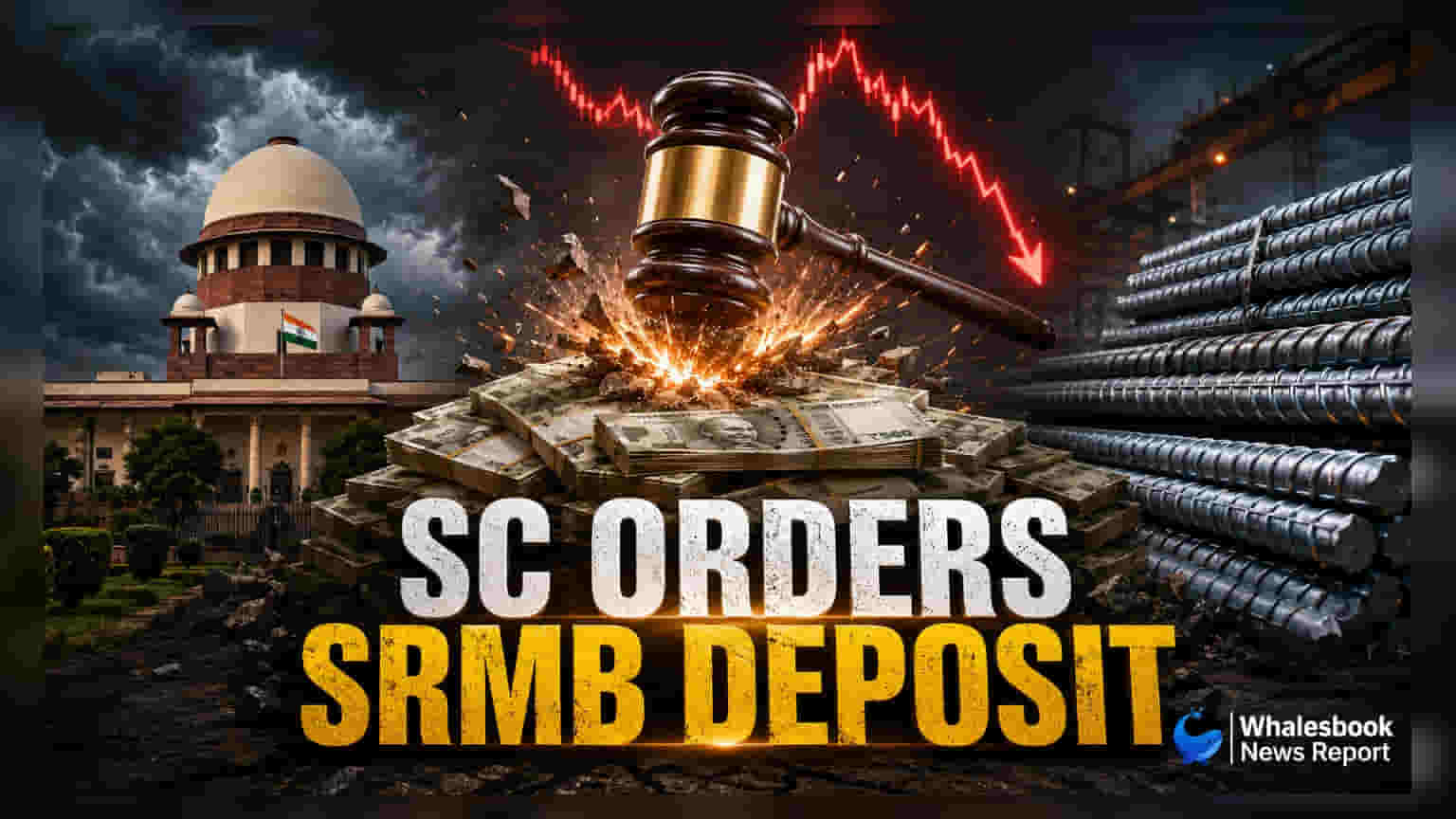


The Escalation of Arbitration Enforcement
The Supreme Court’s recent order directing SRMB Srijan Ltd to deposit ₹20 crore marks the latest progression in a high-stakes, multi-year commercial dispute between the Bengal-based steel producer and Great Eastern Energy Corporation Ltd (GEECL). This mandate acts as a critical condition for maintaining a stay on the execution of an arbitral award, forcing a company—which operates in the capital-intensive steel manufacturing sector—to commit significant liquidity to the court registry. The decision arrives after the Calcutta High Court dismissed SRMB’s challenges under Section 37 of the Arbitration and Conciliation Act on April 13, 2026, solidifying the arbitral tribunal’s 2022 findings.
The Anatomy of the Gas Supply Conflict
The root of this confrontation lies in a 2011 Gas Sale and Purchase Agreement (GSPA) that was intended to span 25 years. The agreement included a Minimum Guaranteed Offtake (MGO) clause, a standard yet rigid mechanism in industrial gas supply contracts that requires the customer to pay for a specified quantity of gas regardless of actual consumption. When SRMB terminated the contract in 2014, citing grievances over supply, it triggered a massive claim for damages from GEECL. The arbitral tribunal subsequently declared the termination illegal, awarding GEECL ₹58.5 crore. With interest accruals, GEECL’s latest valuations of the outstanding liability have climbed toward the ₹119.7 crore mark, creating a substantial financial overhang for the steel maker.
The Financial and Structural Risk Profile
While GEECL continues to seek full recovery of the award, SRMB Srijan remains an unlisted, private entity, which inherently limits public visibility into its debt-servicing capabilities and cash flow health. For an organization operating in the secondary steel market, a nine-figure liability—compounded by the need to secure bank guarantees or cash deposits for court stays—represents a severe drain on working capital. Unlike its competitors, which may maintain more flexible supply contracts, SRMB’s reliance on the GSPA has proven to be a strategic and financial vulnerability that persists years after the contract’s termination. The court's firm stance on the deposit underlines a broader judiciary trend that prioritizes the finality of arbitral awards, leaving limited room for debtors to maneuver through prolonged litigation.
The Outlook for Resolution
The legal stalemate, now stretching over a decade, underscores the inherent risks associated with long-term industrial supply commitments. While the Supreme Court has granted a stay contingent on the ₹20 crore payment, the underlying Section 34 challenge proceedings continue to move forward under the scrutiny of the courts. For GEECL, which has been aggressively pursuing recovery through asset attachment orders and bank account restraints, this deposit is a milestone in a larger effort to convert the arbitral award into realized cash. Conversely, SRMB faces the dual pressure of continuing its manufacturing operations in Durgapur while navigating an increasingly restrictive environment for challenging enforceable commercial debts.