

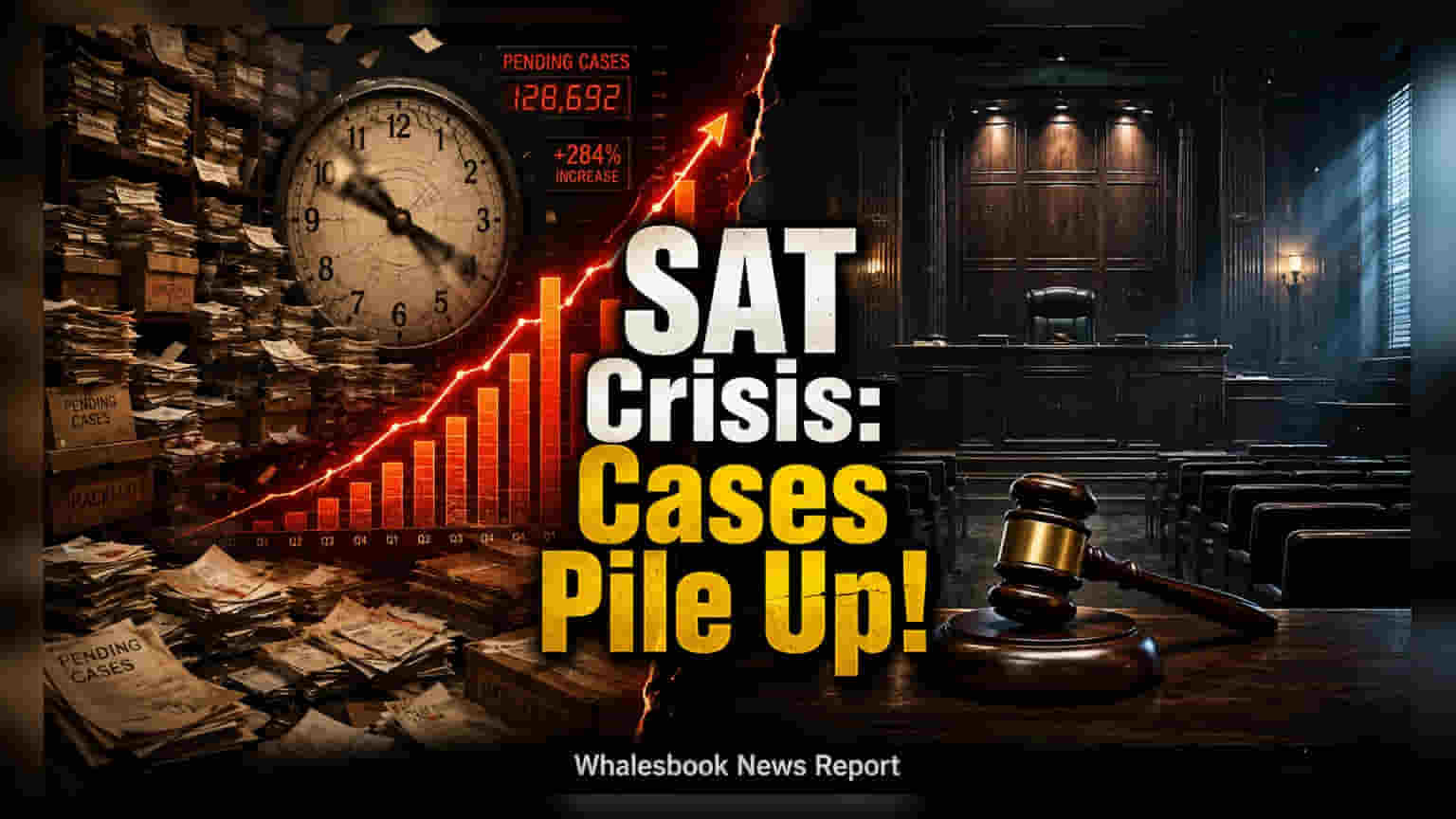
The Securities Appellate Tribunal (SAT) is facing a record backlog of 1,066 pending cases as of the end of FY26. Despite a decline in fresh appeals, the tribunal’s significantly reduced disposal rate has caused this pile-up. For listed companies and market participants, this trend translates into prolonged legal uncertainty, potentially inflating litigation costs and keeping contingent liabilities unresolved on balance sheets.
The Securities Appellate Tribunal (SAT), the apex body that hears appeals against orders passed by the Securities and Exchange Board of India (SEBI), is currently grappling with its largest case backlog in six years. As of the end of fiscal year 2026, the number of pending matters reached 1,066. This figure represents an 11% increase from the previous year and is more than double the 479 cases pending in FY20.
This mounting pressure on the tribunal’s docket presents a paradox: the backlog is rising even as the flow of new litigation has slowed. According to the latest annual data, fresh appeals filed before the SAT dropped to 429 in FY26, down from 533 in the prior year. However, the number of appeals resolved by the tribunal saw a sharper decline. Appeals dismissed or disposed of fell to 135 in FY26, less than half the 308 cases resolved in the previous fiscal year. This inability to keep pace with incoming matters has caused the pile-up to reach historic levels.
For investors and corporate entities, this sluggish resolution process carries significant financial and operational risks. Prolonged litigation often forces companies to maintain high levels of provisions or disclosure of contingent liabilities on their balance sheets. When cases drag on for years, the legal and advisory costs mount, eating into profits. Furthermore, for individuals caught in regulatory investigations—such as those related to insider trading or market manipulation—the indefinite wait can create long-term career risks and reputational damage.
There is also a qualitative shift in how these cases are being handled. Recent trends show that the tribunal is taking a more active role in scrutinizing the evidence and proportionality of SEBI’s orders, frequently modifying or setting aside penalties. While this adds a layer of protection for appellants, it also contributes to the time required to settle each case, as deeper investigations and procedural fairness take longer to execute than routine dismissals.
Looking ahead, the primary factor to watch will be the tribunal’s ability to clear this backlog. The speed of case resolution will depend heavily on the filling of key judicial vacancies and the capacity to operate multiple benches concurrently. Until the disposal rate improves, companies involved in regulatory disputes may need to brace for longer timelines in obtaining final clarity on enforcement actions.