

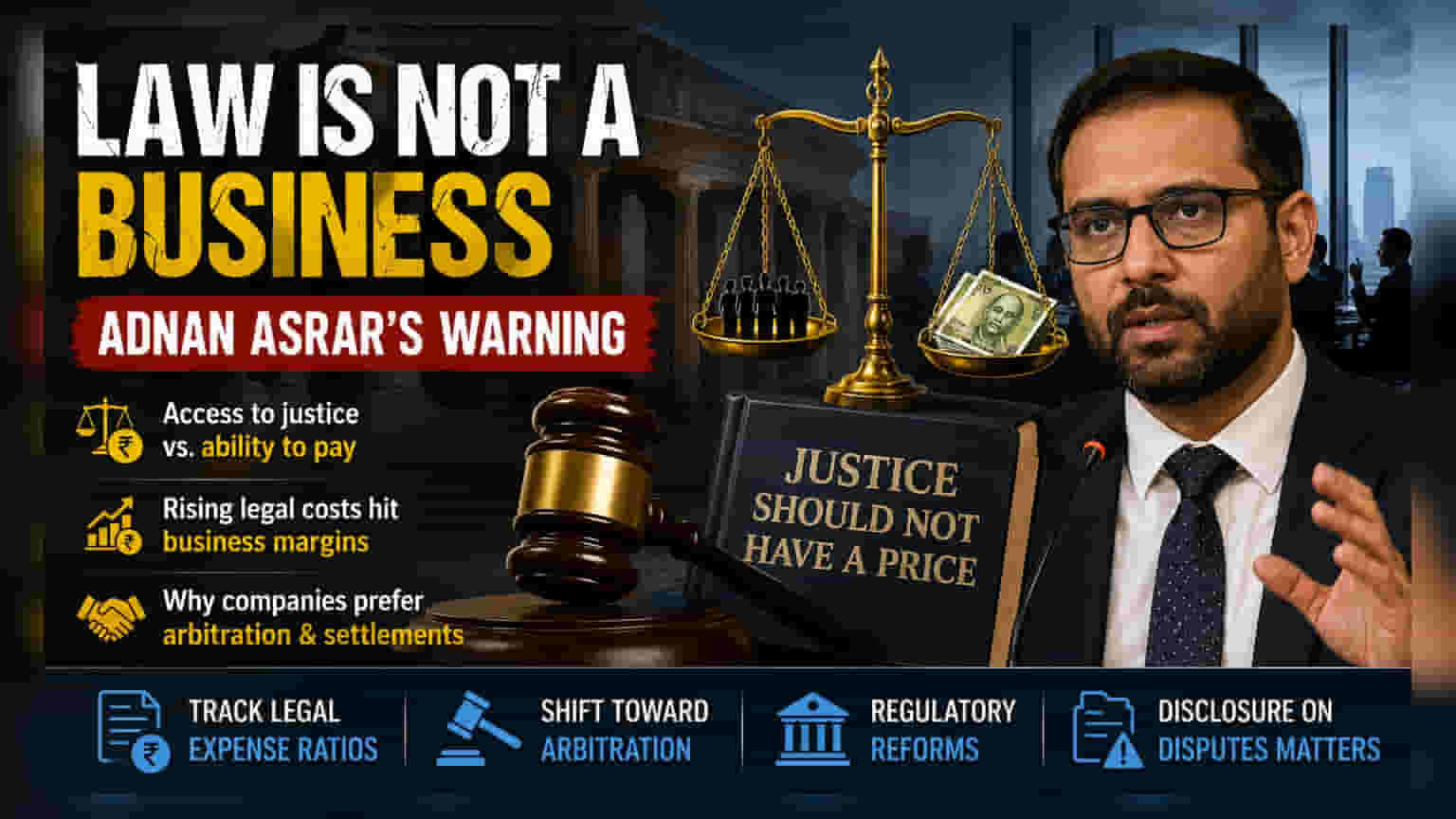
Adnan Asrar, a professor at Lloyd Law College, has criticized the rising cost of legal services, calling it a 'de facto commercialization' of justice. For the business community, this highlights the broader challenges in the Indian judicial system, including high litigation expenses and the increasing pressure on professional ethics in a profit-driven market.
What Happened
Adnan Asrar, an Assistant Professor at Lloyd Law College, has raised concerns regarding the state of the legal profession in India. During a recent graduation ceremony, he warned against the growing trend where the ability to pay dictates access to legal representation. He argued that the professional environment increasingly prioritizes financial gain over ethical practice, a phenomenon he describes as the 'de facto commercialization' of law.
Why The Legal Environment Matters To Business
The efficiency and cost of the legal system are fundamental to the business environment in India. When legal fees rise significantly, it creates challenges for both individuals and companies. For corporations, litigation is often a necessary part of operations, and escalating legal costs directly impact operating margins. When the legal system becomes difficult or expensive to navigate, it creates uncertainty, which is a major factor for investors assessing the ease of doing business.
The Challenge Of Litigation Expenses
Asrar’s comments touch on a broader issue: the accessibility and predictability of the justice system. In the corporate world, businesses rely on a functioning judiciary for contract enforcement, dispute resolution, and regulatory compliance. If the legal system is perceived as being driven by the ability to pay rather than the merit of the case, it can influence how companies approach risk management. This often leads businesses to favor Alternative Dispute Resolution (ADR) mechanisms, such as arbitration, to avoid the high costs and time delays associated with traditional courtroom litigation.
Corporate Governance And Ethical Standards
The speech also highlighted the clash between professional ethics and the pressure to deliver results. In the legal sector, as in many other professional services, there is a constant tension between serving the client's interests and maintaining broader ethical standards. For investors and stakeholders, this reinforces the importance of corporate governance. Companies that maintain high ethical standards in their legal and compliance departments often face lower risks of regulatory friction, penalties, or reputational damage.
What To Watch Next
The core monitorables for those observing the Indian business and legal climate include:
Trends in Legal Expense Ratios: Investors often check the legal and professional fees reported by companies in their annual filings to understand their litigation burden.
Shifts Toward Arbitration: Keep an eye on whether businesses are increasingly turning to arbitration or settlement mechanisms to manage rising legal costs and avoid long-drawn-out court battles.
Regulatory Updates: Any reforms aimed at improving the efficiency of the courts or reducing the cost of justice are critical for the long-term health of the business environment.
Disclosure on Disputes: For large firms, the quality and transparency of disclosures regarding pending legal cases remain a vital metric for assessing operational risk.