 Whalesbook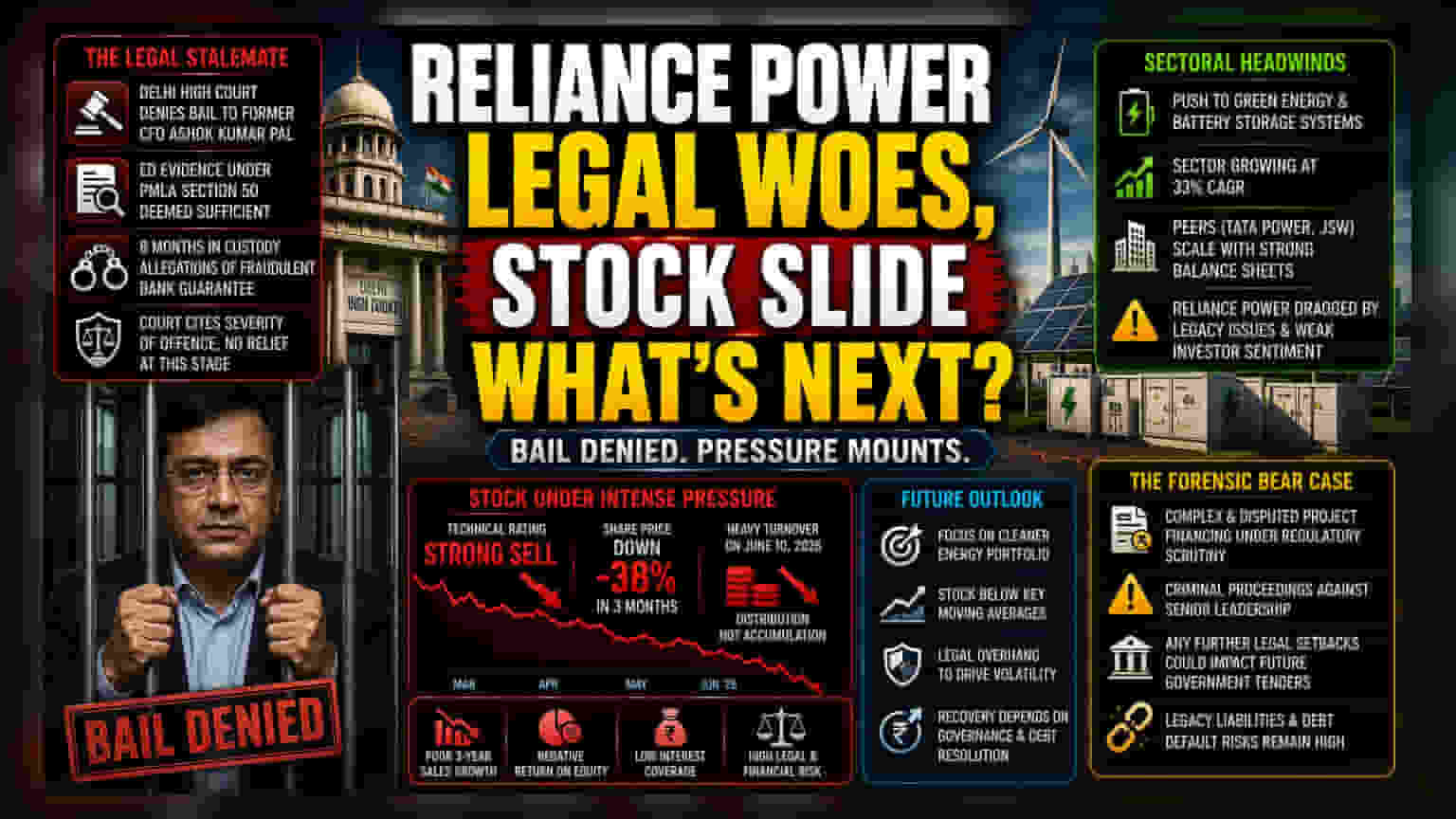


The Delhi High Court has denied bail to former Reliance Power CFO Ashok Kumar Pal, who remains in custody over a Rs 68 crore fraudulent bank guarantee scandal. The ruling intensifies scrutiny on the company’s internal controls and legal entanglements as it attempts a pivot into the competitive battery energy storage market.
The Legal Stalemate
The denial of bail for former Chief Financial Officer Ashok Kumar Pal marks a continuing challenge for Reliance Power. The Delhi High Court, presided over by Justice Madhu Jain, determined that the evidence presented by the Enforcement Directorate—including material gathered under Section 50 of the Prevention of Money Laundering Act—did not permit the granting of relief at this stage. Despite defense arguments focusing on prolonged custody and constitutional protections, the court underscored that the severity of the allegations surrounding the fraudulent bank guarantee requires continued detention, leaving the former executive incarcerated eight months after his initial arrest.
Analytical Deep Dive: Sectoral Headwinds
While Reliance Power continues to market its strategic shift toward green energy, including a pipeline of battery energy storage systems, the company’s recent market performance tells a more complex story. Shares have faced significant volatility, trading under intense pressure as institutional sentiment shifts. The stock recently received a 'Strong Sell' designation from technical analysis platforms, reflecting a combination of weak price momentum and poor historical sales growth. Unlike competitors like Tata Power or JSW, which are scaling battery storage projects with clearer balance sheets, Reliance Power remains weighed down by legacy legal disputes and an inefficient capital structure. Investors have observed heavy turnover in shares on June 10, 2026, which analysis suggests is indicative of distribution—informed participants exiting positions rather than long-term accumulation—even as the sector experiences a broader 33% CAGR growth trajectory in storage technology.
The Forensic Bear Case
The case highlights structural vulnerabilities that continue to haunt the Anil Ambani-led group. Beyond the immediate legal proceedings, the company’s reliance on complex, often disputed project financing has drawn repeated regulatory scrutiny. While the Solar Energy Corporation of India previously withdrew a broader debarment notice, the criminal nature of the current proceedings against senior leadership casts doubt on the company's internal due diligence processes. The company’s low interest coverage ratio and negative return on equity over the past three years serve as red flags, suggesting that despite potential operational capacity in thermal and hydro assets, the financial architecture remains fragile. Any further setbacks in the courts or additional defaults on debt obligations could severely jeopardize the firm's standing in future government tenders.
Future Outlook
Reliance Power management maintains its focus on a cleaner energy portfolio, aiming to capitalize on India’s renewable energy targets. However, with the stock failing to sustain levels above key short-term moving averages and the ongoing legal saga involving former top management, the path to recovery is arduous. Analysts suggest that until the company resolves its legacy liabilities and demonstrates a clean break from past governance failures, volatility is likely to persist regardless of broader sector growth.