

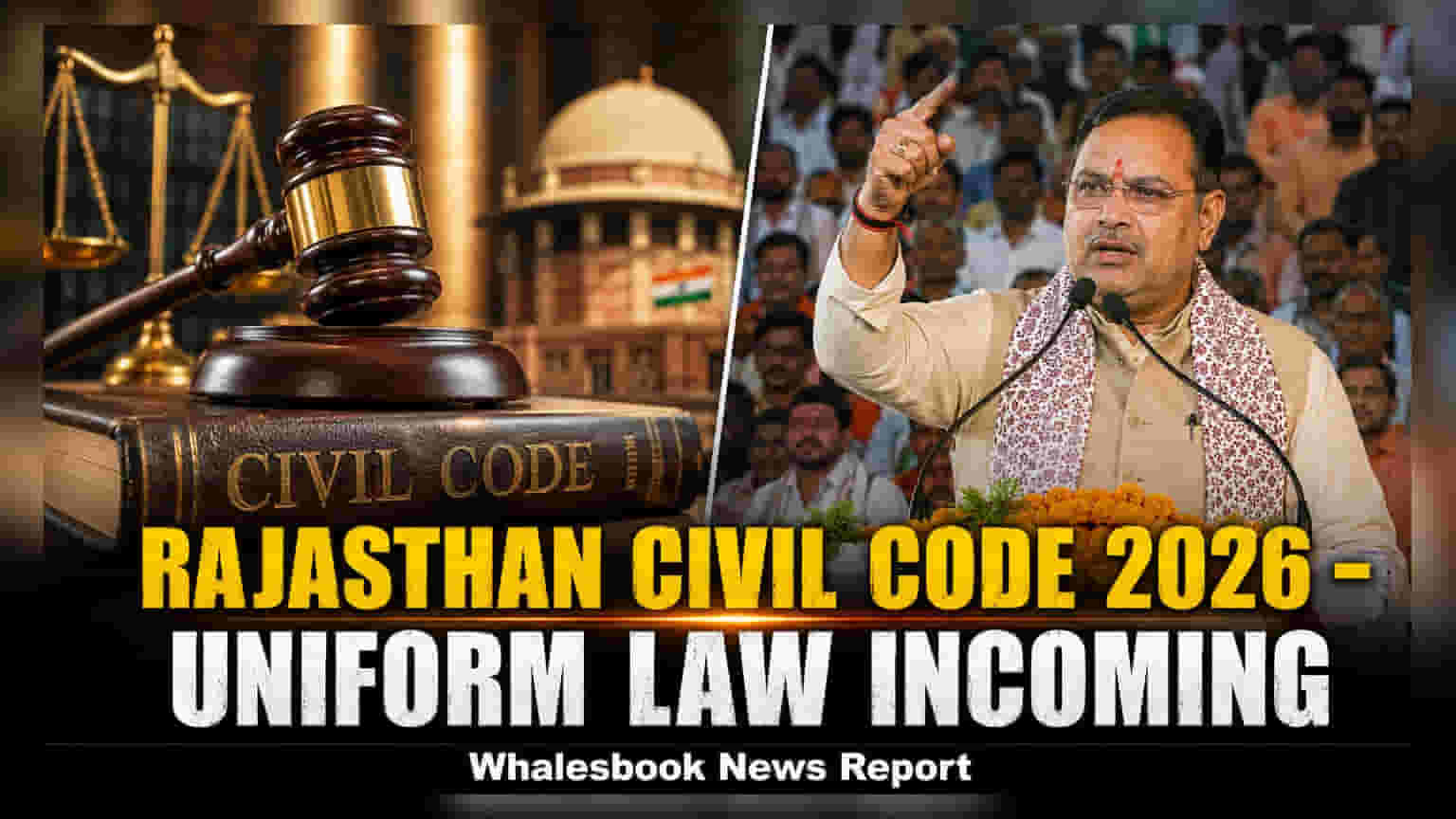
The Rajasthan government has approved the draft 'Rajasthan Uniform Civil Code (UCC) Bill, 2026' to standardize laws on marriage, inheritance, and divorce. The bill, which explicitly excludes tribal communities, is scheduled for introduction in the state Assembly during the monsoon session starting August 20, 2026.
The Rajasthan Cabinet, led by Chief Minister Bhajanlal Sharma, officially approved the draft of the 'Rajasthan Uniform Civil Code (UCC) Bill, 2026' on August 13, 2026. This move seeks to establish a unified legal framework across the state, replacing diverse personal laws with a common set of rules covering matters such as marriage, divorce, inheritance, maintenance, and live-in relationships.
Key provisions within the proposed legislation include the mandatory registration of marriages within 60 days, a prohibition on polygamy, and the introduction of equal inheritance rights for sons and daughters. The state government has clarified that tribal communities are explicitly excluded from the scope of this legislation, ensuring that their existing customs and practices remain outside the purview of these new rules.
The bill is now slated to be introduced in the Rajasthan Legislative Assembly during the upcoming monsoon session, which is scheduled to commence on August 20, 2026. The discussions held in the Assembly will be the next step in the process, determining the final structure and timeline for the law's implementation across the state.
Alongside the UCC legislation, the Cabinet also approved the 'Rajasthan Tree Protection Bill, 2026'. This separate legal measure is designed to mandate the conservation and protection of 29 specific tree species throughout the state, reflecting a broader legislative focus on policy updates during the current session.
While this development represents a significant administrative shift, it is important to note that such legislative changes can involve complex implementation processes, as seen in other jurisdictions that have navigated similar legal frameworks. Interested observers should monitor the upcoming Assembly sessions for the specific operational details and final version of the bill as it moves through the legislative process.