

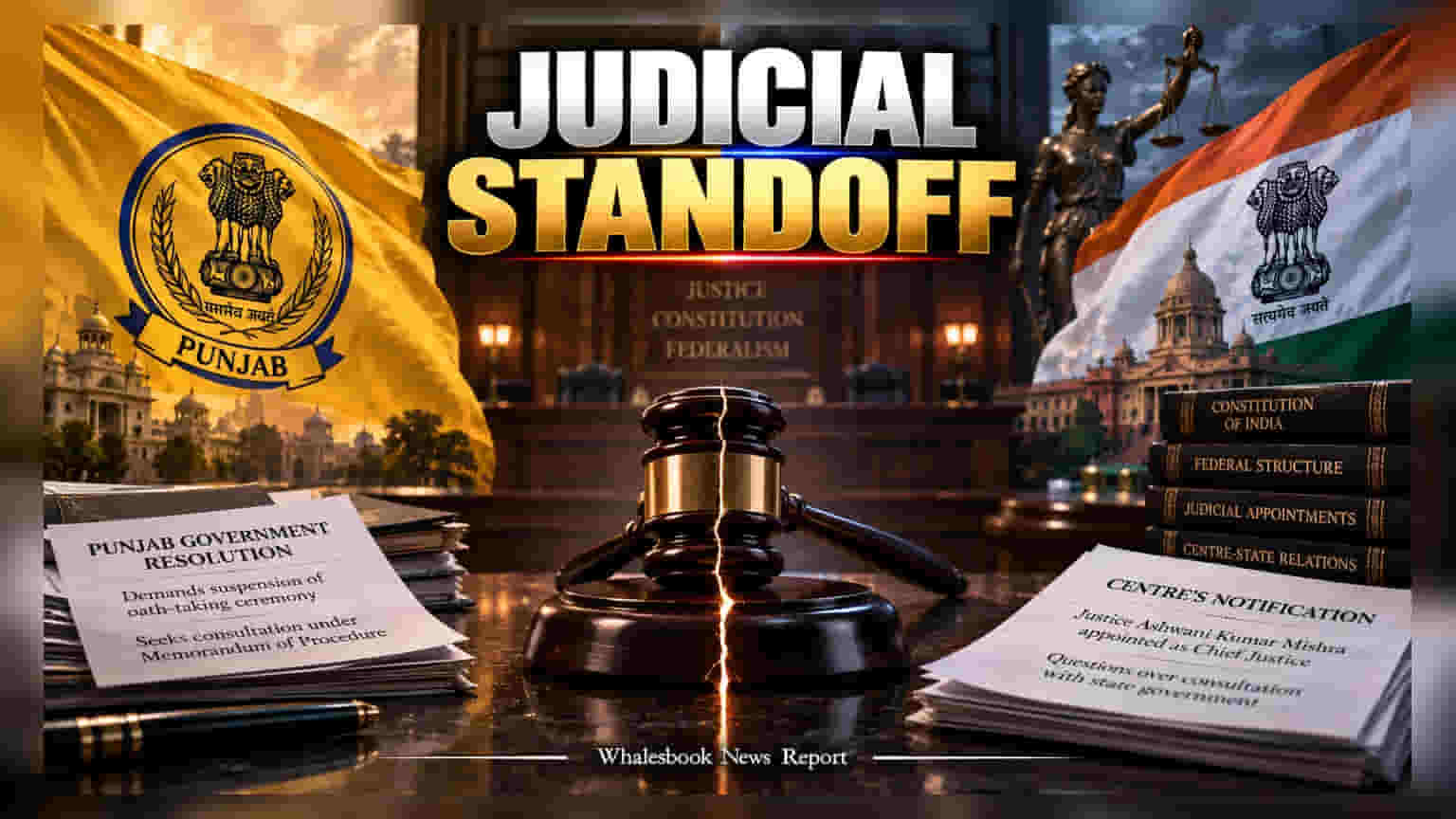
The Punjab government has formally opposed the appointment of Justice Ashwani Kumar Mishra as Chief Justice of the Punjab and Haryana High Court. The state cabinet passed a resolution citing a failure in mandatory consultation protocols. This move escalates ongoing tensions between the state and central government, potentially impacting administrative coordination and judicial oversight.
The Punjab government, led by the state cabinet, has formally objected to the central government's notification appointing Justice Ashwani Kumar Mishra as the permanent Chief Justice of the Punjab and Haryana High Court. In a meeting held on September 6, 2026, the cabinet passed a resolution demanding that the oath-taking ceremony be suspended. The state administration contends that the Union government bypassed the established Memorandum of Procedure, which requires consultation with the state executive regarding such high-level judicial appointments.
Justice Mishra, who has been serving as the Acting Chief Justice since June 2, 2026, following the elevation of his predecessor, Justice Sheel Nagu, to the Supreme Court, was notified as the permanent Chief Justice on September 5. The state government claims it was not adequately consulted before this notification was issued, arguing that the lack of input from the state violates constitutional norms of federal cooperation.
This dispute over judicial appointment procedure is part of a broader, ongoing friction between the Aam Aadmi Party-led Punjab government and the Union government. For residents and those monitoring the region's governance, the conflict adds to a list of unresolved administrative issues. These include disputes over the release of the Rural Development Fund, which state officials have previously claimed has been withheld, and disagreements regarding changes to the rules governing the Bhakra Beas Management Board.
While the Punjab government maintains that its input is essential for administrative and judicial balance, legal experts often note that under the current Memorandum of Procedure, state consent does not function as a veto over judicial appointments recommended by the Supreme Court Collegium. The state’s move to block the appointment is seen by observers as a symbolic and strategic escalation of its stance against federal interventions in state affairs.
For investors and stakeholders observing the state's economic and governance environment, the primary monitorable is whether this confrontation leads to delays in judicial processes or further strains fiscal cooperation between the state and the center. The standoff raises questions about how potential policy decisions, judicial reviews of state expenditures, and ongoing administrative governance will proceed amidst this heightened tension. The immediate next step to track will be the response from the Union government and whether the judiciary proceeds with the oath-taking ceremony despite the state's resolution.