

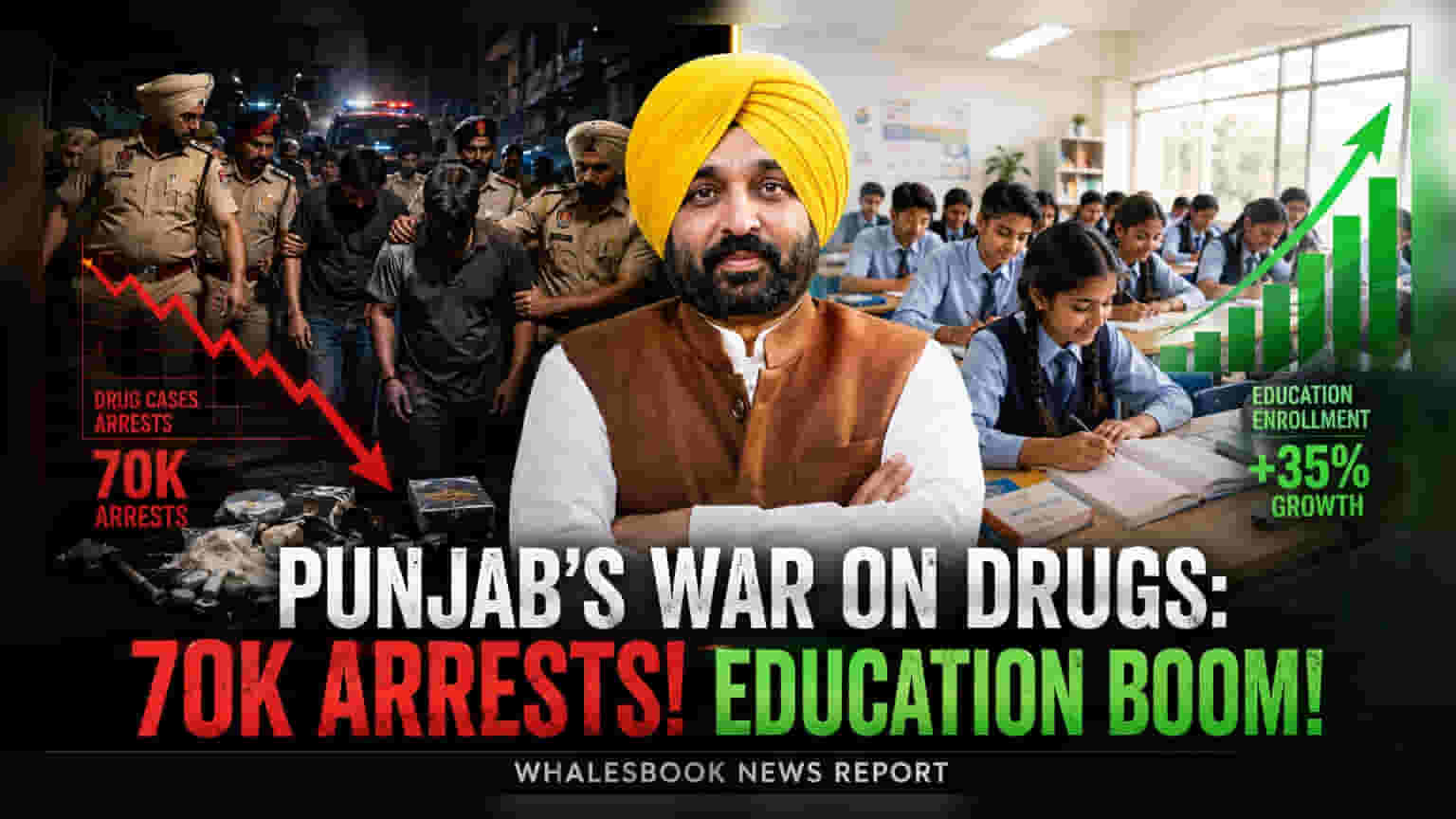
Punjab Chief Minister Bhagwant Mann reported 70,000 arrests related to drug smuggling following a 500-day campaign. The 'Yudh Nashean Virudh' initiative relies on community-based oversight through 1.25 lakh Village Defence Committee volunteers. Investors tracking Punjab's socio-economic stability may monitor how such large-scale administrative and law enforcement actions impact the state's local business environment and rural development goals.
Punjab Chief Minister Bhagwant Mann announced that the state's intensive anti-drug campaign, known as 'Yudh Nashean Virudh,' has resulted in the arrest of 70,000 individuals suspected of drug smuggling. This figure covers a span of 500 days of active enforcement. The state government has positioned this drive as a core part of its strategy to address the drug menace, which has historically been a significant challenge for the region.
Community Participation and Enforcement Strategy
A key element of this campaign is the involvement of Village Defence Committees. According to official reports, approximately 1.25 lakh volunteers are currently active across 13,000 villages in Punjab. The state government has described these committees as the foundation of the effort, aimed at identifying and reporting illegal activities at the local level. By decentralizing the oversight process, the administration aims to create a more resilient monitoring system within rural areas.
Economic and Social Context for Stakeholders
For those tracking the region's economic and investment landscape, law and order initiatives are often viewed as essential precursors to stable economic development. The drug issue has previously been cited by various industry observers as a factor that can hinder labor productivity and social stability. By focusing on both strict enforcement and community awareness, the government is attempting to stabilize the state's social fabric.
The effectiveness of these measures remains a subject of ongoing observation. Investors typically look for consistency in such administrative campaigns to determine whether they lead to long-term improvements in the state's business climate. Future updates from the state administration regarding judicial outcomes for those arrested, as well as the long-term sustainability of the volunteer-based committee structure, will be key factors for those monitoring the impact of these social policies on Punjab's regional stability.