

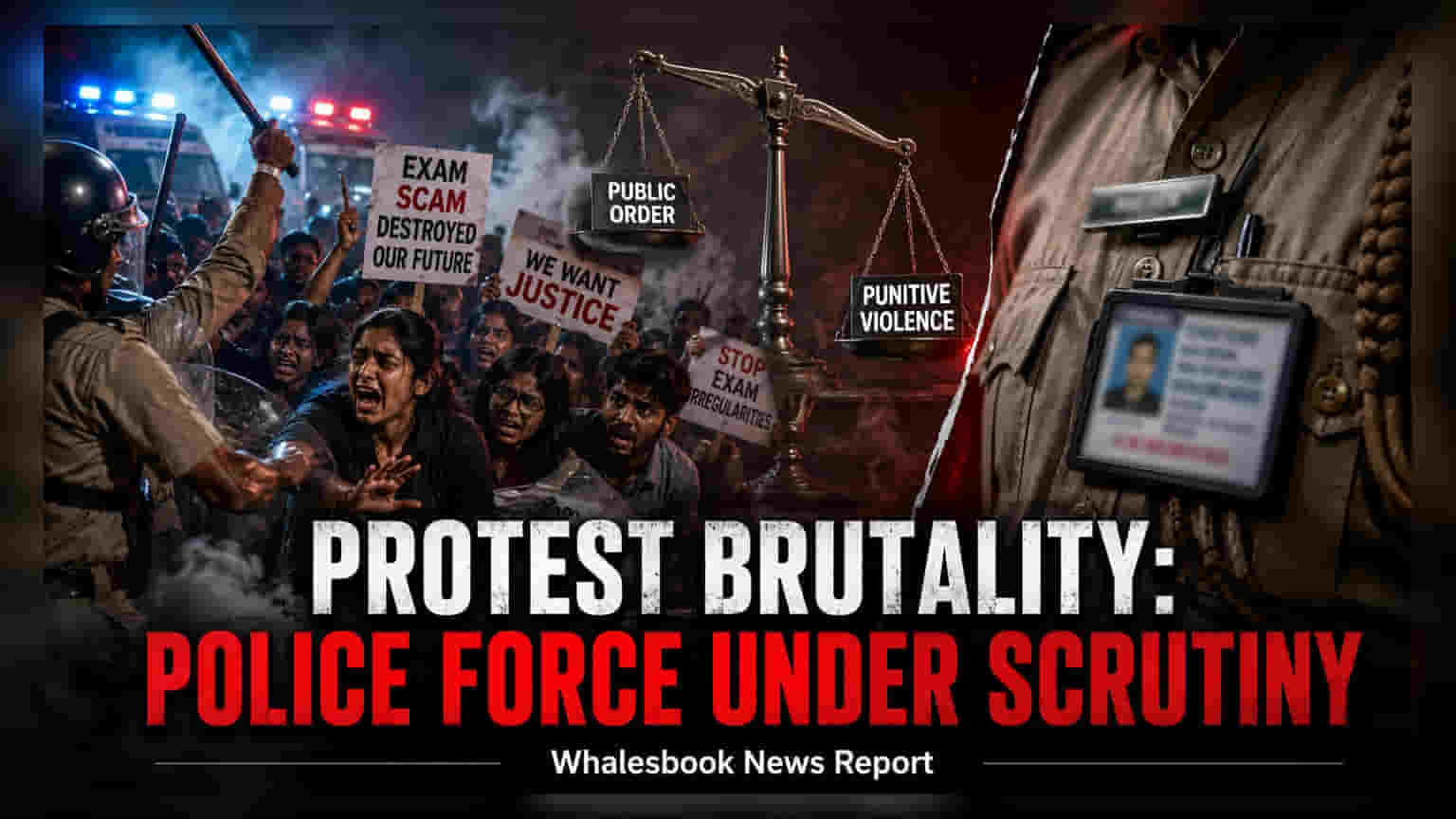
Legal experts are raising concerns over police conduct during a July 20 protest against national exam irregularities. Reports of unidentified officers and potential violations of force protocols have prompted a debate on constitutional accountability and crowd control standards.
Detailed Coverage
A protest held on July 20 regarding alleged irregularities in national-level examinations has led to a significant legal and civic discussion. Thousands gathered to march toward Parliament, resulting in a confrontation between demonstrators and security forces, including the Delhi Police and the Rapid Action Force.
Force Protocols and Constitutional Standards
Questions have been raised regarding the methods used to manage the crowd. Under the Bharatiya Nagarik Suraksha Sanhita (BNSS), law enforcement is permitted to use civil force to disperse unlawful assemblies, provided the action adheres to the principle of minimum force. Critics and legal observers are examining whether the reported actions, which include allegations of strikes to the head, align with the standards of proportionality and necessity established by the judiciary.
This principle of reasonableness is rooted in established legal precedents, such as the Supreme Court’s 2012 ruling in the Ramlila Maidan Incident case. In that judgment, the Court emphasized that any use of force by the state must be minimal, necessary, and proportionate to the situation to protect constitutional liberties. When these standards are not met, the nature of the policing can be viewed by critics as punitive rather than preventive.
Identification and Accountability Requirements
Another focal point for legal observers is the issue of officer identification. Reports indicating that some personnel may have obscured or removed their name badges have drawn comparisons to the Supreme Court’s 1997 ruling in the D.K. Basu vs State of West Bengal case. That ruling established clear guidelines requiring all police officers to wear visible identification to ensure that the use of coercive state power remains attributable to specific individuals.
This requirement is now reflected in Section 36 of the BNSS, which is designed to ensure accountability. Legal analysts argue that the inability to identify officers involved in the confrontation hinders the ability of citizens to seek redressal through formal channels. The denial of prompt legal access for some detained individuals has further amplified calls for a review of the chain of command and the protocols followed during the demonstration.
While the Delhi Police has maintained that the situation was handled professionally, the combination of allegations regarding excessive force and the challenges surrounding officer identification remain subjects of ongoing debate. Investors and observers often monitor such incidents as they relate to the broader regulatory environment and the institutional adherence to legal safeguards in public management.