

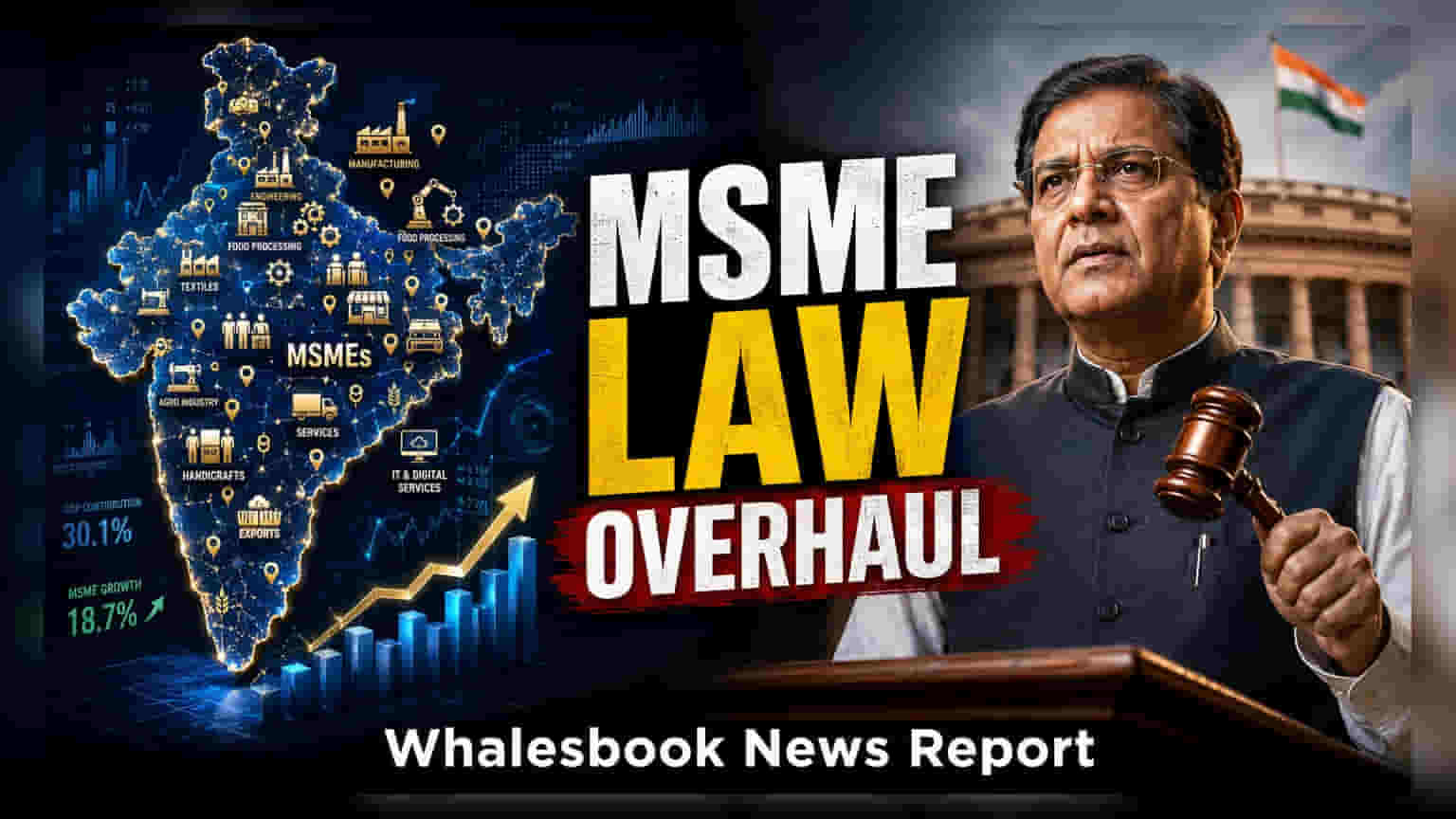
Parliament has passed the MSME Development (Amendment) Bill, 2026, introducing major reforms to improve payment cycles and dispute resolution. Key changes include mandatory TReDS invoice settlement for public sector firms and faster legal remedies for suppliers. The law aims to unlock working capital and reduce financial stress for small businesses.
The Micro, Small and Medium Enterprises (MSME) Development (Amendment) Bill, 2026, has been passed by both Houses of Parliament, receiving approval from the Rajya Sabha on August 3, 2026, and the Lok Sabha on August 7, 2026. This legislation marks a significant attempt to modernize the legal framework governing small businesses in India, focusing on structural improvements to cash flow, compliance, and dispute settlement.
Addressing Liquidity and Payment Delays
A central pillar of the new law is the focus on timely payments, which has historically been a significant pain point for MSMEs. The amendment introduces a mandatory requirement for all Central Public Sector Enterprises (CPSEs) to settle invoices through the Trade Receivables Discounting System (TReDS). By bringing these transactions onto an RBI-regulated digital platform, the government aims to ensure that suppliers can access liquidity against their invoices faster, rather than waiting for extended payment cycles that often strain working capital and operational stability.
Faster Dispute Resolution
To combat the issue of long-drawn-out legal battles, the Bill enhances the framework for dispute resolution. It establishes a statutory timeline for mediation and arbitration processes. A critical investor-relevant provision is the mandate for courts to order a 50% payment of awarded amounts to the supplier if a case remains pending for more than six months. This mechanism is designed to prevent buyers from using the judicial process to delay payments indefinitely, providing relief to smaller vendors who may lack the financial reserves to sustain lengthy litigation.
Digital Registration and Flexibility
The amendment provides statutory backing to the Udyam digital registration portal, standardizing the process for businesses to formally register as MSMEs. Furthermore, the legislation empowers the government to adjust investment and turnover thresholds for MSME classification via notifications. This allows for more agility in adapting to inflation, technological advancements, or changing market conditions without needing to go through the legislative process every time a classification update is required.
Implementation and Business Outlook
While the amendment introduces structural improvements, its real-world impact will depend on the notification of detailed rules and the operational capacity of the newly empowered Facilitation Councils. For businesses and investors watching the sector, the primary monitorables will include the pace at which CPSEs integrate fully with TReDS and the efficiency with which local councils handle new cases.
Investors should note that while this law addresses critical areas like payment delays and dispute resolution, it does not remove the broader regulatory burden that MSMEs face, such as complex GST compliance or environmental and labour law requirements. The legislation represents a step toward a more trust-based regulatory environment, but small enterprises will continue to navigate sector-specific pressures such as high working capital needs and competitiveness against large-scale or imported goods.