

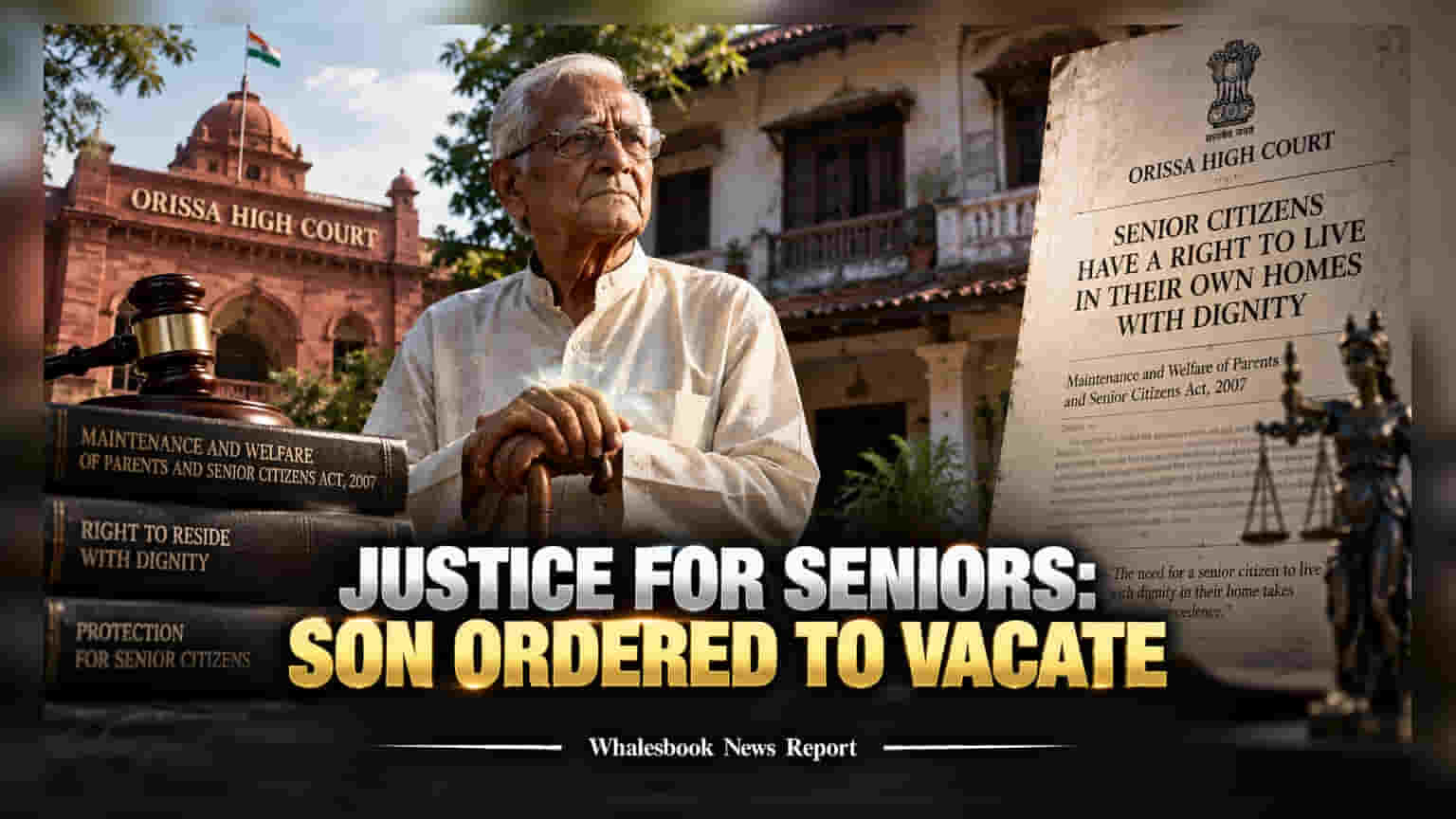
The Orissa High Court has directed an 86-year-old man’s son to vacate the ground floor of their family home, citing the Maintenance and Welfare of Parents and Senior Citizens Act, 2007. This legal decision prioritizes the father's right to live with dignity. The court clarified that this ruling concerns residency and does not impact separate, ongoing civil disputes regarding property ownership.
The Orissa High Court has issued a significant ruling regarding the rights of senior citizens to reside in their own homes. In a case involving an 86-year-old retired government employee, the court mandated that the man’s youngest son must vacate the ground floor of the family’s ancestral property. The decision was based on the Maintenance and Welfare of Parents and Senior Citizens Act, 2007, which aims to provide protective mechanisms for elderly individuals against harassment and displacement.
The court emphasized that the primary purpose of this legislation is to ensure the physical safety and emotional well-being of parents within their own residence. By upholding the order, the judiciary affirmed that the need for a senior citizen to live with dignity in their home takes precedence in these specific legal proceedings.
While the court secured the father's immediate right to reside in the property, it maintained a clear boundary regarding separate legal disagreements. The father had previously transferred several land titles to the son’s name during a time when the family relationship was stable. Following a breakdown in the relationship, the father sought to reclaim these assets. The High Court, however, determined that the Maintenance and Welfare of Parents and Senior Citizens Act is not designed to settle complex questions of property title. It directed that such disputes over ownership and land transfers must be handled through the appropriate civil court process.
This case remains a private legal matter between family members. It has no bearing on public markets, corporate performance, or stock exchange listings. The ongoing dispute regarding land ownership continues to be a matter for civil litigation, distinct from the court's order concerning the immediate right of residence.