

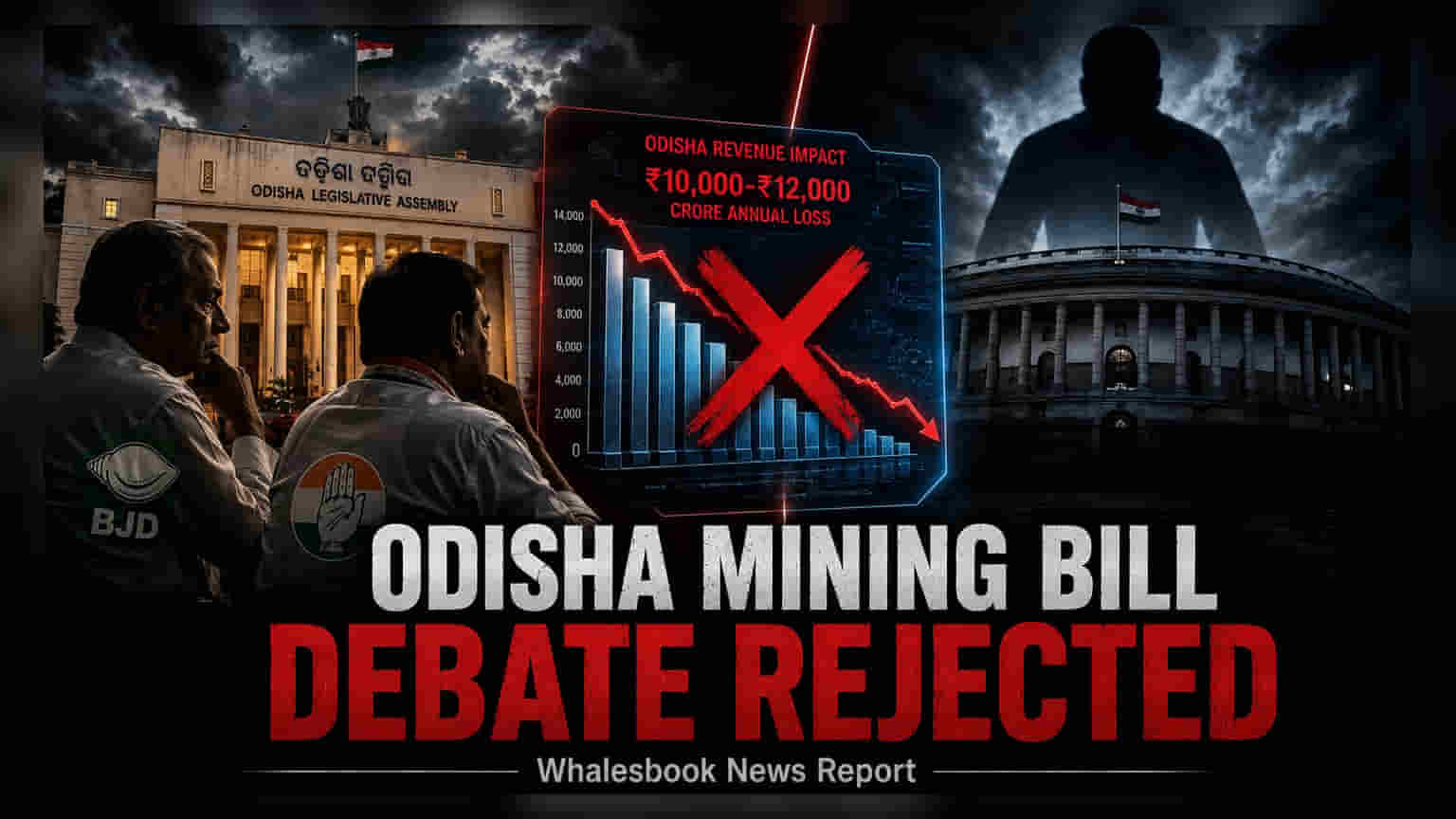
The Odisha government has declined opposition requests for a special assembly session to discuss the Mines and Minerals (Development and Regulation) Amendment Bill, 2026. This decision shifts the debate to the upcoming monsoon session. For investors, the development highlights ongoing policy uncertainty regarding state-level mining revenues, which could impact operational costs and regulatory stability for major mining and steel producers in the region.
The Odisha government has officially turned down demands from the Biju Janata Dal (BJD) and the Congress party to hold a special legislative assembly session. The request was aimed at debating the recently passed Mines and Minerals (Development and Regulation) Amendment Bill, 2026. Parliamentary Affairs Minister Mukesh Mahaling confirmed the refusal, stating that the discussion will instead take place during the standard monsoon session of the assembly, expected to convene in September.
The opposition parties have characterized the legislation as a threat to the state’s financial health. Critics argue that the bill, which was passed by the Union Parliament on August 13, 2026, limits the state's authority to collect taxes on mineral-bearing lands. Opposition leaders have raised concerns that this change could lead to annual revenue losses estimated between ₹10,000 crore and ₹12,000 crore for Odisha, alongside potential losses in historical dues.
This legislative conflict follows a significant 2024 Supreme Court ruling that had previously strengthened the rights of states to tax mineral rights. The new Amendment Act is the central government's legislative response to this ruling. While the central government asserts that the Act ensures a stable, transparent, and competitive environment for mining operations, the opposition claims it erodes state fiscal autonomy, or the power of the state to manage its own tax revenue.
For shareholders in companies with significant operations in Odisha—such as Tata Steel, Vedanta, National Aluminium Company (Nalco), and Jindal Steel & Power—this political and legislative friction is a key monitorable. Changes to mining regulations and tax structures directly impact operating costs, profit margins, and project viability. When there is a standoff between state and central governments regarding mineral-related fiscal powers, it creates a layer of uncertainty for long-term project planning and royalty structures.
Beyond the assembly hall, the issue has led to calls for widespread protests and potential disruptions. Investors may need to track how the upcoming monsoon session unfolds and whether any specific amendments or localized policy responses are proposed to address these revenue concerns. The core focus for the market will be on how this impacts the long-term cost structure of mineral extraction and whether it results in any operational delays or localized regulatory hurdles in the state.