

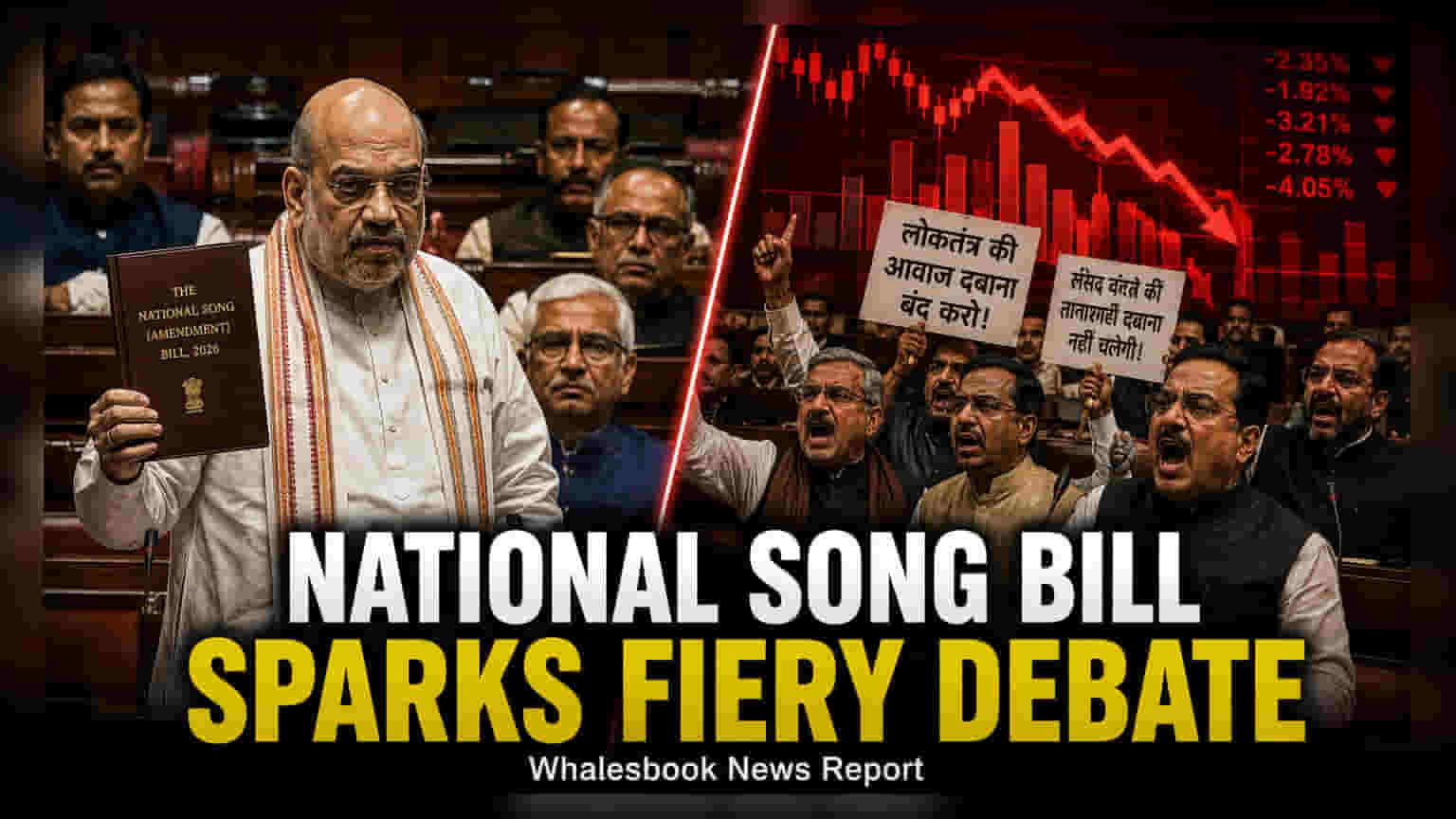
The government has introduced an amendment to the Prevention of Insults to National Honour Act in the Rajya Sabha. The proposed law seeks to criminalize the intentional disturbance of the national song, 'Vande Mataram', mirroring existing protections for the national anthem. If passed, offenders could face up to three years in prison.
Detailed Coverage
The Union government has introduced the National Honour (Amendment) Act, 2026, in the Rajya Sabha, aiming to extend legal protection to the national song, 'Vande Mataram'. The bill, introduced by Minister of State for Home Affairs Nityanand Rai, seeks to modify Section 3 of the Prevention of Insults to National Honour Act, 1971, which currently focuses on the national anthem.
Under the proposed amendment, any individual who intentionally prevents the singing of 'Vande Mataram' or disrupts an assembly engaged in its rendition may face imprisonment of up to three years, a fine, or both. This legislative change seeks to provide the national song with the same legal status as the national anthem regarding public performance and conduct.
Legislative Rationale and Government Stance
The Statement of Objects and Reasons for the bill, presented by Union Home Minister Amit Shah, draws upon a historical perspective from the January 24, 1950, meeting of the Constituent Assembly. The document cites that Dr. Rajendra Prasad, who served as the President of the Constituent Assembly, held the view that 'Vande Mataram' deserves equal honor alongside the national anthem due to its significant contribution to India’s freedom movement. This legislative effort aims to formalize that stance into current law.
Opposition and Parliamentary Debate
The introduction of the bill faced immediate pushback from opposition members in the Rajya Sabha. Parliamentarians including P Sandosh Kumar and John Brittas of the CPI expressed opposition, characterizing the bill as an attempt to divert parliamentary focus. They argued that the introduction of such legislation serves to pull attention away from other active concerns, such as the ongoing discussions regarding the NEET paper leak and the accountability of the Union Education Minister.
Context of Recent Guidelines
This move follows a directive issued by the Ministry of Home Affairs on July 9, 2026. That instruction had already set a framework for the national song’s usage, requiring that all six stanzas of 'Vande Mataram' be performed at official functions and in schools before the national anthem. The guidelines also stipulated that audiences should remain standing during the song, excluding instances where it is played as part of a cinematic narrative in theaters. The current bill serves to codify and add legal enforcement mechanisms to the respect accorded to the song, a process that investors and the public will continue to monitor as the bill progresses through the parliamentary approval process.