

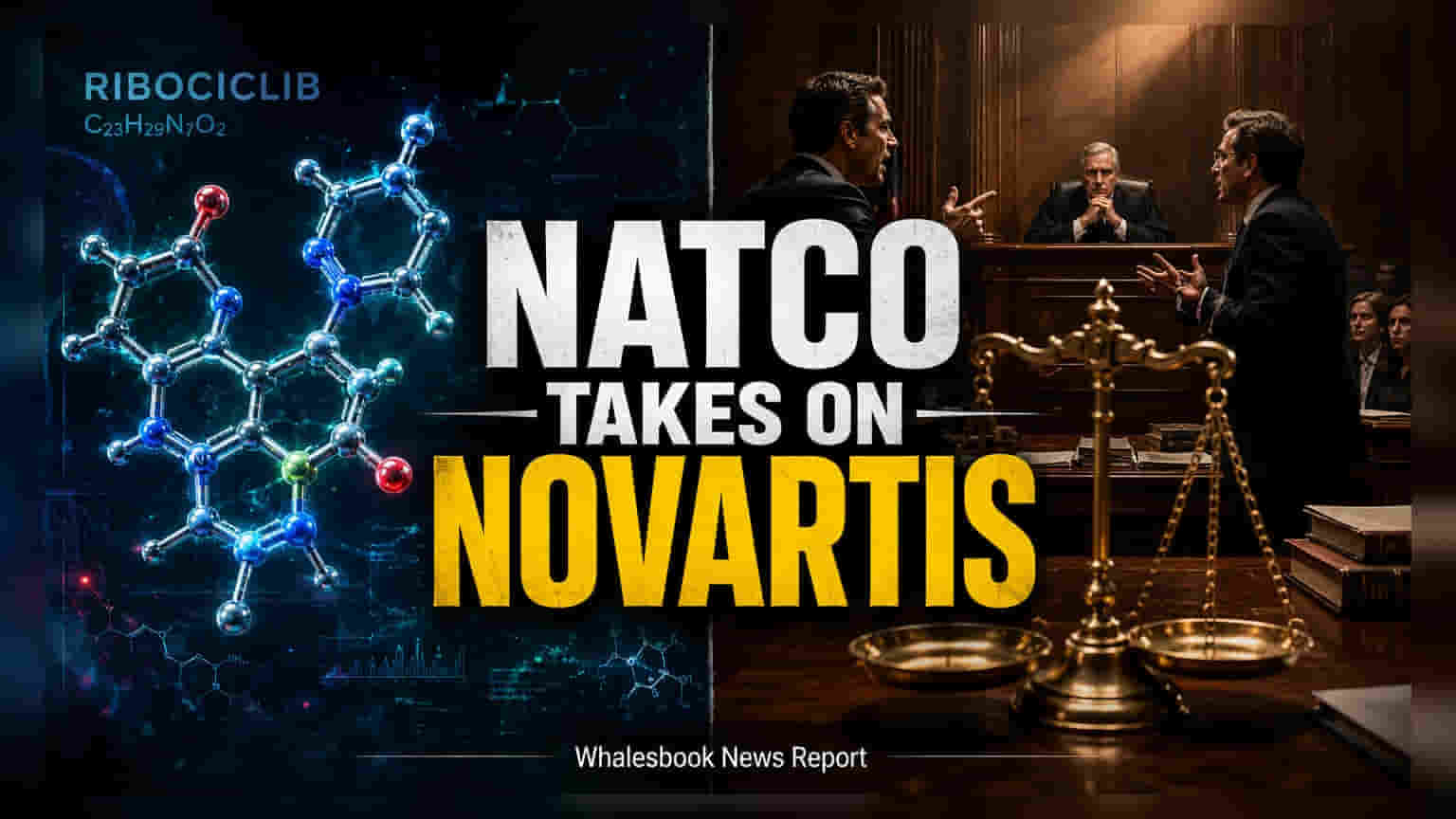
Natco Pharma has challenged the Indian Patent Office’s decision to grant a second patent for Novartis’s breast cancer drug, ribociclib, claiming it unlawfully extends exclusivity until 2029. This legal battle is significant for Natco, which is working to navigate generic competition, export-related risks, and a recent decline in quarterly profits.
Natco Pharma has approached the Delhi High Court to contest the Indian Patent Office’s recent approval of a second patent for Novartis’s breast cancer medication, ribociclib, marketed as Kisqali. The Hyderabad-based drugmaker argues that this latest patent grant, issued on July 10, 2026, creates an unlawful monopoly by extending Novartis’s market exclusivity until 2029.
Natco’s legal petition contends that ribociclib is already protected under an existing Indian patent (IN 283133) that is valid until May 2027. By securing a second patent, Natco alleges that the company is effectively delaying the entry of generic versions of the drug into the Indian market. Justice Anup Jairam Bhambhani, who heard the matter briefly, has issued notices to the concerned parties, with further proceedings scheduled for September 16, 2026.
This legal friction comes at a challenging time for Natco Pharma. The company recently reported a 34% year-on-year decline in its consolidated net profit for the fourth quarter of the 2026 fiscal year, which stood at ₹270 crore. The company’s stock has been trading around the ₹918–₹921 level, reflecting a cautious market sentiment as investors weigh the company's growth prospects against its current financial pressures.
For Natco, the ability to launch high-value generic products is a central part of its growth strategy. However, the generic pharmaceutical sector is currently facing several headwinds. Beyond patent litigation, there are broader industry concerns regarding potential US tariffs on generic drug imports, which could impact the company’s export realizations. Furthermore, Natco continues to face intense pricing competition in its key export markets, which, combined with rising operational costs, has contributed to earnings volatility.
Investors and market participants are closely monitoring this legal dispute, as it directly impacts the timeline for when Natco might be able to commercialize its own version of the drug. The company has a history of engaging in such patent challenges to secure early market access, but the outcome of these cases remains uncertain. Moving forward, the key monitorable for shareholders will be the outcome of the September 16 hearing and any further updates on the company’s ability to navigate these regulatory and patent-related hurdles.