

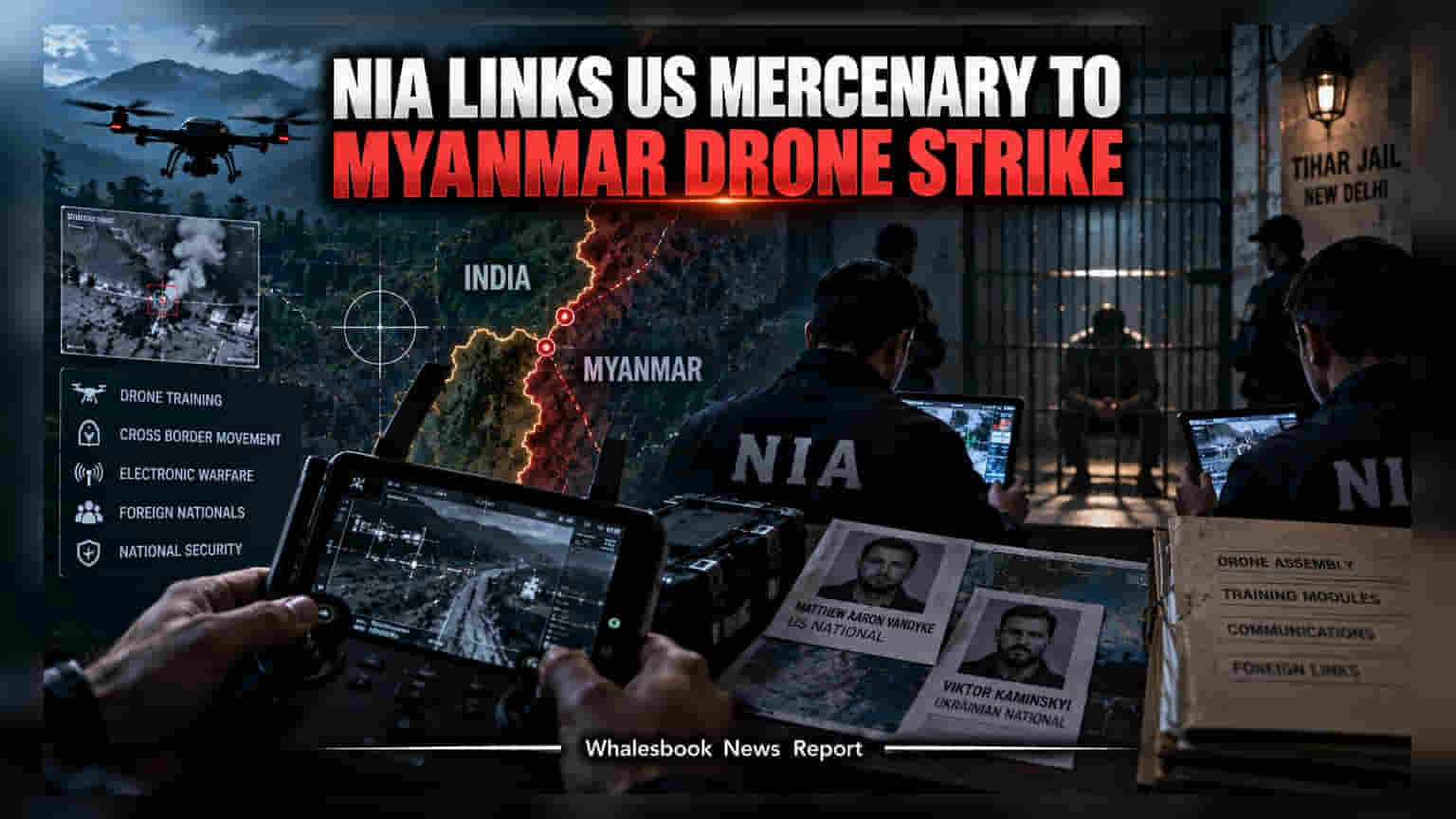
The National Investigation Agency has informed a Delhi court that seven foreign nationals, including a US citizen, held in Tihar Jail are linked to a drone strike on a civilian aircraft in Myanmar. The detainees allegedly provided training in drone warfare to ethnic armed groups after entering India on tourist visas.
The National Investigation Agency (NIA) has formally apprised a Delhi court of significant findings connecting seven foreign nationals currently detained in Tihar Jail to a targeted drone strike in Myanmar. The investigation highlights the suspected involvement of these individuals in training Ethnic Armed Groups (EAGs) to conduct military-grade drone operations and electronic warfare.
Among those identified by investigators are a US national, Matthew Aaron VanDyke, and several Ukrainian citizens, including Viktor Kaminskyi. Federal investigators allege that the group entered India on tourist visas, arriving initially in Guwahati, Assam. From there, the cohort reportedly bypassed travel permit requirements to reach Mizoram, eventually crossing into Myanmar to provide technical expertise in drone assembly and jamming technology. The NIA contends that these actions were intended to strengthen insurgent capabilities against the military junta in Myanmar, with potential security implications for India’s Northeast region.
Digital forensic evidence, including images and video recordings recovered from devices seized during operations in Kolkata, Lucknow, and New Delhi, forms a key part of the agency's case. On August 31, 2026, the Delhi court granted the NIA permission to conduct custodial interrogation of VanDyke and Kaminskyi to further investigate the conspiracy. The suspects have been charged under the Unlawful Activities Prevention Act (UAPA), reflecting the gravity of the allegations regarding activities that could disrupt India's sovereignty and internal security.
The investigation remains sensitive due to the international nature of the suspects and the complex legal and diplomatic challenges involved. While legal teams representing the detainees have contested the necessity of further custodial questioning, the court has authorized the process, citing the requirement for the NIA to complete its investigation without judicial interference. Meanwhile, reports regarding the health and specialized needs of the detainees have added a layer of complexity to the administrative handling of the case within the prison system.
The next critical phase of the investigation will involve the detailed analysis of the recovered digital data and the findings from the authorized interrogations. Authorities are focusing on determining the full extent of the training provided and whether the network had additional support structures within India. The case serves as a point of concern for national security agencies, particularly regarding the potential for foreign nationals to exploit border regions for illicit military training.