

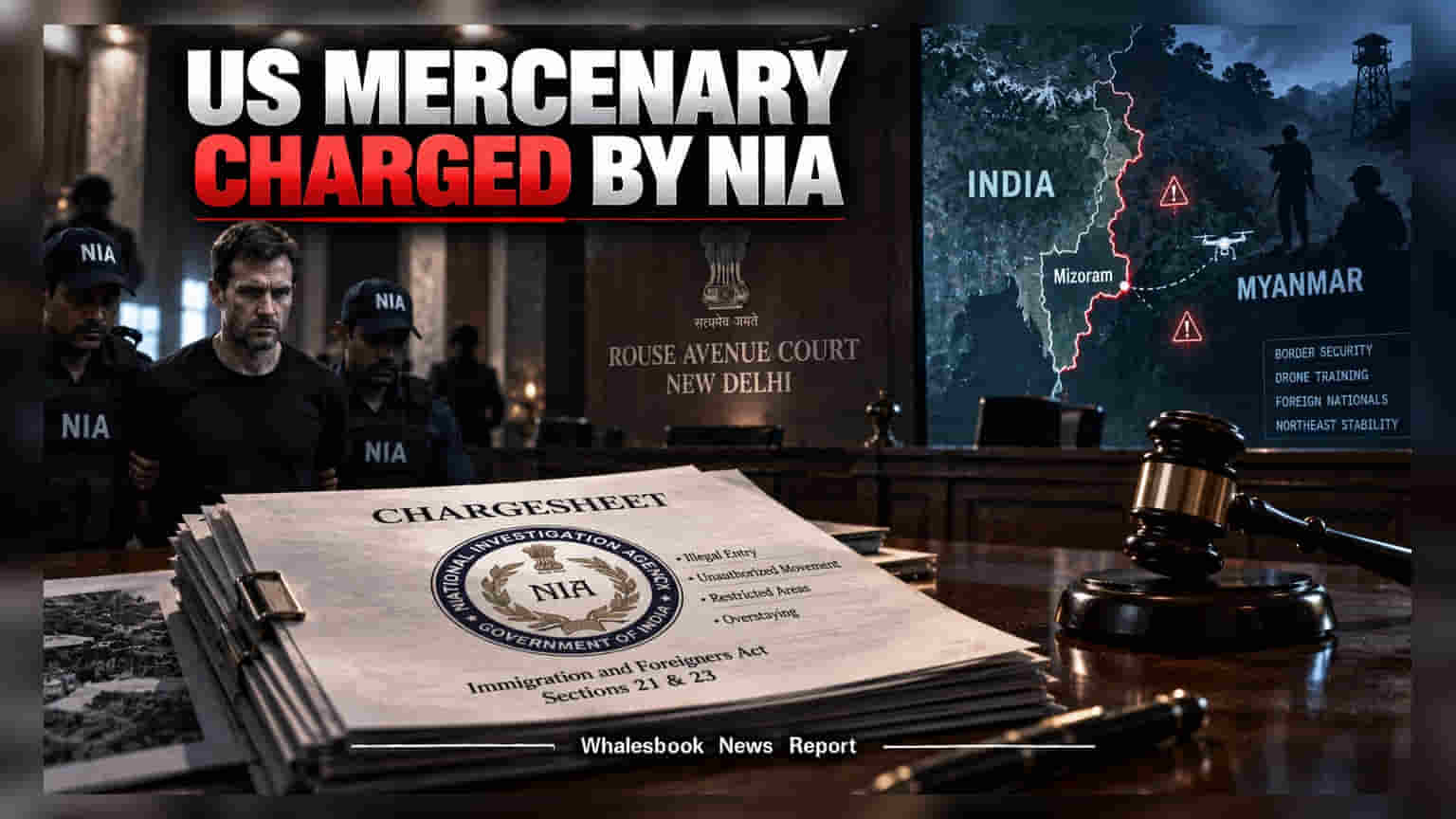
The National Investigation Agency has filed a chargesheet against American national Matthew Aaron VanDyke and six Ukrainian associates for violating immigration laws. The charges follow allegations of providing drone warfare training to ethnic armed groups near the Myanmar border. While the current legal focus remains on visa and travel rule breaches, authorities have confirmed that the investigation into potential security threats remains active.
The National Investigation Agency (NIA) filed a formal chargesheet on Tuesday at the Rouse Avenue Court in Delhi, marking a significant step in the legal case against American national Matthew Aaron VanDyke and six Ukrainian associates. The group was initially detained in March 2026 at various Indian airports, triggering a seven-month investigation into their activities along India's northeastern border.
The chargesheet currently focuses on alleged violations of the Immigration and Foreigners Act, specifically Sections 21 and 23. These provisions concern illegal entry, unauthorized movement, and overstaying in restricted areas. Authorities allege that the group utilized valid visas to enter India, traveled to the sensitive border region of Mizoram without the required permits, and crossed into Myanmar to provide drone warfare training to ethnic armed groups operating in the conflict-ridden territory.
Legal observers have noted a strategic recalibration in the NIA’s approach. While the initial detention involved scrutiny under the Unlawful Activities (Prevention) Act (UAPA) regarding potential links to terrorism and attacks on civilian infrastructure in Myanmar, the current chargesheet confines the immediate prosecution to regulatory and territorial transgressions. By narrowing the scope to immigration violations, the agency has prioritized the immediate legal documentation of the group's movements and activities.
Despite the shift in the current charges, the broader legal and security investigation continues. The NIA has clarified that the probe into UAPA-related offenses remains pending, meaning the legal pathway for more severe charges has not been ruled out. The agency has also secured permission to continue interrogating VanDyke and one of his associates while they remain in judicial custody.
The involvement of foreign nationals in tactical training near the porous Mizoram-Myanmar border has drawn sustained attention from security agencies. Given the regional volatility, authorities are closely vetting the extent of the training provided and the potential long-term implications for stability in the Northeast. Investors and market watchers generally monitor such developments in border regions as they directly impact regional security, infrastructure projects, and the overall stability required for economic activity in the Northeast.
The next important phase for this case will be the continued investigation by the NIA into the pending UAPA-related aspects, which could lead to further legal updates. Stakeholders should track court proceedings for any new information regarding the status of the investigation or changes in the legal strategy pursued by the state.