

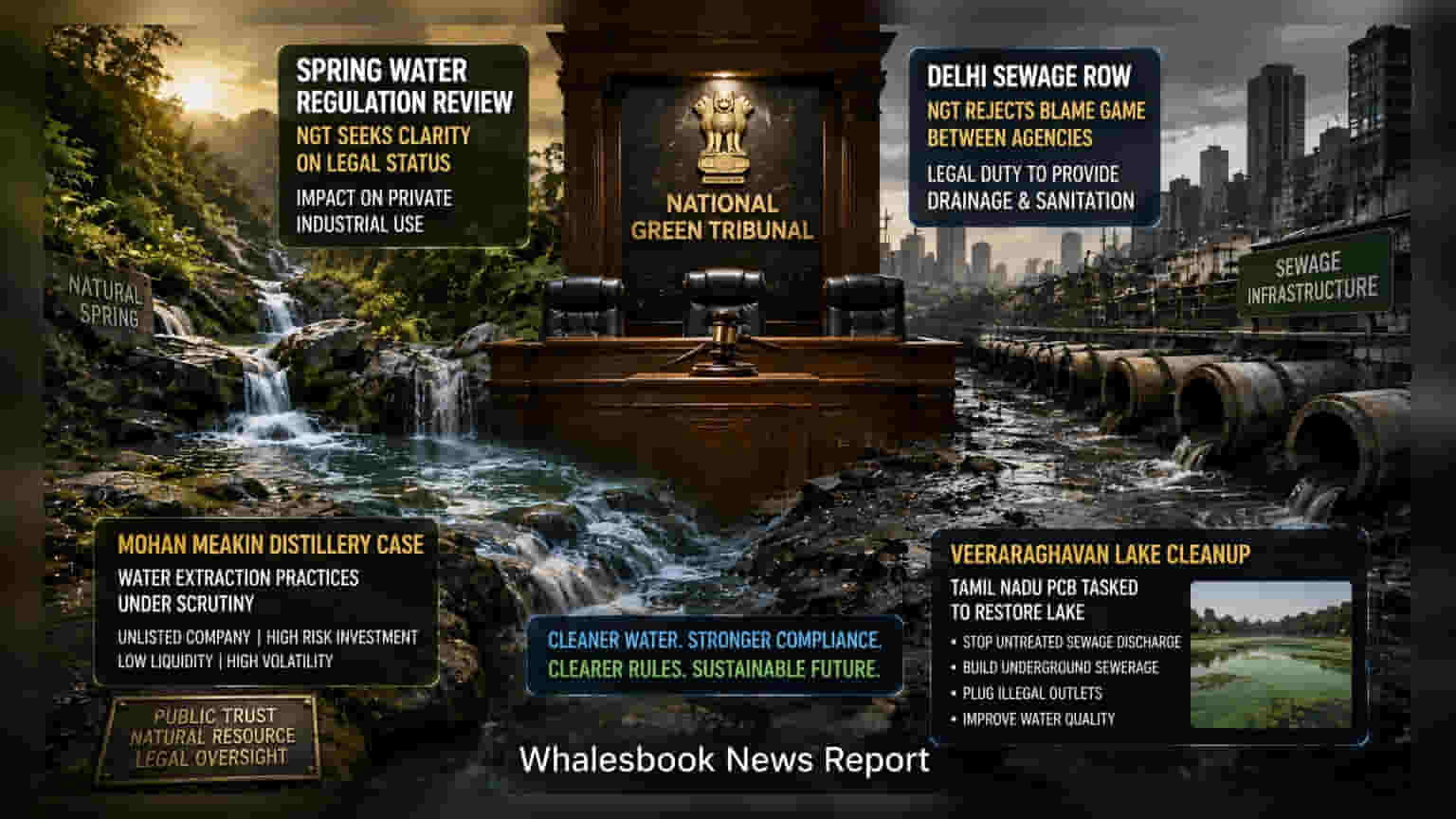
The National Green Tribunal (NGT) has directed the Ministry of Jal Shakti to clarify the regulatory status of spring water extraction by private industries. This development, alongside orders to resolve Delhi's sewage infrastructure deadlock, highlights growing regulatory pressure on environmental compliance.
The National Green Tribunal (NGT) has launched a significant review of how spring water is regulated for private industrial use. The tribunal has directed the Union Ministry of Jal Shakti to determine whether natural spring water should be classified under existing groundwater laws. This order follows ongoing litigation concerning the Kasauli distillery operated by Mohan Meakin, where questions have been raised regarding the company's water extraction practices.
For investors, it is important to note that Mohan Meakin is an unlisted public limited company and does not trade on major exchanges like the NSE or BSE. Shares for such companies are typically traded in the unlisted or "grey market." Unlike listed stocks, these shares face significantly lower liquidity, higher price volatility, and limited regulatory oversight, which can make them high-risk investments. The NGT's move to tighten oversight on spring water could further complicate compliance for companies relying on this resource, potentially impacting future operational flexibility.
Parallel to this, the NGT is addressing a long-standing administrative deadlock in the capital. There is a persistent friction between the Delhi Jal Board and the Delhi Urban Shelter Improvement Board regarding who is responsible for managing sewage infrastructure in informal settlements. The tribunal has rejected attempts by authorities to shift blame, asserting that there is a clear legal obligation to provide proper drainage and sanitation.
This governance standoff carries implications for companies involved in urban sanitation, waste management, and infrastructure development. When regulatory agencies are in conflict, it often leads to project delays, payment cycle issues, and increased scrutiny on contract execution. Investors monitoring infrastructure and water treatment sectors should track how quickly these civic bodies can resolve their disputes to clear the way for ongoing sanitation schemes.
Separately, the Tamil Nadu Pollution Control Board has been tasked with cleaning the Veeraraghavan lake in Tambaram. The lake has been severely impacted by untreated sewage discharge, leading to poor water quality and the spread of invasive plants. Local authorities have been ordered to build underground sewerage networks and plug illegal outlets to restore the water body. This cleanup initiative underscores the ongoing nationwide effort to enforce stricter environmental standards, which may increase compliance costs for industrial and municipal entities operating near critical water sources.