

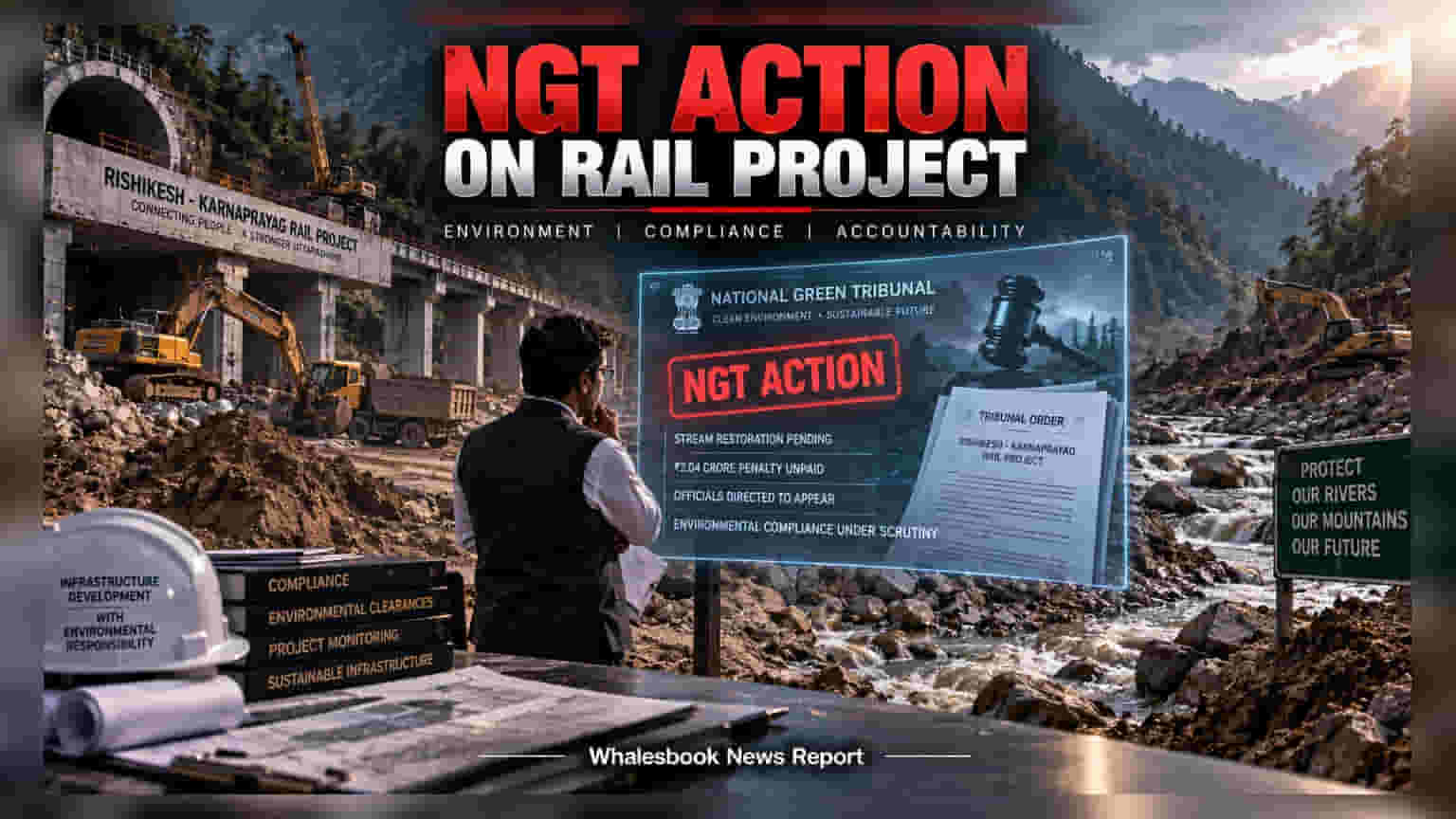
The National Green Tribunal has criticized authorities and developers, including Rail Vikas Nigam Limited (RVNL) and Megha Engineering, for environmental damage in the Rishikesh-Karnaprayag rail project. The tribunal highlighted an unpaid Rs 2.04 crore penalty for ecological restoration, flagging concerns about project compliance and accountability in sensitive Himalayan regions.
The National Green Tribunal has issued a sharp reprimand regarding environmental compliance in the Rishikesh-Karnaprayag rail project, naming Rail Vikas Nigam Limited (RVNL) and Megha Engineering and Infrastructures Limited. The tribunal’s criticism focuses on the failure to restore the Chopra Gadhera freshwater stream in Jawadi village, which was damaged during the construction of the railway line.
Accountability in the Rishikesh-Karnaprayag Rail Project
Despite an earlier directive issued in July 2026 requiring a report on environmental compensation, the tribunal noted that documentation remains incomplete. A major point of contention for the court is an unpaid penalty of approximately Rs 2.04 crore, which was mandated for the restoration of the damaged ecology. Justice Arun Kumar Tyagi has directed senior state officials, including the Chief Secretary of Uttarakhand and the Principal Chief Conservator of Forests, to appear personally to address why these orders have not been complied with.
For investors, environmental compliance is a critical monitorable for infrastructure companies, particularly those operating in ecologically sensitive zones like the Himalayas. Failure to adhere to environmental norms can lead to project delays, stop-work orders, increased costs, and reputational damage. While the penalty amount is relatively small compared to the scale of large infrastructure projects, the regulatory pressure and the potential for stricter oversight on future project execution remain significant factors for stakeholders.
Broader Regulatory Focus on Compliance
The tribunal also addressed separate environmental concerns in Uttar Pradesh, including allegations of illegal waste disposal by paper mills in Muzaffarnagar and stalled rejuvenation efforts for a water body in Prayagraj. By issuing notices to the Commission for Air Quality Management and state pollution control boards, the NGT is signaling a wider, more rigorous approach to monitoring environmental standards across industrial and infrastructure projects.
The key focus for investors moving forward will be how the companies and state agencies respond to these regulatory directives. The next court hearings, scheduled for early December 2026, will be important for tracking whether the pending penalties are settled and if the project restoration plans are finalized. Investors may also look for any company announcements regarding compliance measures or potential updates on these ongoing regulatory proceedings.