 Whalesbook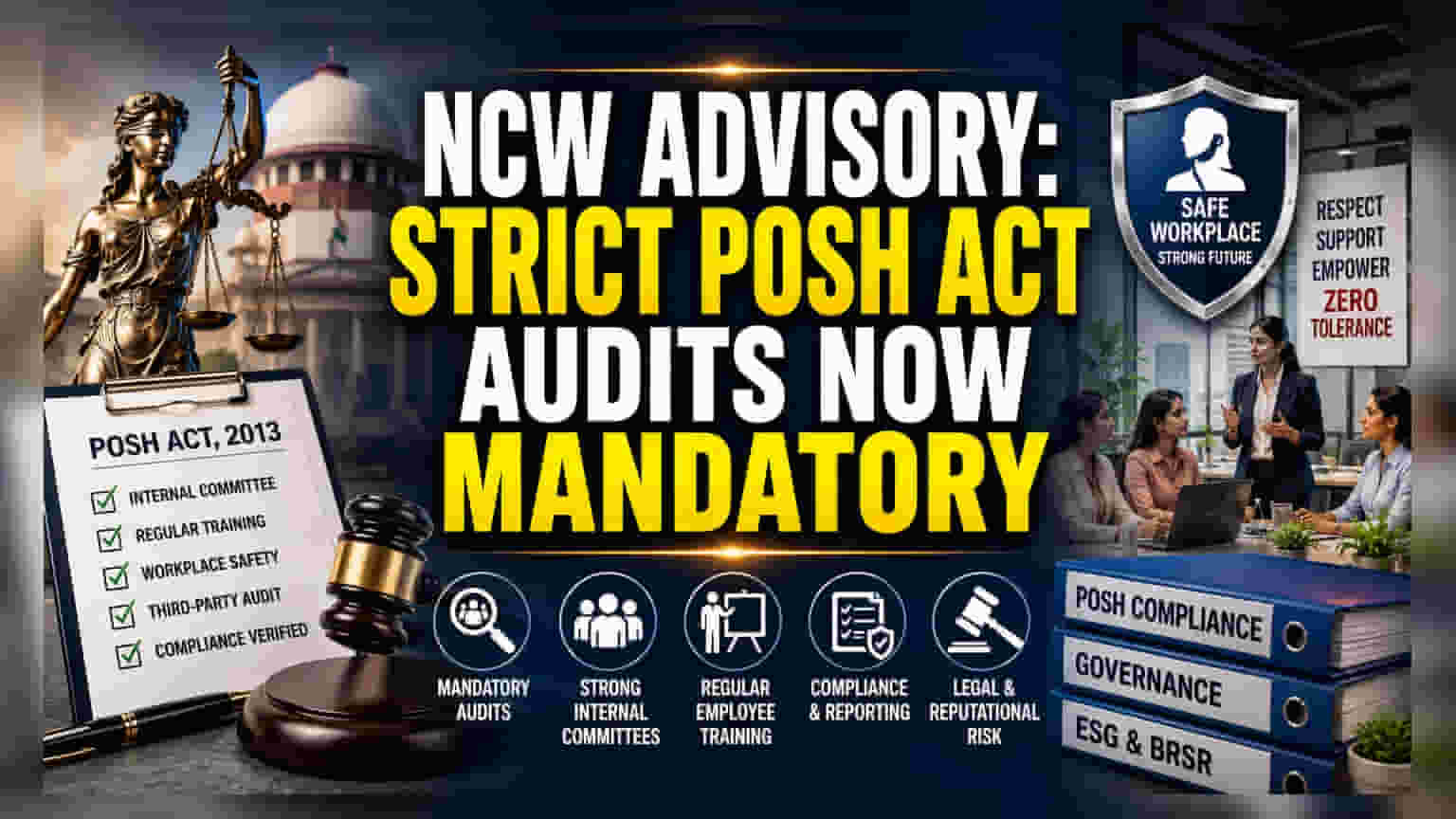
The National Commission for Women (NCW) has issued an advisory to states to enforce mandatory POSH audits, signaling a major regulatory push for workplace safety. For investors, this highlights the growing importance of ESG compliance, as companies may now face stricter scrutiny regarding internal governance and workplace safety standards.
What Happened
The National Commission for Women (NCW) has issued a significant advisory to all states and Union Territories, urging the immediate and strict enforcement of mandatory audits under the Sexual Harassment of Women at Workplace (Prevention, Prohibition and Redressal) Act, 2013 (POSH Act). The Commission has called for these audits to be treated with the same level of importance and priority as financial or fire safety checks. This directive aims to ensure that companies move beyond mere paperwork and implement tangible safety measures, including the effective functioning of Internal Committees (ICs) and continuous employee training.
Why This Matters For Investors
For shareholders and the broader market, this advisory signals a tightening of the regulatory environment around workplace governance. While the POSH Act has been in place for over a decade, the NCW's call for mandatory audits suggests that regulators are moving toward a 'verify and enforce' model rather than relying solely on self-declared compliance.
From an investor's perspective, this is closely linked to the 'Social' (S) pillar of Environmental, Social, and Governance (ESG) criteria. Institutional investors and funds increasingly use ESG scores to evaluate long-term business sustainability. A failure to demonstrate robust compliance with such social laws can lead to reputational risk, potential legal penalties, and a negative impact on a company's ESG rating. As transparency standards under frameworks like SEBI's Business Responsibility and Sustainability Reporting (BRSR) continue to evolve, companies will likely face more pressure to disclose the health and effectiveness of their internal safety mechanisms.
The Corporate Impact
The implementation of these audits will likely require companies to strengthen their internal governance frameworks. This involves not only ensuring that Internal Committees are properly constituted with the mandatory number of women members and external experts but also that they are actively functioning. Companies may need to allocate more resources toward regular third-party audits, specialized staff training, and digital compliance tracking systems to meet these heightened expectations from district-level authorities and regulators.
Risks and Governance Oversight
The primary risk for investors lies in the operational and reputational fallout of non-compliance. If a company fails to maintain effective POSH protocols, it may face scrutiny from District Magistrates, police, and other regulatory bodies. Beyond legal repercussions, inconsistent governance in sensitive areas like workplace safety can signal broader management deficiencies to the market. For companies with large workforces, especially in the organized sector, failing to keep pace with these evolving safety standards could become a point of friction during audits or investor diligence processes.
What Investors Should Track
Investors may want to monitor how companies disclose their workplace safety metrics in future annual reports or sustainability filings. Key areas to watch include the transparency of Internal Committee disclosures, the frequency of safety training programs, and any management commentary regarding updates to compliance policies. As the regulatory push for active monitoring increases, the ability of a company to maintain a safe and compliant working environment will become a clearer indicator of its long-term operational discipline and governance quality.