

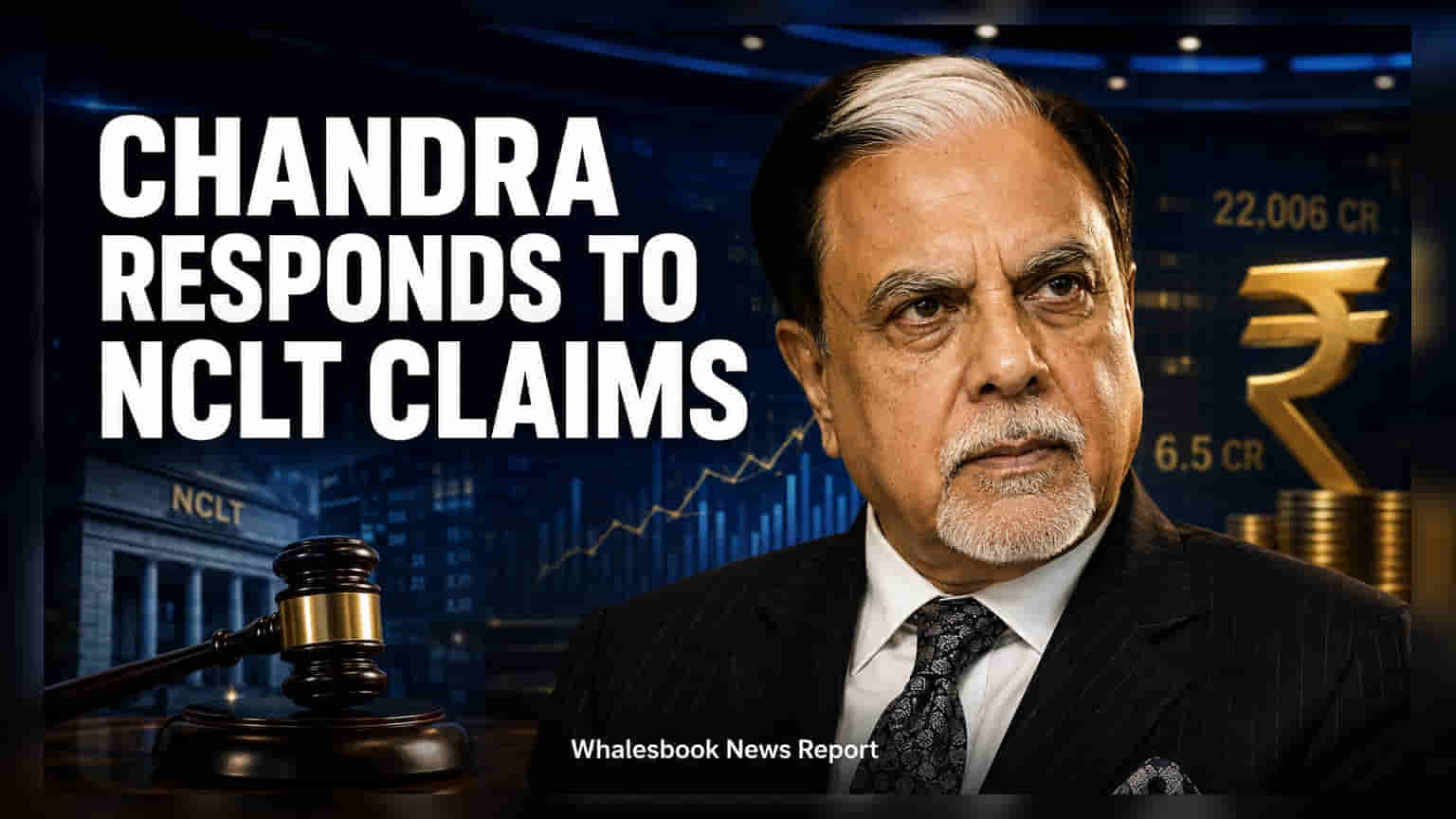
The NCLT Delhi bench has approved a personal insolvency plan for Zee Group founder Subhash Chandra, allowing a payout of ₹6.5 crore against contested claims. Major creditors, including HDFC Bank and LIC Housing Finance, are set to challenge this decision, which effectively results in a significant write-down for lenders.
The National Company Law Tribunal (NCLT) Delhi bench has approved a personal insolvency resolution plan for Zee Group founder Subhash Chandra. Under the Insolvency and Bankruptcy Code (IBC), the plan requires a total payment of ₹6.5 crore, which includes ₹6.25 crore for creditors and ₹0.25 crore allocated for process costs. This approval was granted following a tie-breaking vote from a judicial member after a split verdict within the NCLT bench, with support from creditors holding roughly 80.8% of the voting share.
The Scale of the Write-Down
The approval has drawn significant attention due to the difference between the creditors' claims and the approved payout. While some reports pegged the claims against Chandra at approximately ₹22,006 crore, the approved plan allows for a settlement of ₹6.5 crore. This effectively results in what is known as a massive "haircut" for lenders—a situation where they receive back only a very small fraction of what they initially claimed was owed. This disparity has sparked public and regulatory debate regarding the fairness of the insolvency framework when applied to personal guarantors.
Creditors Prepare for NCLAT Appeal
Major financial creditors, including HDFC Bank and LIC Housing Finance, were among those who opposed the resolution plan during the tribunal proceedings. These lenders are reportedly dissatisfied with the recovery amount and are exploring legal options to challenge the NCLT decision at the National Company Law Appellate Tribunal (NCLAT). For investors and stakeholders, this means the legal uncertainty surrounding the case is far from resolved, and the appellate court's decision will be a critical monitorable in the coming months.
Chandra’s Stance and Debt Context
Subhash Chandra has actively defended his position, asserting that he was a personal guarantor for Essel Group entities rather than a primary borrower. In public statements, he has maintained that the actual contested claims are closer to ₹3,992 crore, significantly lower than the figures cited by some creditors. He also emphasized that the borrowing entities within the Essel Group have already repaid approximately ₹43,000 crore out of the total ₹45,000 crore debt outstanding as of 2019.
Chandra also sought to clarify the corporate structure, noting that several entities previously identified as associates in recent reports are linked to Jawahar Goel, whose business interests were separated from his own back in 2008-09. Regarding his professional operations, Chandra has indicated plans to travel to Switzerland to meet potential investors for his business rehabilitation efforts.
Investor Monitorables
The primary focus for market participants will remain the potential appeal at the NCLAT. The outcome of that legal challenge will determine whether the current repayment plan stands or if creditors can secure a more favorable resolution. Additionally, investors will be tracking management commentary on how these ongoing insolvency proceedings might impact the long-term operational stability and governance of the associated group companies.