

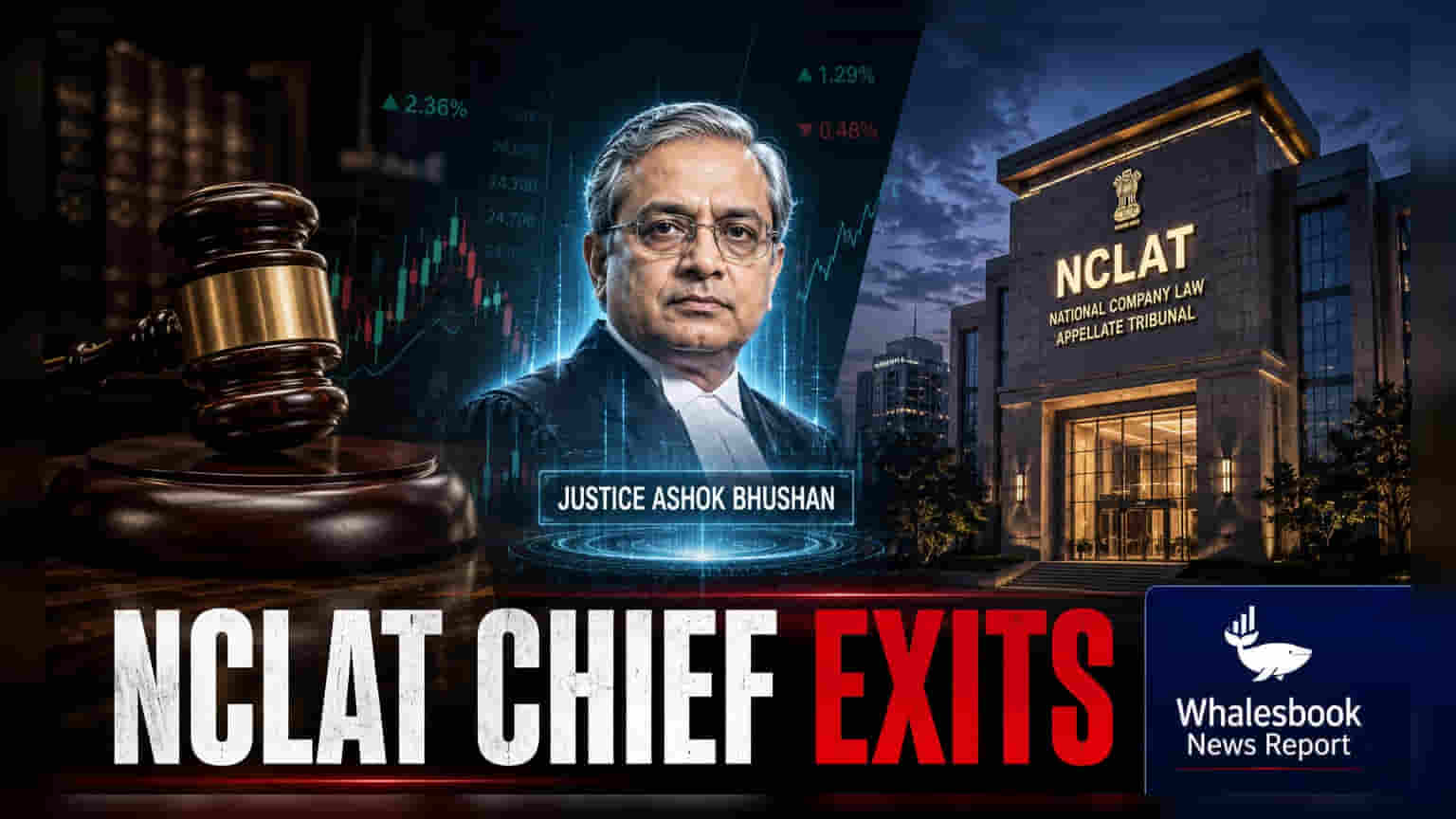
Justice Ashok Bhushan has concluded his tenure as the Chairperson of the National Company Law Appellate Tribunal. His leadership influenced major corporate law and insolvency rulings, including key decisions on digital market competition and the Insolvency and Bankruptcy Code.
What Happened
Justice Ashok Bhushan stepped down as the Chairperson of the National Company Law Appellate Tribunal (NCLAT) on July 4, 2026. Having assumed the role in November 2021, his departure marks the end of nearly five years of leadership at the country's top appellate body for corporate and insolvency disputes. Justice Bhushan, a former Supreme Court judge, presided over several high-profile legal matters that have redefined how Indian courts interpret competition laws and the Insolvency and Bankruptcy Code (IBC).
Impact on Digital Market Regulation
Under Justice Bhushan’s tenure, the tribunal issued landmark rulings that significantly impacted big tech companies operating in India. A primary focus was the intersection of competition law and digital platforms. In the high-profile Google Android case, the NCLAT examined allegations of market dominance, reinforcing the Competition Commission of India's stance on proprietary app requirements. Similarly, the tribunal addressed disputes regarding the Google Play Store billing system, clarifying how penalties for anti-competitive behavior should be calculated based on relevant turnover. His benches also upheld findings concerning privacy policy concerns in the Meta-WhatsApp matter, signaling a more assertive judicial approach to digital competition.
Refining Insolvency Principles
Beyond digital markets, Justice Bhushan’s decisions played a crucial role in shaping the IBC landscape. His benches provided necessary clarity on the maintainability of voluntary insolvency petitions, notably in the Go First case, where the tribunal supported the process despite opposition from stakeholders. Another impactful judgment ensured that homebuyer claims are protected, requiring that such claims are accounted for in corporate debtor records before any resolution plan is approved. These rulings helped create a more structured legal path for resolution processes, directly influencing how lenders, creditors, and homebuyers navigate corporate insolvency.
Legacy in Corporate Law
Before heading the NCLAT, Justice Bhushan held a long and distinguished judicial career, including serving as a judge at the Supreme Court of India. His approach to corporate law was often characterized by a focus on procedural integrity. For instance, his bench ruled that the NCLAT does not have inherent powers to review its own final orders, except in specific instances involving procedural errors. This clarification helped prevent unnecessary litigation cycles and provided greater finality to the tribunal's decisions.
What Investors Should Track
As the NCLAT enters a leadership transition, investors and corporate stakeholders will look toward the appointment of the next Chairperson to understand the future judicial direction. The tribunal remains the final appellate authority for companies facing insolvency or competition investigations. Key monitorables for market participants include future rulings on pending competition cases, the consistency of IBC interpretations, and the speed at which the tribunal processes ongoing insolvency resolution plans. Changes in tribunal leadership often set the tone for how strictly regulatory bodies like the CCI are permitted to enforce competition norms against dominant market players.