

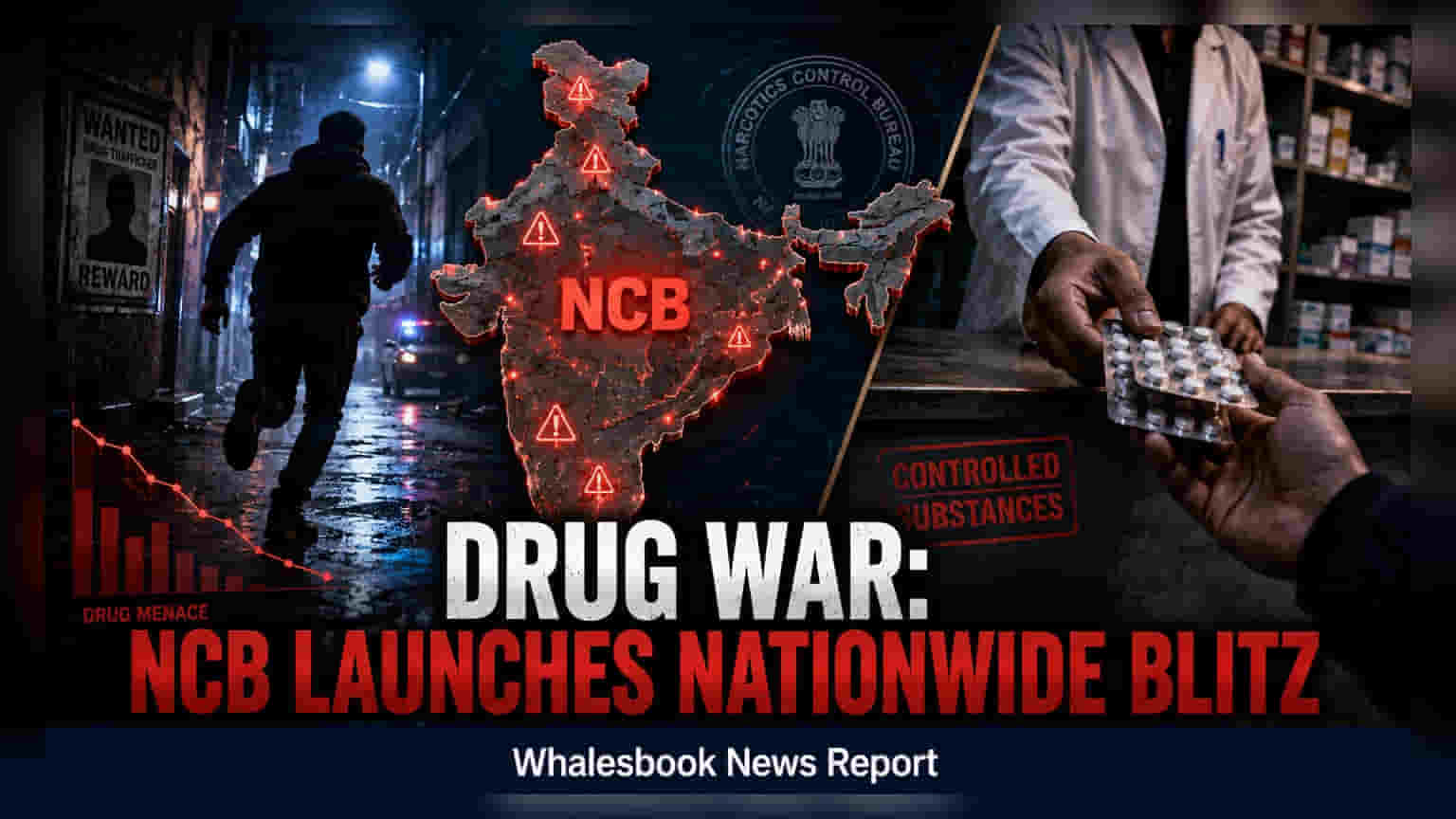
The Narcotics Control Bureau (NCB) will initiate a year-long, 24-phase enforcement campaign starting this September to dismantle drug trafficking networks. For investors in the pharmaceutical and retail sector, the drive includes rigorous inspections of medical stores to curb the diversion of medicines. This creates a compliance-focused environment for distribution networks across India.
The Narcotics Control Bureau (NCB) has announced a comprehensive nationwide anti-drug enforcement campaign scheduled to run from September 2026 through August 2027. This multi-pronged initiative, designed to align with the National Vision Document for Narcotics Control 2026-29, will feature 24 specialized drives, with each phase lasting two weeks.
While the primary objective of this operation is to dismantle drug trafficking syndicates and apprehend fugitives, the campaign also introduces a significant focus on the pharmaceutical supply chain. Starting in October, the NCB, working alongside state-level Anti-Narcotics Task Forces and local drug controllers, will conduct extensive inspections of medical stores and pharmacies. The goal is to identify and stop the diversion of pharmaceutical drugs for illicit use, a practice that falls under the purview of the Narcotic Drugs and Psychotropic Substances (NDPS) Act.
For investors monitoring the healthcare and pharmaceutical sector, this development highlights the growing importance of regulatory compliance in drug distribution. While large, organized pharmaceutical manufacturers typically operate under stringent internal controls and regulatory oversight, the enforcement drive signals a stricter climate for the entire distribution and retail channel.
Compliance risks become particularly relevant during such enforcement periods. Pharmacies and distribution entities found to have weak documentation, improper inventory tracking, or involvement in the sale of restricted substances without proper verification may face severe legal consequences, including license suspensions or permanent closures. Consequently, companies with robust supply chain tracking and strong institutional compliance programs are better positioned to navigate such intensified regulatory environments.
This campaign is a government enforcement action and is not a corporate event directly affecting the financials of listed pharmaceutical companies. However, the operational impact of these inspections may be felt by smaller, unorganized players in the pharmacy retail space.
The long-term focus for investors in this sector remains on how companies manage their distribution networks. The primary monitorable during this year-long period will be any reports of regulatory action against specific distribution nodes or retail chains, as well as any industry-wide trends toward increased digitalization of medicine tracking to ensure full compliance with the NDPS Act. Market participants may also track whether these intensified checks lead to any temporary supply chain disruptions in specific regions.