

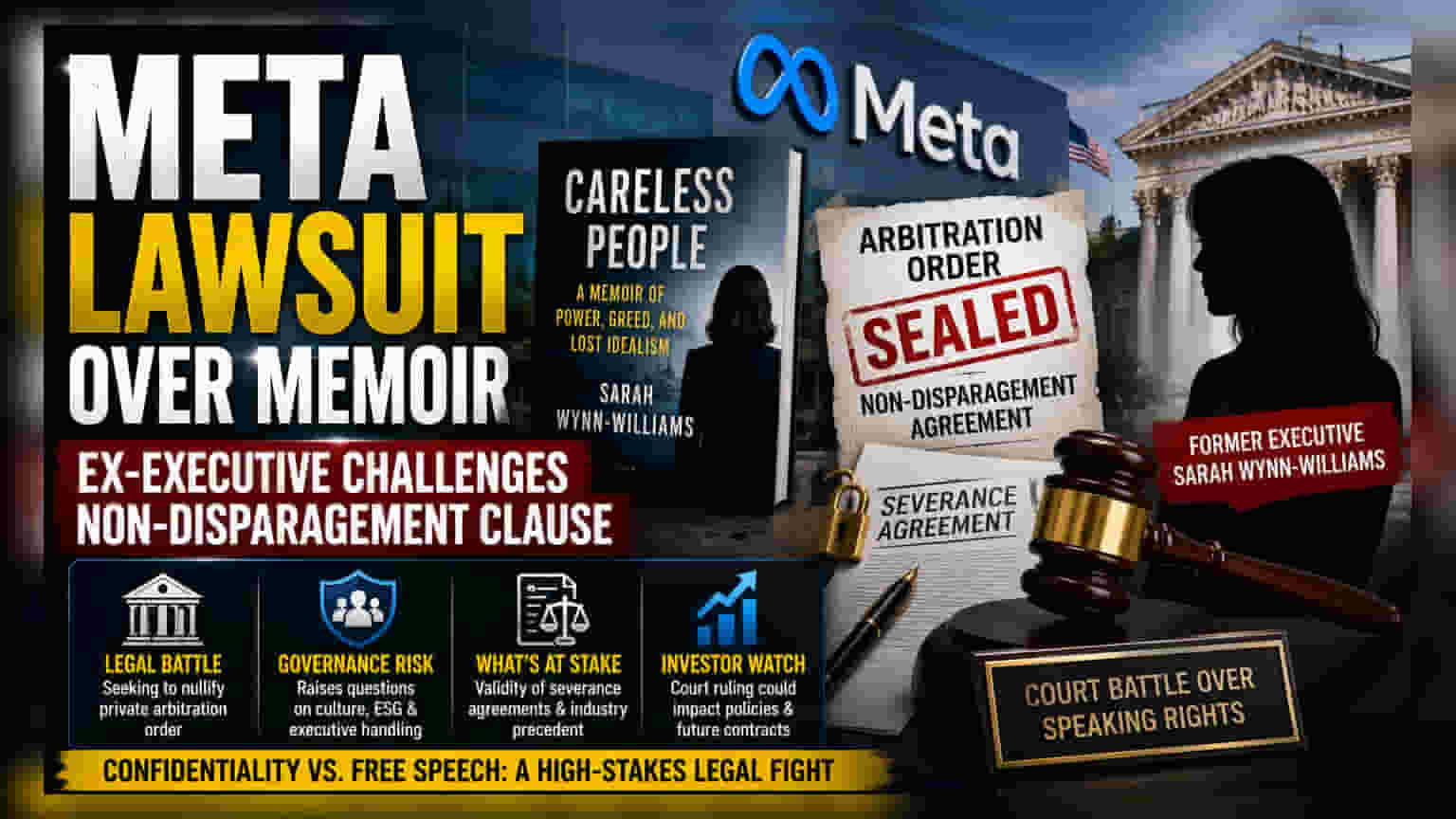
A former Meta executive is suing the company in federal court, seeking to overturn an arbitration order that restricts her from discussing her past role or promoting her book. The lawsuit challenges the validity of her 2017 severance agreement. Investors are monitoring the situation as it highlights potential governance risks regarding how large technology companies handle sensitive internal information and executive departures.
What Happened
Meta Platforms Inc. is facing a legal challenge from a former executive, Sarah Wynn-Williams, who served as director of global public policy. The lawsuit, filed in a federal court in Northern California, attempts to nullify an existing private arbitration order. This order currently prohibits the former executive from discussing her tenure at the company or promoting her memoir, titled "Careless People."
The former employee alleges that the severance agreement she signed upon leaving the company in 2017 was executed under duress. She is now seeking to invalidate that agreement, which includes a non-disparagement clause. Meta has publicly disputed these claims, stating that the former executive is violating the terms of her contract and that her book contains inaccuracies. The company maintains that an arbitrator has already ruled that the agreement is binding.
Governance and Reputation Risks
For investors in large technology companies, legal disputes involving former executives often raise questions about governance and internal culture. Companies like Meta frequently utilize strict non-disclosure and non-disparagement agreements to protect sensitive business information and maintain confidentiality after senior leaders depart.
However, when such agreements lead to high-profile lawsuits, it can create a public relations challenge. Investors often monitor these cases for potential impacts on a company's Environmental, Social, and Governance (ESG) standing. While such litigation is generally common for global entities, significant legal losses or adverse rulings regarding severance terms can sometimes lead to a broader review of how a company handles executive departures, which may influence long-term policy and HR practices.
Why The Legal Details Matter
The case centers on the validity of arbitration orders and severance contracts. Meta is reportedly seeking substantial damages, citing each alleged violation of the non-disparagement clause. If the court rules in favor of the former executive, it could potentially weaken the enforceability of similar agreements across the tech sector. If the court upholds the arbitration, it reaffirms the company's ability to protect its internal policies through private arbitration processes.
What Investors Should Track
Investors may look for updates on the court’s decision regarding the motion to nullify the arbitration order. While this specific lawsuit may not have an immediate material impact on Meta’s financial performance, the precedent it sets could be relevant. The primary monitorable is the court's stance on the validity of the severance agreement and whether the company is required to alter its approach to similar non-disparagement contracts in the future.