 Whalesbook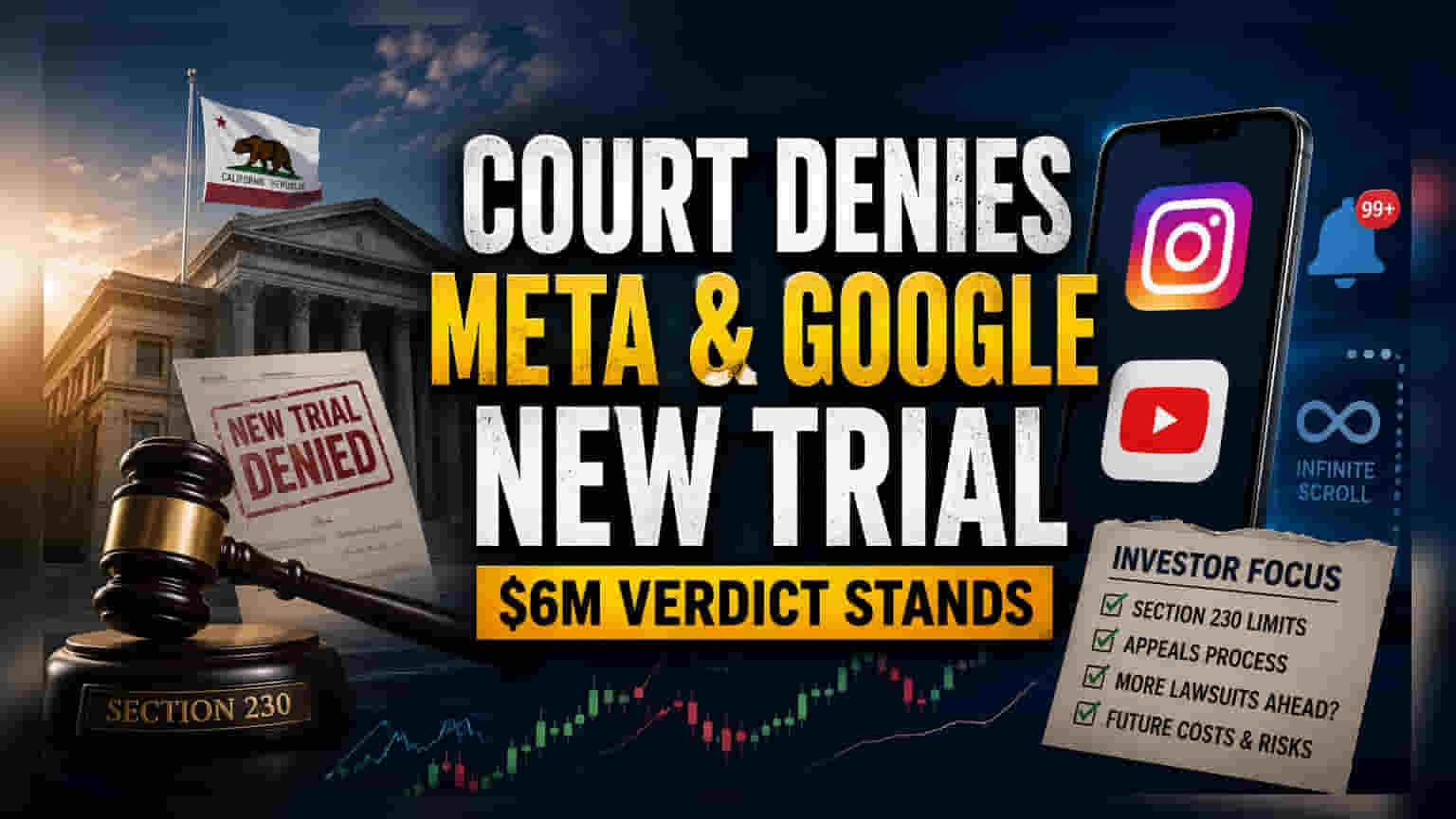


A California court has denied Meta and Google's request for a new trial in a lawsuit linking their platforms to youth addiction. While the financial penalty is small, the court’s dismissal of the Section 230 defense creates a significant legal precedent. Investors are monitoring how this shift in liability—moving from user content to platform design—might influence future legal costs for major technology firms.
What Happened
A California state court judge has officially denied requests from Meta Platforms and Google for a new trial regarding a lawsuit that accused their platforms, Instagram and YouTube, of contributing to social media addiction among young people. The court upheld an earlier jury verdict that found the companies liable for damages totaling $6 million. The companies had argued for a retrial, but the judge ruled that their arguments were insufficient to overturn the original finding.
Why The Section 230 Ruling Matters
The most important aspect of this development for investors is the court’s interpretation of the Communications Decency Act, specifically Section 230. This federal law has historically acted as a major shield for technology companies, protecting them from being held responsible for the content posted by their users. In this case, however, the judge ruled that Section 230 does not automatically protect companies when the issue involves the specific design features of their apps, such as notification systems or the infinite scroll mechanism.
By distinguishing between user-generated content and the physical design of the platform, the court has signaled a potentially narrower application of this legal shield. While the $6 million damages figure is small for large companies like Meta and Google, the legal precedent could be significant. If courts consistently rule that design features fall outside the protections of Section 230, it could open the door to a much larger volume of lawsuits regarding the addictive nature of social media platforms.
Business And Sector Context
For investors, the primary concern is not the immediate financial impact of this specific judgment, but rather the risk of future litigation. If this legal theory takes hold, tech companies may face increased costs related to legal defenses and potential settlements. This scenario is somewhat similar to historical lawsuits in other sectors, such as the tobacco or pharmaceutical industries, where product design and marketing strategies became central to large-scale liability claims.
Big tech companies are currently dealing with a wave of regulatory and legal challenges globally, ranging from antitrust investigations to data privacy concerns. This ruling adds to that pressure, forcing companies to defend not just the content on their sites, but the foundational ways their products are built and marketed to users.
How Investors May Read This
The market generally understands that these large technology firms have the resources to handle legal expenses. However, the risk lies in the uncertainty of future legal rulings. A persistent trend of court losses could lead to higher compliance costs or regulatory pressure to change platform design features, which are currently core to user engagement and advertising revenue.
Investors are closely watching to see how these companies adjust their legal strategies on appeal. Meta and Google have both confirmed their intent to appeal the decision, indicating that this legal battle is far from over. The final outcome of the appeals process will likely determine whether this becomes a long-term liability trend or remains an isolated case.
What Investors Should Track
Going forward, the key monitorable is the appeals court process. Investors should watch for any rulings that provide clarity on where Section 230 protection ends and liability for design features begins. Additionally, market participants may track whether other plaintiffs initiate similar lawsuits, as a rise in such filings could create a pattern of legal risk that might impact long-term operational costs or necessitate changes to platform functionality.