

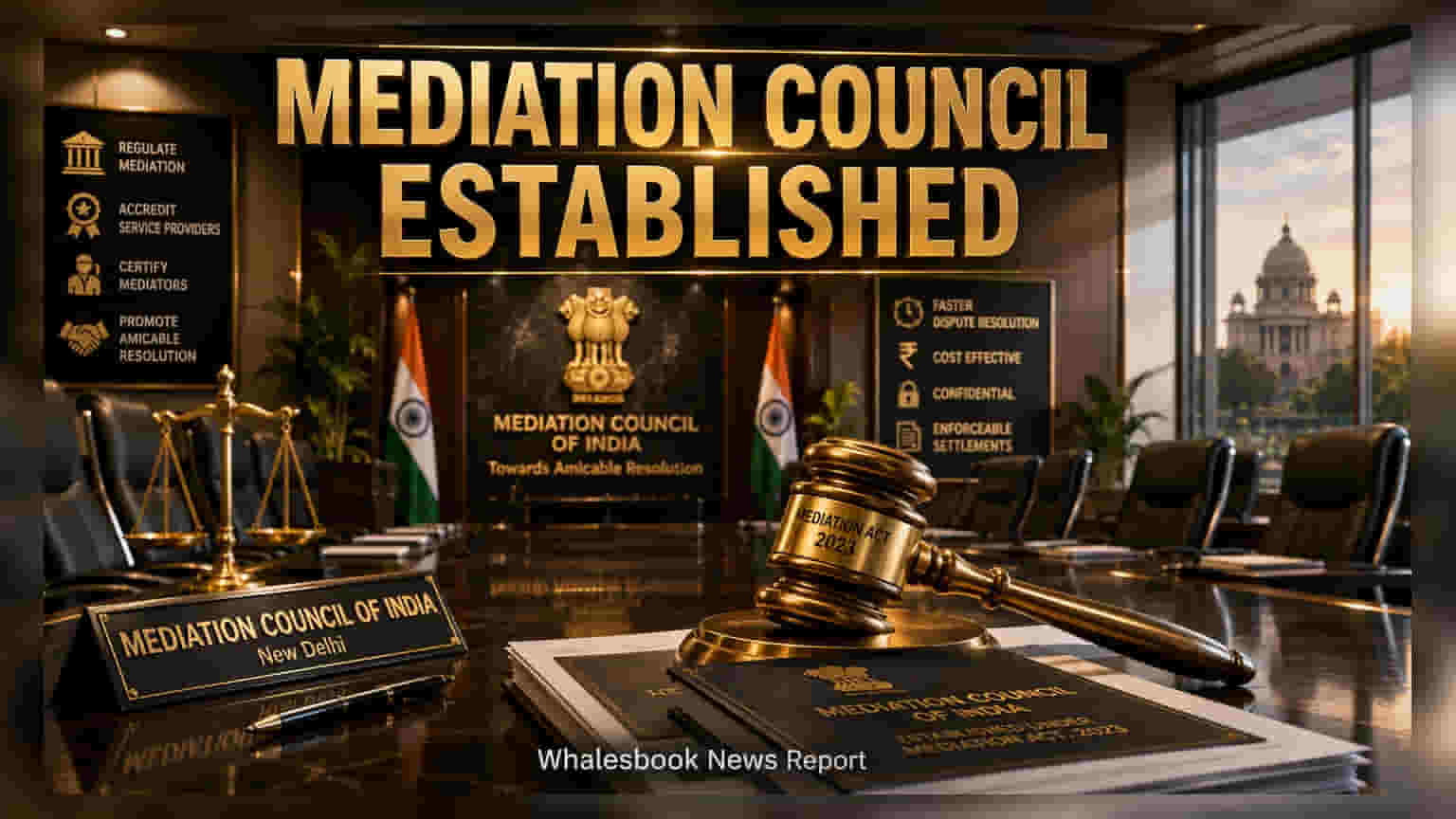
The Union Government has officially formed the Mediation Council of India to institutionalize dispute resolution. This development aims to reduce the backlog of commercial and civil cases, potentially lowering legal costs and time for businesses involved in litigation.
The Union Government has officially established the Mediation Council of India, a statutory body designed to overhaul the country's dispute resolution framework. Notified on August 27, 2026, the council operates under the provisions of the Mediation Act, 2023. Headquartered in Delhi, this body is tasked with regulating mediation, accrediting service providers, and certifying professional mediators across the country.
For the Indian corporate sector, this establishment marks a potential shift toward faster settlement of commercial and civil disputes. Currently, high pendency in courts often leads to long, expensive legal battles for companies. By moving toward a structured, institutionalized system, the government aims to provide a more efficient alternative to traditional litigation, where outcomes can be binding and enforceable.
The Council will serve as the primary authority for maintaining high standards in mediation. Its responsibilities include registering mediators, setting professional and ethical guidelines, and ensuring that mediation processes are transparent. The government's goal is to transition from ad-hoc settlement methods to a formal, reliable process that encourages parties to reach mutually agreeable outcomes without needing a court verdict.
While the formation of the Council is a significant policy update, there are practical implementation risks that stakeholders may monitor. Lawmakers and legal experts have noted that the council faces potential hurdles, including resource allocation and the challenge of identifying suitable candidates for key statutory roles. There is also the matter of ensuring the Council's independence, particularly in disputes where the government might be a involved party, which remains a topic of regulatory discussion.
Procedural concerns have also been raised regarding the mandatory nature of pre-litigation mediation. Some critics argue that adding this layer could inadvertently increase delays rather than simplifying the process for businesses and citizens. Furthermore, the current legal framework under the 2023 Act does not clearly address the enforcement of settlement agreements resulting from international mediations conducted outside India, which is a point of consideration for companies with cross-border legal exposure.
The next steps for the Council include the finalization of detailed operational rules and the appointment of key leadership personnel. Investors and corporate legal teams will likely track these appointments and the eventual issuance of standard operating procedures, as these will determine how effectively the body can reduce the current judicial backlog and impact the ease of doing business in India.